

The Ultimate Reference Guide to Dog Crates: Finding Your Pup’s Pawsome Sanctuary
Your dog's crate isn't a cage; it's a vital psychological sanctuary that taps into their natural denning instincts to provide ultimate peace of mind. While the global market for dog crates crate options is projected to reach $3.67 billion by 2035, many pet parents still feel a twinge of guilt when they close that latch. You want your furry friend to feel cozy and secure, but choosing between wire, plastic, or heavy-duty metal models can feel "paws-itively" overwhelming. You might worry about finding the right size for a growing pup or feel confused by recent safety updates like the July 19, 2026, CPSC ban on child gates with integrated pet doors.
We understand that you want to balance premium safety with pure joy for your companion. You're likely looking for a durable solution that helps with house-training while fitting your home's unique decor. This guide will show you exactly how to choose an udderly pawsome sanctuary that promotes health and happiness. We'll preview everything from IATA air travel regulations to finding CPS-certified crash-tested models from brands like Gunner or Lucky Duck for your next family road trip. Get ready to transform a simple piece of pet gear into a reliable den where your pup truly belongs.
Key Takeaways
- Understand the "Denning Instinct" to transform a simple crate into a psychological sanctuary that offers your furry friend true peace of mind.
- Evaluate the pros and cons of five different dog crates crate styles, ensuring you choose the right material for durability, airflow, and your home decor.
- Apply the "Goldilocks Rule" of sizing with precise measurements to guarantee your pup has enough room to turn and lie down without compromising house-training.
- Build an udderly pawsome connection using slow introduction techniques and happy praise to make the crate your companion's favorite place to snooze.
- Master essential safety guidelines, from collar removal to temperature control, to provide a secure environment that delivers pure joy and reliable protection.
Understanding the Dog Crate: More Than Just a Cage
Many new pet parents look at a crate and see bars. They feel a wave of "cage guilt" because it looks like a prison, but for your companion, it's actually an indoor den. A well-chosen Dog crate provides essential boundaries and a sense of security. It's a bedroom, a retreat, and a personal sanctuary where they can find pure joy and relaxation. Reframing your perspective is the first step toward strengthening the bond with your pup. When you view it as a cozy den rather than a cage, you unlock a tool that serves three vital purposes: efficient housebreaking, safety when you're away, and stress-free travel for every family adventure.
The Psychology of the Denning Instinct
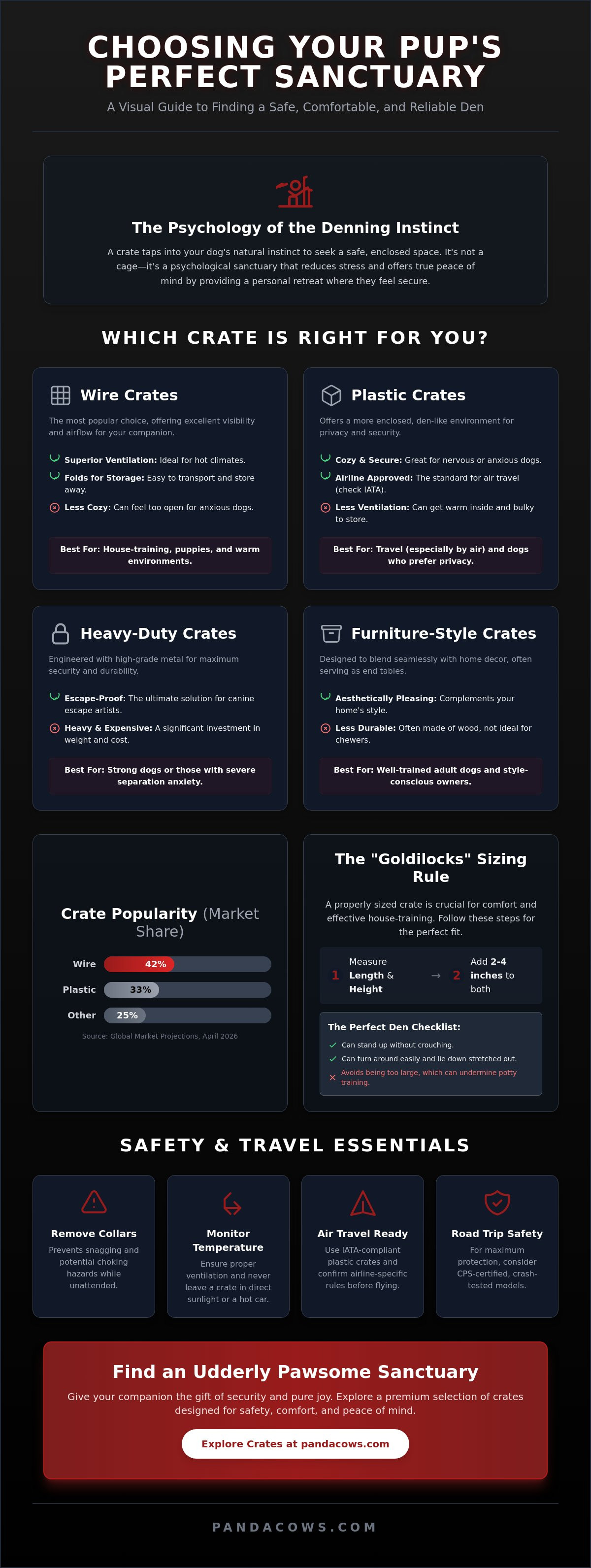
Dogs aren't humans. While we might enjoy wide-open spaces and high ceilings, our furry friends often feel exposed and vulnerable in the middle of a large room. Their wild ancestors used dens to protect themselves from harsh weather and lurking predators. This biological drive remains hard-wired into your dog’s DNA today. The denning instinct is a biological drive for enclosed security that provides a dog with a physical and emotional sense of safety. When you introduce dog crates crate environments correctly, you are actually helping to reduce your dog's cortisol levels. By providing a dedicated space where they don't have to stay on "high alert" to guard the entire house, you give them the gift of true peace of mind.
Benefits for the Modern Pet Parent
Choosing the right dog crates crate solution isn't just about the dog's psychology; it's about your sanity, too. A crate acts as a supportive partner in your daily routine, helping you manage the challenges of pet ownership with whimsical ease. It turns potentially stressful situations into moments of connection and reliability.
- Accelerated Housebreaking: You can speed up potty training by utilizing a dog’s natural desire to keep their sleeping area clean. Since dogs rarely want to soil their bed, they learn to hold it until they are taken outside.
- Preventing "Paws-asters": Stop chewed furniture, shredded pillows, or the ingestion of toxic household items before they happen. A crate ensures your pup stays out of trouble when you can't keep a watchful eye on them.
- Routine and Reliability: Creating a consistent crate routine helps manage separation anxiety. It gives your dog a predictable "safe zone" that remains constant even if you move houses or travel to new places.
By investing in a premium sanctuary, you aren't just buying pet gear; you're crafting a lifestyle of happiness and health. It's an udderly pawsome way to ensure your companion feels loved and secure every single day.
Comparing Crate Materials: Which Crate is Right for You?
Selecting the perfect sanctuary for your companion is a journey that moves from understanding their needs to finding the right fit for your home. The right dog crates crate selection allows you to provide a safe space while maintaining your personal style. To give them pure joy, you must balance durability with comfort. Your choice often depends on whether you're looking for a permanent home fixture or a portable travel solution that keeps your companion secure on the go.
Life-Stage Crating is a smart approach for pet parents who want to support their pet's growth. A playful puppy likely needs a durable wire crate with a divider to assist with potty training; whereas a calm adult might prefer the aesthetic appeal of a furniture-style model. Matching the material to your dog's current age and energy level ensures a reliable environment they'll love for years to come.
Wire vs. Plastic: The Classic Debate
Wire crates remain the most popular choice, holding a 42% market share as of April 2026. They offer the best ventilation and allow your furry friend to see everything happening in the house. These are udderly pawsome for easy storage since most fold flat. If your dog prefers a darker, more secluded den, a plastic crate (holding 33% of the market) is often the better bet. Plastic is also the standard for air travel. When moving your pet, always check the latest transportation safety guidelines to ensure your setup meets federal requirements for animal welfare.
Best For: Wire is ideal for hot climates and house-training. Plastic is best for nervous dogs who need privacy and for airline adventures.
Specialized Solutions: Furniture and Heavy-Duty
If you want your pet’s den to blend with your decor, furniture crates are a premium choice. These are crafted with care to look like end tables or credenzas, allowing the crate to become a functional part of your living room. For the "Houdini" dogs who can escape standard latches, heavy-duty aluminum crates are the essential upgrade. While these can cost between $400 and $900 according to April 2026 market data, they provide peace of mind for owners of high-anxiety pets. Soft-sided carriers, making up 25% of the market, are the go-to for lightweight travel and feline friends who enjoy a cozy, flexible space.
To find a durable piece of gear that fits your lifestyle, explore our collection of premium pet solutions designed for every stage of your journey together.
Sizing and Comfort: Creating an Udderly Pawsome Den
Finding the right fit for your companion is a journey that requires more than just a quick glance at a weight chart. Many retailers suggest sizing based on breed weight alone, but that's often a recipe for a cramped pup. To give your furry friend the best experience, you must measure their actual physical dimensions. When looking at different dog crates crate models, you're searching for that "Goldilocks" fit. It shouldn't be so small that they're hunched, nor so large that they feel insecure or use the extra space as a restroom. A perfectly sized den promotes peace of mind by offering enough room to stretch while maintaining a cozy, protective atmosphere.
A cozy den is only half the battle; the other half is holistic comfort. Hard plastic or metal floors can cause calluses or pressure sores over time, especially for dogs who spend several hours resting. For senior pups who need extra joint support, you should consider investing in a premium orthopedic dog bed. This simple addition transforms a functional space into a luxury suite, ensuring your companion wakes up with a wagging tail rather than stiff limbs. By prioritizing ergonomics, you're strengthening the bond through thoughtful care.
How to Measure Your Dog for a Crate
To ensure your pup lives their best life, follow these three specific steps before you shop for your next dog crates crate. Accuracy here prevents the need for returns and keeps your dog's health at the forefront.
- Step 1: Length. Measure from the tip of the nose to the base of the tail. Add 2 to 4 inches to this total so they can stretch out fully without hitting the walls.
- Step 2: Height. Measure from the floor to the highest point of the dog, which is usually the top of the ears or head. Add 2 to 4 inches so they can stand comfortably.
- Step 3: Width. Measure across the widest part of their shoulders and add 2 inches for easy turning room.
Accessorizing for Pure Joy
Once the size is right, it's time to add the "pawsome" touches that make the crate a favorite destination. Crate covers are fantastic tools for reactive dogs because they block out distracting sights that might trigger barking or anxiety. During the early stages of life, a waterproof pet mat is an absolute must-have. It protects the crate floor from accidents while providing a soft surface for napping. Finally, don't forget to include mental enrichment. Adding safe, durable chew toys keeps their minds engaged and helps them associate their sanctuary with pure joy and relaxation.
Crate Training Basics: A Paws-itive Approach
Training your dog to love their new dog crates crate is a journey of patience, not a race of convenience. While some brands claim that hardware alone solves anxiety, we believe that thoughtful training is what truly builds a lasting bond. Our "Slow and Steady" philosophy ensures that the crate remains a sanctuary of pure joy rather than a place of restriction. The most vital rule is simple: never use the crate as a form of punishment. If your companion associates their den with your frustration, they’ll lose the peace of mind they need to truly relax. Instead, focus on creating "paws-itive" associations by using high-value treats and plenty of enthusiastic praise every time they step inside.
You can also turn crate time into a rewarding part of your grooming routine. After a relaxing session with a self-cleaning slicker brush, your dog will likely feel calm and ready for a nap. Placing them in their crate after grooming reinforces the idea that this is a space for quiet, peaceful moments. If you encounter the "Puppy Blues" during the first week, don't panic. Whining and barking are natural as they adjust to their new boundaries. Ignore the noise for short bursts to avoid rewarding the behavior, and only let them out when they are quiet and calm.
The First 24 Hours: Introduction
The secret to a successful start is to remove all pressure. Leave the crate door wide open and let your dog explore their new indoor den at their own pace. You can encourage them by tossing a few kibbles inside or placing their favorite toy in the back corner. Feeding full meals inside the crate is an udderly pawsome way to create a strong "food equals happy place" link. The goal is for the dog to enter the crate voluntarily because they see it as a source of rewards. By making the crate the most exciting place in the house, you're setting the foundation for years of reliable comfort.
Building Duration and Nighttime Success
Once your pup is comfortable stepping inside, it's time to build duration. Start small. Close the door for just 1 minute while you stay in sight, then gradually increase that time to 1 hour as they become more confident. For nighttime success, keep the crate near your bed during the initial stages. Hearing your breathing provides your furry friend with a sense of security and peace of mind. To keep their sanctuary fresh, ensure you know how to wash a dirty dirty dog before they settle in for a cozy night. A clean pup in a clean crate makes for a much happier home environment.
Ready to start your training journey with the right gear? Shop our collection of premium dog crates and give your pet the sanctuary they deserve.
Safety Guidelines and Travel Essentials
Safety is the silent partner of happiness. When your companion settles into their dog crates crate, you need absolute peace of mind that they're protected from every angle. One of the most overlooked risks in crate safety is the collar. Tags or buckles can easily snag on wire mesh or door latches, which can lead to panic or even strangulation. Always remove your dog’s collar before they enter their sanctuary, or switch to a break-away version designed specifically for safety. By taking this small step, you ensure their den remains a place of pure joy rather than a potential hazard.
Airflow and temperature control are equally essential for your pup’s health. While wire crates offer maximum ventilation, plastic and heavy-duty metal models can trap heat more quickly. For air travel in 2026, IATA regulations require ventilation on at least three sides to ensure your furry friend breathes easily. Never place the crate in direct sunlight or near a drafty window. Monitoring the environment helps prevent overheating and keeps your companion cozy and relaxed throughout the day.
Home Safety Checklist
Creating a reliable home environment means more than just picking a spot in the corner. From daily care to restful nights, where you place the den matters. Follow these essential guidelines to keep things udderly pawsome:
- Inspect Regularly: Check older wire models for sharp edges or loose parts that could poke or scratch your pet.
- Strategic Placement: Keep the crate in a "goldilocks" zone. It should be away from high-traffic "loud" zones but close enough to the family so they don't feel isolated.
- The 4-Hour Rule: Avoid leaving adult dogs in a crate for more than 4 hours during the day. They need regular breaks to stretch, hydrate, and maintain their "paws-itive" attitude.
On the Road: Travel Crate Tips
Whether you're heading to the vet or embarking on a cross-country adventure, securing your pet is a top priority. In a vehicle, an unsecured crate can slide or tip during sudden stops. Use tie-down straps to anchor the crate to the floor or seat. Look for "Crash-Tested" labels from the Center for Pet Safety (CPS) for the highest level of protection. Brands like Gunner and Lucky Duck have 2026 certified models that offer a literal fortress for your furry friend.
If your journey takes you to the skies, you'll need an airline approved dog carrier that meets specific IATA standards. These require the crate to be rigid and large enough for the dog to stand, turn, and lie down naturally. Don't forget the essentials for pit stops, such as portable water and eco-friendly dog poop bags. Strengthening the bond with your pet means being prepared for every mile of the journey together.
Ready for a Lifetime of Tail Wags?
Transforming your home with the right dog crates crate solution is about more than just managing behavior; it's about honoring your companion's natural instincts. You've mastered the nose-to-tail measurements needed for that perfect fit and explored how different materials, like well-ventilated wire or premium furniture pieces, suit your specific lifestyle. By prioritizing positive training and safety checks like collar removal, you're creating a reliable sanctuary where they can truly thrive. Every choice you make helps in strengthening the bond between you and your companion through thoughtful, expert care.
Our products are crafted with care for peace of mind, ensuring your furry friends enjoy the highest quality standards. We're dedicated to helping you provide a life of health and happiness. Give your pet pure joy—Shop our Udderly Pawsome Collection! Your pup's best life starts with a cozy place to call their own, and we're excited to be part of your journey.
Frequently Asked Questions
How long can a dog stay in a crate during the day?
Adult dogs shouldn't stay in their dog crates crate for more than 4 hours at a time during the day. Puppies require much more frequent breaks to prevent accidents and keep their spirits high. For example, a 2-month-old pup typically needs a potty break every 2 hours. Providing these regular intervals of freedom ensures your companion remains happy and maintains a positive association with their sanctuary.
Should I put a bed in my dog’s crate?
You should put a bed in the crate if your dog isn't a destructive chewer who might ingest the fabric or stuffing. Adding a soft layer provides pure joy and prevents pressure sores that can develop on hard surfaces. For senior dogs, an orthopedic pad is a premium choice that supports joint health and ensures they wake up with a wagging tail rather than stiff limbs.
Is it okay to cover a dog crate with a blanket?
Covering a dog crates crate with a breathable blanket is perfectly safe and often helps reactive dogs settle down. It mimics the natural denning instinct by blocking out visual stimuli that might cause excitement or anxiety. Just make sure you leave at least one side uncovered to maintain proper airflow and prevent overheating, especially if you live in a climate where temperatures exceed 75 degrees Fahrenheit.
What do I do if my dog won’t stop crying in the crate?
Wait for a moment of silence before letting your dog out to avoid rewarding the crying behavior. You must first ensure their physical needs are met, such as a recent potty break or a vigorous play session. Using high-value treats during the introduction phase helps build a reliable connection so they eventually enter their sanctuary voluntarily and feel a sense of peace of mind.
Can two dogs share one large crate?
Two dogs should not share the same crate because it can lead to accidental injuries or resource guarding during stressful moments. Even the best of friends need their own individual space to feel truly secure. Providing separate sanctuaries ensures each pet has enough room to stand and turn without being crowded, which promotes long-term safety and strengthens the bond you share with each pet.
How do I know if the crate is too small for my dog?
The crate is too small if your dog’s head touches the top while standing or if they have to hunch to turn around. You'll know it's a perfect fit when there are 2 to 4 inches of extra space above their head and past their tail. Proper sizing is essential for their physical health and helps maintain the "Goldilocks" balance of a cozy, secure environment.
What is the best type of crate for a dog with separation anxiety?
A heavy-duty aluminum model is the best choice for dogs with high separation anxiety because it's virtually escape-proof. These designs prevent "paws-asters" and keep your companion safe from self-injury during panic episodes when you aren't home. While these premium models are a significant investment, they offer a level of durability that standard wire or plastic options simply cannot match for anxious pets.
Can I use a crate for a cat?
You can absolutely use a crate for a cat, particularly for safe travel or during a quiet recovery period after a vet visit. Many feline friends enjoy the security of a smaller, enclosed space that feels like a cozy hideaway. Whether you're using it for a dog or a cat, the goal remains the same: providing a crafted sanctuary that delivers pure joy and reliable protection.