

The Ultimate Guide to Dog Poop Bags: Eco-Friendly & Pawsome Solutions for 2026
Last Tuesday morning, a pet parent named Sarah found herself in an "udderly" messy situation when her bag leaked right through her knit gloves during a walk in Central Park. It's a frustrating moment that instantly ruins the pure joy of a morning stroll with your furry friend. We all agree that picking up after your companion shouldn't feel like a high-stakes gamble against thin plastic and lingering odors. You want a walk that focuses on wagging tails, not worrying about whether your dog poop bags will hold up under pressure or if that "green" label is just clever marketing.
Discover how to choose the perfect solutions that balance premium durability, scent control, and environmental responsibility for a mess-free experience every single time. We'll break down the 2026 US waste regulations and explain why specific compostable certifications matter more than others. From finding reliable high-count rolls to mastering the art of the one-handed open, this guide provides everything you need for a peaceful, "pawsome" journey. It's time to bring back the "pure connection" to your daily routine with products that are as reliable as they are kind to our shared planet.
Key Takeaways
- Learn why picking up after your furry friend is a vital step in protecting your neighborhood’s health and ensuring a cleaner, greener planet for every tail-wagger.
- Navigate the confusing world of eco-labels to distinguish between truly compostable materials and misleading "greenwashed" alternatives for total peace of mind.
- Discover how to choose high-quality dog poop bags that offer the perfect blend of scent control and durable designs, from convenient handle-ties to standard rolls.
- Master the most hygienic disposal methods and learn the truth about the "flushable" myth to keep your home environment fresh and mess-free.
- Strengthen the bond with your companion by turning routine chores into udderly pawsome moments of connection with premium, reliable lifestyle solutions.
Why Choosing the Right Dog Poop Bags Matters for Every Paw-rent
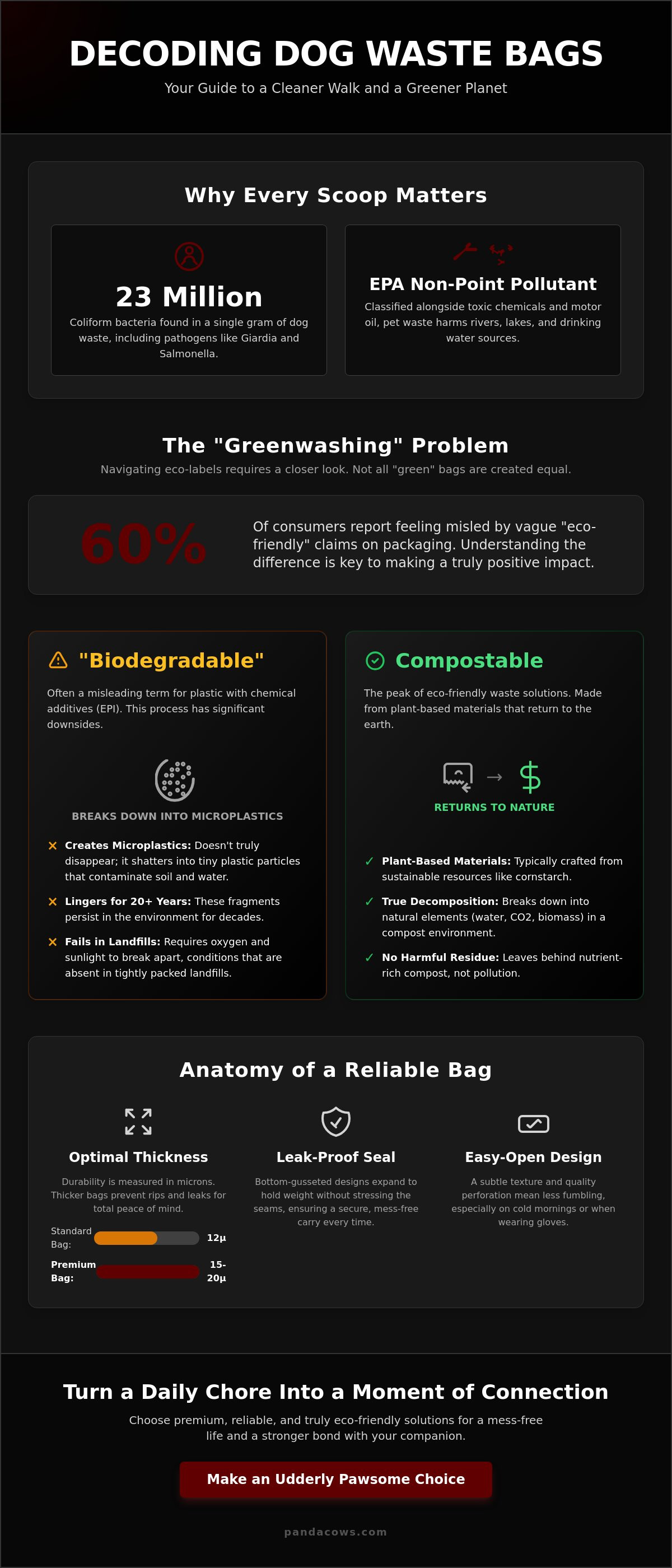
Every stroll with your furry friend is a chance for pure joy, but it also comes with a messy reality that requires a reliable solution. Choosing the right dog poop bags isn't just about hygiene; it's about being a responsible guardian for your pet and the planet. Leaving waste behind is never an option. A single gram of dog waste can contain 23 million coliform bacteria. This includes nasty pathogens like Giardia and Salmonella that can linger in the soil for years. Beyond the health risks, many cities enforce strict pooper-scooper laws that carry fines ranging from $50 to $500 depending on your local jurisdiction. Reliability provides that essential peace of mind, allowing you to focus on the wagging tail at the end of the leash. Strengthening the bond with your companion means protecting the spaces where you play. Whether you're exploring a crowded city park or a quiet mountain trail, having a stash of udderly pawsome bags makes every adventure stress-free.
Pet Waste and the EPA: A Serious Environmental Concern
The Environmental Protection Agency (EPA) classifies pet waste as a significant threat to our shared ecosystems. In 1991, the EPA labeled pet waste as a non-point source pollutant, placing it in the same category as toxic chemicals and motor oil. When left on the ground, rain washes these "gifts" into storm drains, eventually reaching local rivers and lakes. This excess nitrogen and phosphorus can trigger harmful algae blooms that kill fish and make water unsafe for swimming. According to EPA data, two or three days' worth of droppings from a population of about 100 dogs can contribute enough bacteria to temporarily close a bay to swimming and shellfishing. From backyard play to forest hikes, every uncollected mess contributes to a larger ecological burden that affects us all.
The Anatomy of a High-Quality Waste Bag
A premium bag needs to be more than just a piece of plastic. Durability is measured in microns. Most standard bags are around 12 microns, but a reliable 15 to 20 micron thickness ensures you won't have any "hands-on" accidents. Look for bottom-gusseted designs that provide a leak-proof seal by expanding to hold weight without straining the seams. High-quality dog poop bags also feature a textured surface and easy-open technology. This ensures you aren't fumbling with a stuck bag during a chilly 6:00 AM walk. The right texture matters for grip, especially when wearing gloves or dealing with damp weather. A bag that opens on the first try means less time struggling and more time celebrating the simple joy of a walk. It's about combining daily care with practical solutions to keep your bond strong and your hands clean.
Compostable vs. Biodegradable: Decoding the Green Labels
Picking the right dog poop bags shouldn't feel like a high school chemistry test. In 2026, the "greenwashing" debate is more intense than ever, with 60% of consumers reporting they feel misled by vague eco-friendly packaging. Some brands use "biodegradable" as a marketing buzzword, while others commit to rigorous scientific standards. Understanding these differences is essential for pet parents who want to protect our local ecosystems. High levels of nitrogen and phosphorus in pet waste can devastate local habitats, and understanding the environmental impact of dog waste on water quality helps us see why the bag we choose matters so much.
What Does "Biodegradable" Actually Mean in 2026?
The term "biodegradable" is a broad umbrella that often hides a plastic secret. Many of these products are actually traditional plastics mixed with EPI additives. These chemicals help the bag break into smaller pieces when exposed to oxygen and sunlight. While this sounds helpful, it often results in billions of microplastics that linger in the soil for 20 years or more. Landfills are tightly packed environments that lack the oxygen needed for these additives to work effectively. If you store these bags in a car where temperatures reach 105 degrees, the chemical reaction can trigger early, leaving you with a handful of plastic confetti. It's a frustrating experience for any owner seeking a reliable, durable solution for daily cleanups.
Compostable Bags: Plant-Based Power
Compostable bags represent the "udderly pawsome" peak of waste management. These are typically crafted from cornstarch, PLA (polylactic acid), and PBAT, which is a flexible, biodegradable polymer. To earn the "compostable" title, a product must pass the ASTM D6400 or EN 13432 certifications. These tests prove that the material will disintegrate within 180 days in a commercial composting environment, leaving no toxic residue behind.
- ASTM D6400: The US standard for solid materials intended to be composted in municipal facilities.
- EN 13432: The European standard requiring 90% disintegration within 12 weeks.
- Microplastic-Free: True compostables leave behind only CO2, water, and biomass.
While home composting is a great goal, most backyard bins don't reach the 140 degree Fahrenheit threshold required to safely process pet waste. Using certified bags ensures that your furry friend's waste is handled responsibly by municipal facilities. This commitment to quality brings pure joy to the planet and peace of mind to your morning walk. You can explore premium essentials that make every outing a step toward a cleaner world while strengthening the bond with your pup.
Roundup: Essential Features for the Perfect Waste Bag
From the first morning stretch to the final evening stroll, the right dog poop bags transform a messy necessity into a seamless part of your bonding time. You deserve a reliable companion that offers peace of mind while your tails wag in the park. Research published in Environmental Pollution confirms that discarded pet waste accessories are a non-negligible source of plastic pollution; this makes choosing a high-quality, durable bag essential for protecting our shared green spaces. Beyond the material, the design must prioritize your comfort and neighborhood etiquette.
Design choices often dictate your walking rhythm. Handle-tie bags feature 4-inch extensions that make knotting quick and secure, which is ideal for those who prefer carrying bags by hand. Standard rolls prioritize a compact 1.5-inch diameter that fits 95 percent of universal leash dispensers. Regardless of the shape, 100 percent opacity is a non-negotiable feature. High-density materials with 15-micron thickness ensure that the contents remain a private matter, allowing you to maintain a polite and professional appearance during every neighborhood walk.
The Scented Bag Debate: Lavender or Fresh Air?
Scented bags use masking agents to neutralize odors during your 20-minute journey to the nearest bin. While lavender or citrus oils provide a pleasant sensory experience for humans, it is vital to remember that dogs possess 300 million olfactory receptors in their noses. Synthetic perfumes can sometimes irritate furry friends with sensitive respiratory systems or skin allergies. Panda Cows recommends premium unscented bags for households seeking a pure connection with nature. These bags rely on superior thickness and airtight seals rather than chemicals to keep the "mess" contained and the air fresh.
Bulk Buying: Why 900-Count Boxes Are a Game Changer
Calculating your annual bag usage is a simple way to streamline your pet care routine. If your companion goes twice daily, you will use 730 bags every year. Investing in a 900-count box provides a 450-day supply, which significantly reduces the frequency of reordering and lowers the carbon footprint associated with multiple shipping deliveries. This bulk approach is an udderly pawsome way to ensure you never run out during a rainy Tuesday walk. To maintain bag integrity over 15 months, follow these storage tips:
- Keep the box in a cool, dry pantry to prevent the material from becoming brittle.
- Avoid direct sunlight, which can degrade the recycled content in the liners.
- Rotate your stock so you use the oldest rolls first.
Choosing the right features ensures that every walk is filled with pure joy and zero stress. From daily care to playful moments, premium bags are the unsung heroes of a happy, healthy home.
Disposal 101: What to Do After the "Scoop"
From the moment your pup finds the perfect patch of grass to the final toss in the bin, managing waste is about more than just a quick cleanup. It's a commitment to your neighborhood's health and your own peace of mind. To keep things hygienic, follow a simple three-step rhythm: scoop with a sturdy bag, tie a tight double knot to seal in odors, and deposit the waste in a dedicated outdoor receptacle. This routine ensures that bacteria like E. coli and salmonella stay contained and away from your living spaces.
You might feel tempted to flush your dog poop bags down the toilet, but this is a myth that causes major plumbing headaches. Most municipal water treatment plants in the US are designed to process human waste, not the heavy pathogens and fibrous materials found in pet waste. The EPA reported in 2023 that flushing pet waste can contribute to "fatbergs" and pipe blockages that cost cities thousands of dollars to clear. Unless you have a specialized septic system, keep the bags out of the pipes.
For a home that smells "paws-itively" fresh, invest in a dedicated pet waste trash can. These bins use airtight seals and charcoal filters to trap odors before they reach your garage or patio. If the "dirty work" feels like too much, professional waste removal services have grown by 12% in popularity since 2022. Companies like DoodyCalls provide weekly pickups, ensuring your yard stays clean without you ever lifting a scooper.
Where Does the Bag Go? Landfill vs. Compost
The "Landfill Paradox" is a common hurdle for eco-conscious owners. Even the most advanced dog poop bags struggle to break down in a standard landfill because these environments lack the oxygen and light required for decomposition. To truly go green, look for local industrial composting facilities. According to 2024 waste management data, only about 10% of municipal compost centers currently accept pet waste, so always verify with your local provider first. Label your home bins clearly to prevent cross-contamination; pet waste should never go into your standard backyard veggie compost due to the high risk of parasites.
The "Walking Kit": Carrying Used Bags with Dignity
Nobody enjoys carrying a heavy bag for three miles. You can stay hands-free by using leash-mounted bag holders or specialized "poop bag clips" that dangle the knot away from your hand. For longer adventures or hiking trips, using a pet carrier backpack with dedicated, easy-to-clean waste compartments is a game-changer. These bags keep the mess separate from your water bottles and treats, maintaining a "pure joy" experience for both of you. Always pack a portable hand sanitizer with at least 60% alcohol content to use immediately after the scoop. It’s a simple step that keeps your journey safe and your bond strong.
Strengthening the Bond: A Mess-Free Life with Panda Cows
Walking your companion is the highlight of their day; it's a time for exploration and pure connection. When you aren't worried about the "dirty work," you can focus entirely on those happy tail wags. Panda Cows provides premium, reliable pet lifestyle solutions that handle the mess so you can handle the fun. Our mission is to bridge the gap between daily care and playful moments. By choosing high-quality dog poop bags, you ensure that every outing stays whimsical and stress-free. It's about more than just hygiene; it's about the peace of mind that comes from knowing you're prepared for anything.
A clean neighborhood is a happy neighborhood for all furry friends. Environmental studies indicate that nearly 40 percent of pet owners fail to pick up waste, which can lead to significant nitrogen and phosphorus imbalances in local soil. We want to change that narrative. Our commitment to excellence means providing gear that is as durable as it is essential. From the morning stroll to the evening run, we're here to make every second count. We believe that waste management shouldn't be a burden but a seamless part of a happy, healthy home environment.
Beyond the Bag: The Full Grooming Routine
Integrating waste pickup with a post-walk cleaning routine keeps your home pristine and your pet comfortable. After using your dog poop bags, take a moment to check those paws for debris or allergens. For those extra adventurous days when a simple wipe-down won't cut it, check out our guide on washing a dirty dirty dog to keep the process mess-free. A clean environment is vital for a dog's well-being; it prevents the spread of bacteria and keeps their coat udderly pawsome.
Join the Panda Cows Community
We're dedicated to helping pets live their best life through quality gear and sustainable practices. By 2026, the demand for eco-conscious pet products is expected to rise by 6 percent annually, and we're proud to lead that charge. Our community is built on the idea that we can support a sustainable future for our companions and the planet simultaneously. We invite you to shop with confidence and join a group of pet parents who value both joy and responsibility. Give them pure joy, and keep it clean!
- Premium Quality: Durable materials that never let you down.
- Sustainable Future: Solutions that protect the parks we love.
- Holistic Care: From waste management to deep-cleaning grooming tips.
At Panda Cows, we don't just sell products; we cultivate moments of happiness. Let's make every walk a celebration of the bond you share with your best friend.
Step Into a Greener Future With Your Furry Friend
Transitioning into 2026 requires making smarter choices for both the planet and your pup. Choosing the right dog poop bags involves more than just grabbing any roll; it's about understanding the 100 percent compostable standards that keep local parks pristine. By selecting options that meet ASTM D6400 certifications, you ensure that waste breaks down properly rather than lingering in a landfill for decades. These small shifts in your daily routine lead to a massive environmental impact over time.
Every walk is a vital opportunity to deepen your connection, so don't let a messy situation disrupt your rhythm. Panda Cows provides the reliable, premium tools you need to handle the daily "scoop" with total confidence. Thousands of US pet parents trust our curated gear to deliver "peace of mind" during every neighborhood stroll. We focus on strengthening the bond between you and your companion through high-standard essentials crafted with care. It's time to enjoy your outdoor adventures without the stress of unreliable supplies.
Shop Udderly Pawsome Pet Gear at Panda Cows
Let's make every wagging tail a reason to celebrate a cleaner, happier world together.
Frequently Asked Questions
Are all dog poop bags biodegradable?
Not all bags are created equal. While many brands use the term "biodegradable," approximately 60 percent of these products are actually traditional plastic with chemical additives. To ensure you're choosing a truly eco-friendly option, look for the ASTM D6400 certification. This ensures the material breaks down fully in a commercial facility within 180 days, giving you peace of mind while protecting the planet for your furry friends.
Can I put compostable dog poop bags in my backyard compost pile?
You should avoid putting these bags in your backyard bin. Home compost piles typically don't reach the 140 degrees Fahrenheit necessary to neutralize harmful parasites like roundworms. Most compostable dog poop bags are designed for industrial composting systems that maintain high heat. From protecting your garden to keeping your family safe, following local municipal guidelines is always the most reliable choice for responsible pet waste disposal.
What happens if I use a bag that is past its "best by" date?
Using an expired bag often results in a messy situation for pet parents. Most eco-friendly options have a shelf life of approximately 12 months before the material begins to lose its structural integrity. After 365 days, these bags can lose 40 percent of their strength. You don't want to discover a leak mid-walk, so checking the manufacture date ensures every cleanup remains udderly pawsome and secure.
Are scented poop bags safe for my dog?
Scented bags are generally safe, but they can be overwhelming for some pups. While the fragrances are designed for human noses, dogs have 300 million olfactory receptors, making them highly sensitive to strong odors. If your companion has a history of skin allergies, which affects 10 to 15 percent of the canine population, stick to unscented versions. This ensures their daily walk is filled with pure joy rather than sneezing.
How many microns thick should a heavy-duty poop bag be?
A truly heavy-duty bag should be between 15 and 20 microns thick. While standard dog poop bags often measure just 12 microns, upgrading to a 20-micron thickness provides a 40 percent increase in puncture resistance. This extra layer of protection prevents leaks and keeps odors contained. Choosing premium, thicker bags means you can handle even the largest messes with total confidence during your outdoor adventures.
Can I flush dog poop bags down the toilet if they say they are water-soluble?
You should only flush bags specifically labeled as water-soluble and flushable. Even if a bag claims to dissolve, the 2021 Infrastructure Report Card notes that many aging sewage systems can't handle anything other than toilet paper. Unless your home has modern plumbing and the bag meets international flushability standards, it's safer to toss it in the bin. This prevents a 300 dollar plumbing bill and keeps your pipes flowing smoothly.
What is the best way to store bulk dog poop bags?
The best way to store your bulk supply is in a cool, dark, and dry location. High humidity or exposure to sunlight for just 72 hours can weaken the vegetable-based starches used in premium eco-friendly materials. Keep them in a cupboard where the temperature stays between 50 and 75 degrees Fahrenheit. This simple step ensures your rolls stay reliable and strong from the first day to the very last cleanup.
Is it illegal to not pick up dog poop in most US cities?
It's illegal in the vast majority of urban areas across the United States. Cities like Seattle and Washington D.C. have strict ordinances that require owners to remove waste immediately. In some jurisdictions, fines for leaving a mess behind can range from 50 to 750 dollars per offense. Being a responsible neighbor keeps our parks beautiful and ensures every tail wag happens in a clean, healthy, and happy environment.