

The Ultimate Guide to Dog Rucksack Backpacks: Adventure Ready in 2026
What if the very gear meant to bring you closer to your pet is actually causing them hidden discomfort? Many pet parents dream of mountain hikes and city strolls, yet they often feel paralyzed by the fear of causing back pain or seeing their companion overheat in a poorly ventilated dog rucksack backpack. It is a common struggle to tell the difference between a carrier you wear and a saddlebag your dog wears, but getting it right is the key to pure joy on the trail.
We want to ensure your next trip is "udderly pawsome" and entirely safe. This guide promises to help you find the perfect gear by exploring technical features like ergonomic support and 2026 travel standards. You will learn why carriers are best for pups under 25 lbs, how to manage the $150 carry-on fees for airlines like American, and the best ways to keep your furry friend calm. From understanding weight limits to mastering ventilation, we are here to provide the peace of mind you need for every shared adventure.
Key Takeaways
- Identify the crucial differences between carrier and saddlebag styles to choose the right gear for your pet's age and health.
- Discover why a structured base and triple-sided ventilation are essential features in a dog rucksack backpack to prevent back strain and overheating.
- Follow our four-step acclimation guide to build a deep connection and ensure your companion feels safe and cozy before you hit the trail.
- Learn how to maintain your gear with specialized cleaning and safety checks that keep every adventure "udderly pawsome" and secure.
- Understand why internal dimensions and ergonomic support often matter more than simple weight limits for your pet's long-term comfort.
What is a Dog Rucksack Backpack? Understanding the Two Main Styles
The world of pet travel has evolved rapidly. By 2026, the "Adventure Dog" culture has moved beyond simple backyard play to include cross-country hiking and international air travel. This shift has turned the humble dog rucksack backpack into an essential piece of equipment for any serious explorer. However, the term "rucksack" often causes a bit of a tail-spin for shoppers. Does it mean a bag for you to carry your dog, or a pack for your dog to carry their own water? Identifying the right style is the first step toward creating moments of pure connection. At Panda Cows, we believe every journey should be "udderly pawsome," which is why we focus on gear that balances human ergonomics with canine biology to deliver pure joy and peace of mind.
The Carrier Rucksack: For Pups on the Move
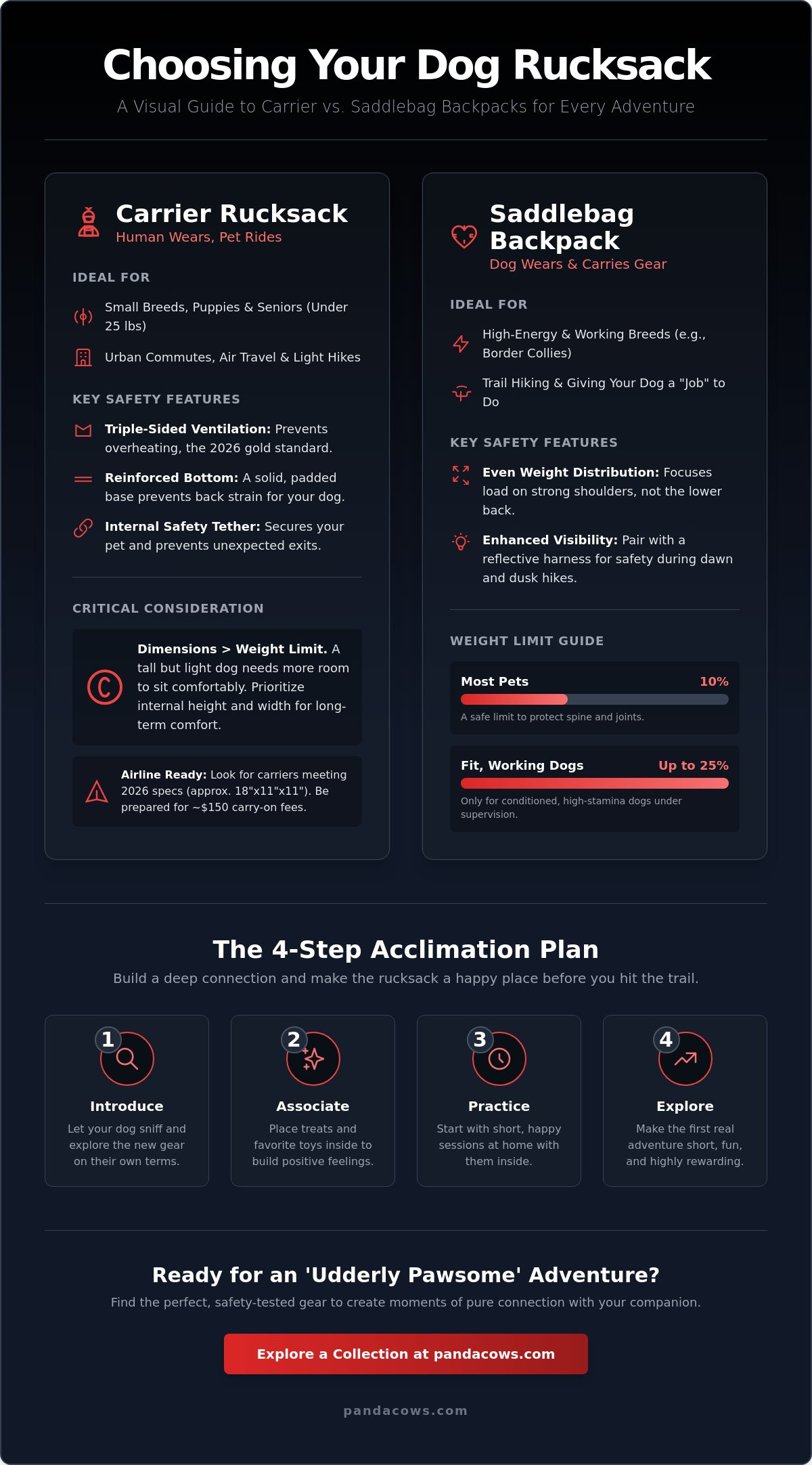
Carrier rucksacks are designed for humans to wear while their furry friend relaxes inside. These are perfect for small breeds, senior dogs with joint issues, or puppies who haven't yet built up their stamina. Modern designs, often classified as backpack pet carriers, prioritize a mix of safety and cozy comfort. From daily city commutes to scenic mountain summits, these bags ensure your companion never misses out on the fun just because their legs are tired. When you are planning a trip through the clouds, it's vital to choose airline approved dog carriers to meet the strict 2026 size regulations. Most major airlines, such as United and Delta, typically require dimensions around 18" x 11" x 11" for in-cabin travel.
- Triple-Sided Mesh: This is the current 2026 gold standard for ventilation and cooling.
- Internal Safety Tethers: These prevent unexpected exits during transitions or busy commutes.
- Reinforced Bottoms: A solid, padded base prevents the "slump" that can cause canine back strain.
The Saddlebag Backpack: For the Working Dog
Saddlebags are the packs that dogs wear themselves. These are ideal for high-energy working breeds who thrive when they have a "job" to do on the trail. While an exceptionally fit working dog can carry up to 25% of their body weight, most pets should stick to a 10% limit to protect their spine and joints. These packs focus on even weight distribution across the shoulders rather than the lower back. To keep your companion safe during dusk or dawn hikes, we recommend pairing their gear with a reflective dog harness for maximum visibility. This ensures that your bold explorer is seen by other hikers and vehicles alike, allowing you to focus on the happiness of the hike.
Carrier vs. Saddlebag: Which Rucksack Fits Your Adventure?
Choosing the right dog rucksack backpack involves more than just picking a color that matches your pup's fur. It requires a thoughtful framework based on your companion's age, physical health, and the specific terrain you plan to conquer. While a young Border Collie might thrive with the mental challenge of a saddlebag, a senior Pug will find pure joy in the breezy comfort of a carrier. Your decision directly impacts their well-being, turning a simple walk into a moment of pure connection. To ensure every trip is "udderly pawsome," you must match the gear to the mission.
There is a persistent myth that weight limits are the only metric that matters for carrier rucksacks. In reality, dimensions are far more critical for canine comfort. A 20 lb dog with long legs might be physically "under the limit" but still feel cramped and anxious in a bag designed for a shorter breed. Always prioritize the internal height and width over the poundage. This ensures your pet can sit naturally and shift positions, which is essential for keeping them calm during longer commutes or hikes. For those seeking the highest standards of safety, exploring premium travel gear can provide the peace of mind you deserve.
Climate and human ergonomics also play a massive role in your choice. In urban settings, asphalt can reach temperatures 40 degrees higher than the air, making elevated ventilation a non-negotiable safety feature. On the trail, the challenge shifts to your own body. If you are carrying your pet for more than 30 minutes, a padded hip belt is essential. This technical feature transfers the load from your delicate shoulders to your stronger pelvic region, preventing the back pain that often cuts adventures short.
When to Choose a Carrier Rucksack
Urban environments are where the carrier style truly shines. Navigating crowded subways or entering shops often requires paws to stay off the floor for safety and hygiene. Carriers are also a lifeline for senior dogs who still crave the enrichment of the outdoors but can no longer manage the joint strain of a three-mile loop. You can find detailed reviews of the best pet carrier backpacks of 2026 to see which models offer the best orthopedic support for older companions.
When to Choose a Saddlebag (Dog-Worn Pack)
Saddlebags are the ultimate tool for backcountry camping and high-energy training. Giving a dog a "job" to carry their own portable pet water bottle and snacks can significantly improve their focus and help burn off restless energy. Before you head out, perform a safety check to ensure the weight sits over the shoulders and doesn't interfere with their natural gait. This setup allows your bold explorer to feel like a true partner in every discovery.
The Canine Comfort Core: Safety Features to Look For
A premium dog rucksack backpack is more than just a container; it's a mobile sanctuary that must protect your pet’s physical health while you explore the world together. While many brands focus on how the bag looks on your back, the real magic happens in the internal architecture. A poorly designed bag leads to the "slump," a dangerous posture where the base sags and forces the dog’s spine into an unnatural arch. By 2026, safety standards have shifted to prioritize rigid, reinforced bottoms that maintain their shape even under the weight of a 25 lb companion. This structural integrity ensures that your furry friend stays level, calm, and comfortable throughout the journey.
Ventilation is another non-negotiable pillar of pet safety. Modern travel gear now utilizes triple-sided mesh as the industry standard to prevent heat exhaustion, especially in humid urban environments. This high-airflow design allows for a consistent cross-breeze, keeping the internal temperature regulated. Inside this breezy environment, the safety tether acts as your primary defense against "paws-asters." This internal clip attaches to your dog’s harness, ensuring they stay securely inside the bag even if you need to bend over or navigate a sudden obstacle. These features provide the peace of mind you need to focus on the joy of the trail rather than worrying about a potential escape.
We don't just care about the passenger; we care about the pilot, too. Distributing the "fur-weight" is essential for long-distance comfort. Look for rucksacks that feature wide, padded shoulder straps and a sternum clip. These technical elements work together to shift the load away from your neck and across your stronger upper back muscles. This ergonomic focus transforms a heavy chore into an effortless stroll, allowing you to strengthen the bond with your pet without ending the day in pain.
Protecting the Dog's Spine and Hips
The "Sit-and-Support" rule is the gold standard for canine ergonomics. Your dog should be able to sit in a natural, upright position without their hips shifting or their spine curving. Much like a high-quality orthopedic dog bed, the interior base should be soft enough for comfort but firm enough to prevent sinking. You should generally avoid "legs-out" designs for long durations, as these can put undue pressure on the hip joints and restrict circulation, which is a major concern for breeds prone to dysplasia.
Material Science: Durability Meets Comfort
Modern fabrics have revolutionized how we maintain our gear. The 2026 standard for a dog rucksack backpack includes water-resistant shells paired with 100% waterproof bottoms to handle muddy trail landings. Claw-proof mesh is another essential upgrade, utilizing reinforced polymer weaves that resist snagging and tearing. For the "whimsical expert" who loves a sunset hike, reflective piping is a vital safety marker that ensures you and your companion remain visible to others long after the sun goes down.
The 4-Step Acclimation Plan: Making the Rucksack a Happy Place
Introducing your companion to a dog rucksack backpack should never feel like a chore; it is a vital bonding exercise that builds a foundation of trust. If you simply scoop your pet up and head for a mountain, you risk creating a negative association that is hard to break. Instead, we recommend a gradual approach that turns the gear into a source of pure joy. By following a structured plan, you ensure that your explorer feels secure and confident before you ever step foot outside. Our goal is to reach that 30 to 45 minute continuous carry limit safely, ensuring every moment is "udderly pawsome" for both of you.
- Phase 1: The Floor Introduction. Place the bag in a common area and leave it open. Scatter high-value treats around and inside the base. This allows your pet to explore the new scent and texture at their own pace without any pressure.
- Phase 2: The Stationary Sit. Once they are comfortable stepping inside, practice the internal tethering. Secure the safety clip to their harness and close the zippers for 60 seconds while remaining on the ground. Reward them immediately to reinforce that being enclosed leads to "pawsome" snacks.
- Phase 3: The Lift-Off. Gently lift the bag and walk around your living room for exactly five minutes. The movement feels different than walking on solid ground, so keep your pace steady and offer verbal praise to maintain a sense of peace of mind.
- Phase 4: The Micro-Adventure. Take a short trip to a local park or a quiet street. This exposes them to outdoor sounds and smells while they are in their safe "mobile den" before you commit to a full-day hiking expedition.
Overcoming Anxiety and Resistance
Every dog communicates through subtle body language, and a "whimsical expert" knows how to read the signs. If you see frequent lip licking, yawning, or the "whale eye" where the whites of their eyes show, it is time to slow down. Resistance is usually a sign of confusion rather than stubbornness. By using high-value rewards like small bits of chicken or cheese, you ensure rucksack time becomes the highlight of their day. These positive reinforcement techniques are remarkably similar to cat training methods that focus on patience and play to strengthen the bond between pet and parent.
Temperature Management During Training
Safety extends beyond psychological comfort to physical well-being. While your pet is inside the bag, monitor their breathing and gum color closely. Healthy gums should be a vibrant pink; if they appear pale or deep red, your dog may be overheating or stressed. Always utilize the "Two-Finger Rule" for the internal tether, ensuring there is enough slack for them to shift positions but not enough to leap out. Even during short 15 minute training sessions, provide frequent hydration breaks to keep them refreshed. To start your journey with the right equipment, shop our premium pet carrier backpacks designed for maximum airflow and comfort.
Maintaining Your Gear: Keeping the Rucksack 'Udderly Pawsome'
To keep your dog rucksack backpack in peak condition, you need a consistent maintenance routine that prioritizes both hygiene and safety. From removing stubborn fur to ensuring the safety tethers remain strong, caring for your gear is an act of love for your companion. By 2026, many high-tech fabrics require specific care to maintain their breathable and water-resistant properties. Neglecting these checks can lead to equipment failure at the worst possible moment. We want every tail to wag with excitement, so prioritize these simple steps to ensure your gear remains reliable and ready for every discovery.
Deep Cleaning and Odour Control
Odour control is essential for your pet's comfort, as their sense of smell is significantly more sensitive than ours. Most premium rucksacks feature machine washable liners that you can easily unzip and refresh. For the outer shell, spot-cleaning with a damp cloth and a mild, pet-safe detergent is the best way to remove trail mud without damaging the water-resistant coating. Avoid harsh chemicals or bleach; these can irritate your dog's skin and respiratory system during long carries. Air-drying is the only safe method for drying your gear. High heat from a tumble dryer can warp the internal structural panels and melt the delicate mesh windows, which compromises the bag's integrity and safety.
Before every adventure, perform a 60-second hardware audit to ensure everything is secure. Inspect every buckle for hairline cracks and test the zippers to make sure they glide smoothly without snagging. Check the internal safety tether for any signs of fraying. A single weak point in the stitching can turn a secure journey into a safety risk. Once the hardware is cleared, store your bag in a cool, dry place. Avoid damp garages or basements where mould can settle into the foam padding, as this can degrade the materials and cause health issues for your pet.
When you are ready to head out, use this final checklist to ensure you have all the essentials packed inside your dog rucksack backpack for a successful trip:
- A portable water bottle and a collapsible bowl for hydration.
- High-value training treats to reinforce positive associations.
- Biodegradable waste bags for responsible exploring.
- A compact pet first-aid kit for minor trail scrapes.
- A small cooling mat or a calming blanket, depending on the season.
Ready for the Next Adventure?
A premium rucksack is more than a purchase; it's a long-term investment in your dog's lifestyle and your unique bond. Choosing high-quality gear ensures that your pet is always included in your most meaningful moments, from mountain summits to quiet city strolls. This inclusive travel fosters a deep connection and delivers the pure joy that every pet parent seeks. When you prioritize safety and comfort, you gain the peace of mind to focus on the memories you're building together. Shop the Panda Cows Carrier Collection for your next pawsome trip!
Ready for a Lifetime of Shared Discoveries?
Choosing the right dog rucksack backpack is the first step toward a world where your pet is a partner in every adventure. We've explored the technical differences between carrier and saddlebag styles, highlighted the 2026 standards for triple-sided ventilation, and mapped out a four-step plan to ensure your companion feels secure. By prioritizing spinal ergonomics and consistent gear maintenance, you're doing more than just buying a bag. You're investing in your pet's holistic well-being and the strength of your unique bond.
At Panda Cows, our travel gear is crafted for pure joy and safety. We use premium materials designed for active adventures and provide peace of mind with secure internal tethers. Don't let your furry friend stay behind on your next mountain hike or city stroll. It's time to give them the "best life" they deserve with equipment that's both functional and whimsical. Discover our Udderly Pawsome Pet Carrier Backpacks and start planning your next trip today. Here's to many happy miles and wagging tails on the road ahead!
Frequently Asked Questions
Is it safe for a dog to be in a rucksack for long periods?
It is safest to limit your dog's time in a carrier to sessions of 30 or 45 minutes. Continuous carry beyond this timeframe can lead to joint stiffness or restricted circulation. Always give your pet a chance to stretch their legs and enjoy a hydration break between sessions to ensure their journey remains "udderly pawsome" and comfortable.
What size rucksack does my dog need?
Your dog needs a bag that allows them to sit, turn around, and lie down naturally. While many carriers support pets up to 25 lbs, internal dimensions are far more important than weight limits. Measure your pet's height and length to ensure they fit within a standard 18" x 11" x 11" space for the best experience.
Can my dog jump out of a carrier backpack?
No, your dog cannot jump out if you use the internal safety tether correctly. This essential clip attaches directly to your pet's harness, providing peace of mind during busy commutes or sudden movements. It is a critical safety feature that prevents "paws-asters" while keeping your companion secure and cozy inside their mobile sanctuary.
Are dog rucksacks airline approved for cabin travel?
Many dog rucksack backpack models are airline approved, but you must check with your specific carrier before booking. As of May 2026, American Airlines charges $150 each way for in-cabin pets, while United Airlines fees start at $95. Most airlines require a soft-sided bag that fits within 18" x 11" x 11" dimensions to stow under the seat.
How much weight can a dog carry in a saddlebag rucksack?
Most dogs should carry no more than 10% of their total body weight to protect their spine. Well-conditioned hiking dogs can carry up to 15% or 18% of their weight. It's vital that dogs don't wear loaded packs until their growth plates close, which typically happens between 12 and 18 months of age, depending on the breed.
What should I do if my dog hates being in the backpack?
If your dog shows resistance, return to the "Floor Introduction" phase of training with high-value treats. Never force your pet inside the bag, as this can damage your bond of trust. Use short, 60-second sessions to build a positive association until they feel calm and view the rucksack as a happy, rewarding place to be.
Do dog rucksacks cause back pain for the human carrier?
A premium dog rucksack backpack won't cause back pain if it includes ergonomic features like padded hip belts and sternum clips. These technical elements distribute the weight away from your shoulders and across your stronger pelvic region. This design ensures you can carry your furry friend for longer distances without experiencing the strain that often cuts adventures short.
Can I use a regular human backpack to carry my dog?
You shouldn't use a regular human backpack because it lacks the ventilation and structural support your pet requires. Standard bags don't have reinforced, solid bases to prevent spinal "slumping" or claw-proof mesh for safety. Specialized pet rucksacks are crafted with care to provide the airflow and stability needed for a safe, joyful trip together.