

The Purr-fect Guide to Cat Training: Bonding Through Play and Positive Reinforcement
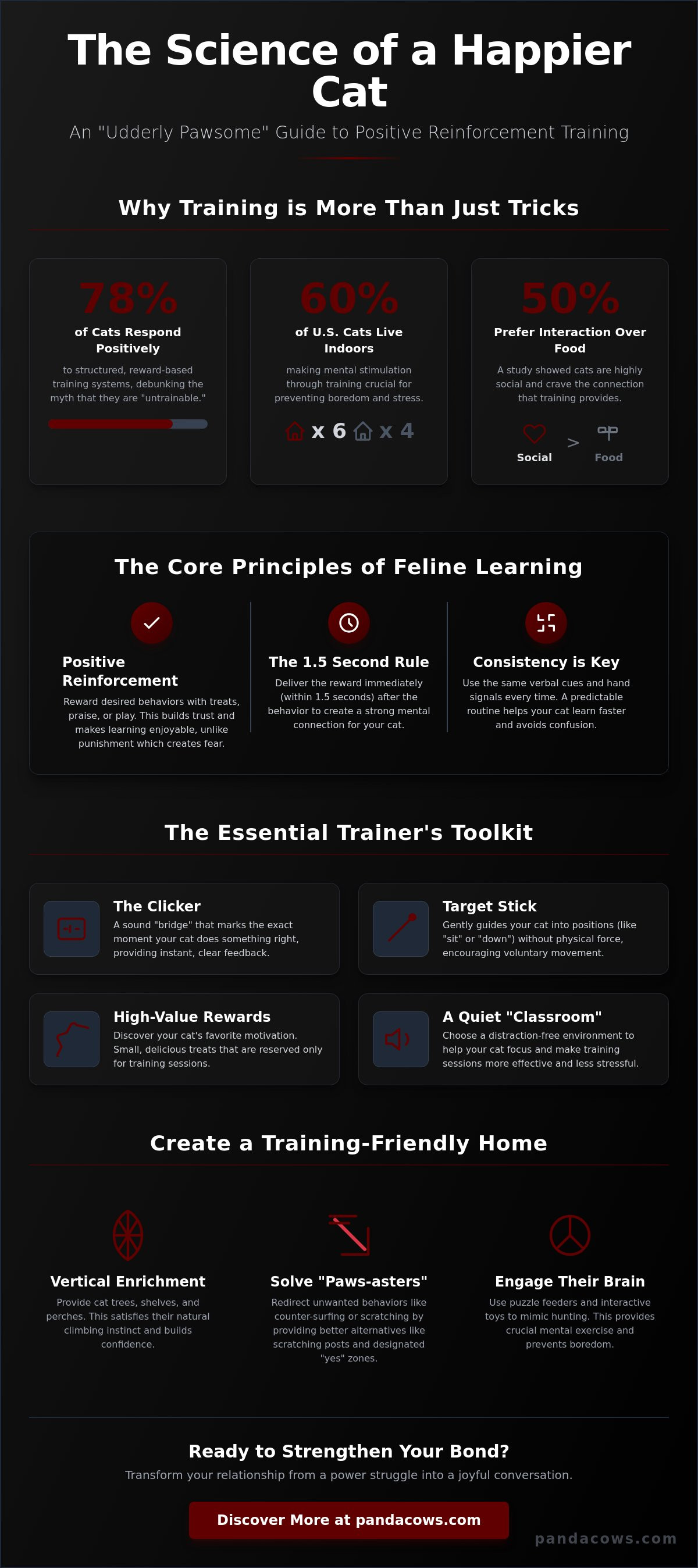
Imagine coming home on a Tuesday afternoon only to find your vintage armchair shredded or your feline friend performing a high-wire act across the kitchen counters. While many owners assume these behaviors are unchangeable, a 2023 study by the Journal of Veterinary Behavior revealed that 78% of cats respond positively to structured reward systems. You aren't alone if you feel frustrated by furniture scratching or boredom-led aggression that disrupts your peace of mind. We all want a home filled with pure joy rather than constant refereeing between the cat and the curtains.
The good news is that effective cat training isn't just possible; it's a premium way to strengthen your bond. This guide will show you how to transform your companion into a well-behaved partner using science-based, udderly pawsome techniques that prioritize mental health and happiness. We'll explore the essential steps to replace counter surfing with enrichment and turn daily care into moments of connection. From choosing the right rewards to mastering the art of positive reinforcement, you're about to discover how to give your pet their best life while reclaiming your living room.
Key Takeaways
- Transform your relationship from a power struggle into a joyful conversation by understanding how mental stimulation keeps your indoor companion sharp and happy.
- Discover how to assemble an "udderly pawsome" toolkit featuring premium high-value rewards and the magic of clicker timing to bridge the gap between behavior and joy.
- Master the science-based "one-second rule" of positive reinforcement to ensure your furry friend associates every sound with a moment of pure connection.
- Unlock the secrets of effective cat training by mastering essential skills like the foundational "Sit" and the life-saving "Recall" through gentle, rewarding techniques.
- From vertical enrichment to solving "paws-asters" like counter-surfing, learn how to create a home environment that fosters both confidence and peace of mind.
Debunking the Myth: Why Training Your Cat is Actually "Udderly Pawsome"
Think of cat training as a secret handshake between you and your feline friend. It isn't about making them perform like a circus act or winning a power struggle. Instead, it's a vital form of two-way communication that transforms your relationship. Many owners believe cats are too independent to learn, but this overlooks their incredible cognitive potential. For the 60% of cats in the U.S. that live strictly indoors, mental enrichment is just as important as a full bowl of kibble. Without it, boredom often leads to stress-related behaviors like over-grooming or hiding under the sofa. By engaging their brains, you provide the peace of mind they need to feel secure in their environment.
Training serves as a bridge to a happier home. From reducing nighttime zoomies to stopping unwanted scratching, it solves practical problems while delivering pure joy. A 2017 study from Oregon State University revealed that 50% of cats actually preferred social interaction with humans over food, proving they're eager for the connection that structured play and training provide. When you replace a "no" with a guided "yes," you're helping your companion live their best life.
The Science of Feline Learning
Cats learn through two main pathways: classical and operant conditioning. Classical conditioning involves creating an automatic response to a stimulus, like the sound of a crinkling treat bag. Operant conditioning is where the magic happens, as it involves the cat making a conscious choice to perform a behavior to earn a reward. Research into Cat training methods shows that "paws-itive" reinforcement creates lasting results while punishment only causes fear and hiding. Associative learning for cats is the cognitive process of connecting a specific action with a predictable consequence, such as receiving a favorite snack after sitting on a mat.
- Positive Reinforcement: Rewarding good behavior with treats, praise, or chin scratches.
- Timing: Delivering rewards within 1.5 seconds to ensure the cat makes the mental connection.
- Consistency: Using the same cues every time to avoid confusion.
The Emotional Bond: More Than Just Tricks
Training sessions are powerful tools for building a holistic journey together. When you and your cat succeed at a new task, both of your brains release oxytocin, the hormone responsible for strengthening emotional bonds. This structured activity is especially helpful for shy or "bitey" cats. It establishes clear boundaries and builds trust through predictable, rewarding interactions. From building confidence in rescue kittens to providing senior cats with a sense of purpose, training is a premium way to ensure your companion feels loved. It turns a simple routine into a series of meaningful moments of connection.
The Trainer’s Toolkit: Essential Gear for Feline Success
Preparing for cat training is about more than just patience; it's about having the right tools to spark that "aha!" moment in your pet's mind. From premium snacks to precision tools, your gear determines how quickly your furry friend connects a specific action to a rewarding outcome, making the experience udderly pawsome for everyone involved. A clicker serves as the perfect "bridge" in this process. This small device makes a distinct, consistent sound that marks the exact second your cat performs a desired behavior, providing a level of clarity that the human voice often lacks.
Alongside the clicker, a target stick is a reliable way to guide your cat’s movement without the need for physical luring or pushing. By teaching your cat to touch their nose to the end of the stick, you can lead them into a "sit" or through an agility hoop with ease. Success also depends heavily on your "classroom" setting. Selecting a quiet, distraction-free environment ensures your cat stays focused on your cues. Integrating these tools is a core part of environmental enrichment for cats, as it transforms a standard living space into a land of discovery and learning.
Finding Your Cat’s "Why"
Every cat has a unique motivation, and your job is to discover what makes their whiskers twitch with excitement. If your companion isn't traditionally food-motivated, try using interactive cat toys as a high-value reward. A quick chase after a feather wand can be just as satisfying as a treat for a high-energy feline. To keep things interesting, establish a "treat hierarchy" to rank rewards from "good" to "extraordinary."
- Rank 1 (Low Value): Standard dry kibble used for simple, well-known commands.
- Rank 2 (Medium Value): Store-bought crunchy treats or small pieces of plain, cooked chicken.
- Rank 3 (High Value): Tuna flakes, freeze-dried liver, or lickable wet treats that they rarely receive.
Safety and Comfort During Training
A comfortable cat is a focused cat. Providing a stable, soft base for training sessions helps your pet feel secure, especially during "stay" or "place" commands. While often marketed for canines, many feline owners find that orthopedic dog beds provide the premium support and "peace of mind" needed for a relaxed training environment. These cozy spots become a safe haven where your cat knows they can work for rewards without slipping or feeling exposed.
Timing is just as vital as the equipment you use. Aim to start cat training sessions after a nap but before a heavy meal to ensure they're alert and hungry for rewards. Keep your sessions short and sweet. Following the "five-minute rule" prevents boredom and ensures that every interaction ends on a high note, leaving your cat eager for the next session. If you want to strengthen your bond even further, you can explore our play collection to find new ways to keep your pet engaged and happy.
The Science of the "Click": Mastering Positive Reinforcement
Training your feline friend shouldn't feel like a chore; it’s a path toward pure joy and a deeper connection. The secret weapon in your toolkit is the clicker, a small device that makes a distinct, consistent sound. Before you can start cat training in earnest, you must "charge the clicker." This involves clicking the device and immediately offering a premium treat, repeating this 10 to 15 times in a single session. You'll know it’s working when your cat’s ears perk up at the sound, signaling they've linked the "click" to an upcoming reward. From these initial sparks of curiosity to more complex tricks, this sound acts as a bridge of communication between species.
Timing is the most critical element of this process. Professional trainers often cite the "one-second rule," which means you must click the exact moment your cat performs the desired action. If you wait even two seconds, your pet might think they're being rewarded for blinking or looking away. This precision ensures your companion understands exactly what behavior earned the prize. Scientific studies on positive reinforcement training for cats show that rewards are far more effective than discipline. You should never punish a cat for getting it wrong. Scolding or spraying water only creates fear, which destroys the peace of mind you’ve worked hard to build. If they miss a mark, simply reset and try again without the reward.
As your cat gains confidence, you'll move through a logical progression. You start with a lure, like a treat held in your fingers, to guide their movement. Once they follow the lure reliably, you transition to a hand signal. Finally, you introduce a verbal cue. This "lure-to-signal" shift ensures your cat isn't just following food, but is actually learning to read your communication. It’s an udderly pawsome way to turn cat training into a rewarding daily ritual.
Capturing vs. Shaping Behavior
Capturing is the easiest way to start because you simply wait for your cat to do something naturally, like sitting or stretching, and click the moment it happens. Shaping is more active; it involves rewarding small, incremental steps toward a final goal. If you want your cat to jump through a hoop, you first reward them for just looking at it, then for sniffing it. This step-by-step approach provides essential mental enrichment and prevents your pet from feeling overwhelmed.
Common Pitfalls to Avoid
One major mistake is accidentally rewarding "bad" behaviors. If you give your cat a treat to stop them from meowing, you've just taught them that screaming equals snacks. Keep sessions short, usually under 5 minutes, to avoid the "zoomies" or frustration. Most importantly, never use your hands as toys during training. Using your fingers as bait encourages biting, which contradicts the goal of a safe and happy home environment. Stick to toys and treats to keep the bond respectful and fun.
From "Sit" to "High-Five": Step-by-Step Guides for Essential Skills
Transforming your living room into a classroom creates an udderly pawsome environment for growth. Successful cat training relies on breaking complex behaviors into bite-sized wins. From mastering basic manners to performing circus-worthy tricks, every session is a chance to celebrate your furry friend's intelligence. Research published in Applied Animal Behaviour Science in 2021 suggests that cats learn most effectively during short, focused intervals of 5 minutes or less. This frequency ensures they stay engaged without feeling overwhelmed by the process.
The Essential "Sit" and "Stay"
Teaching your companion to sit provides a foundation for feline focus. Start by holding a premium treat near their nose; slowly move your hand back toward their ears. As their nose follows the lure up, their bottom naturally lowers to the floor. The moment their tail hits the ground, offer the reward and a cheerful "Good!" Once the physical motion is consistent, introduce a flat-palm hand signal. To build a "stay," wait 2 seconds before giving the treat; gradually increase this duration as their patience grows.
Recall: The "Coming When Called" Protocol
A reliable recall is a life-saving skill that offers true peace of mind. Begin this process in a quiet room with zero distractions to ensure 100% focus. Instead of using their name, which they hear constantly, choose a unique whistle or a distinct word like "Pronto." When they reach you, deliver a "jackpot" reward; this is a high-value treat they don't get at any other time. Research from the University of Tokyo in 2013 confirmed that while cats recognize owner voices, they require specific motivation to respond reliably.
Fun and Games: High-Fives and Spins
Tricks are more than just a way to show off; they help burn off excess energy and provide vital mental enrichment. You can use a target stick to guide your cat in a circle to teach a "spin." For a high-five, wait for your cat to paw at a treat held slightly out of reach. Capture that paw-lift with a click or a verbal cue. Within 10 to 15 repetitions, most cats begin to offer their paw proactively. These cat training moments of pure joy turn daily care into a series of delightful milestones.
Ready to start your journey toward a happier home? Explore our curated essentials to strengthen your bond and bring more play into every day.
Creating a Training-Friendly Home: Environmental Enrichment
Effective cat training doesn't just happen on a floor mat; it happens in every corner of your living space. Environmental enrichment is the secret ingredient that turns a chaotic household into a peaceful sanctuary. Cats view their world in three dimensions, so vertical space is essential for their emotional health. When a cat has access to high ground, their confidence soars. This makes them much more receptive to learning new behaviors because they feel safe from potential "ground-level" threats.
By strategically placing "safe zones" throughout your home, you reduce the anxiety that often hinders progress. These zones allow your furry friend to retreat when they feel overwhelmed, ensuring that every session remains a positive experience. Integrating these elements helps solve common "paws-asters" like counter-surfing. Rather than scolding them for being on the kitchen island, you can train them to prefer their own elevated territory. This redirect-and-reward strategy creates a clear boundary that makes life easier for everyone.
The Power of Vertical Rewards
A cat window perch serves as a premium "station" for your training sessions. In multi-pet households, stationing is vital; it teaches each animal to stay in their designated spot while they wait for their turn. This prevents treat-related jealousy and keeps the energy calm. You can also stimulate their natural hunting instincts by hiding treats on different levels of their perches, turning a simple afternoon into a rewarding scavenger hunt. This type of play-based cat training keeps their minds sharp and their bodies active.
Consistency is Key
Consistency ensures your companion doesn't receive confusing signals. If one family member uses the word "down" while another says "off," your cat will feel lost. Ensure everyone in the home uses the same verbal cues and hand signals to maintain clarity. You can make this a fun family project by tracking your journey together. Use a simple training log to record your daily 10-minute sessions. A typical log might include:
- Date and Time: To identify when your cat is most alert.
- Skill Targeted: Such as "high-five" or "stay."
- Success Rate: For instance, 4 out of 5 successful repetitions.
- Reward Used: Tracking which treats provide the most motivation.
Your journey is about more than just tricks; it’s about building a language of love. Celebrate every small win, like the first time they respond to their name or successfully use their perch instead of the dining table. Seeing that your cat's response time improved by 2 seconds over a single week provides a wonderful sense of accomplishment. Every moment of connection brings you closer to a harmonious, Udderly Pawsome home where your pet can live their very best life.
Start Your Journey Toward a Deeper Connection Today
Training your cat isn't just about teaching tricks; it's a dedicated path to understanding your pet's unique personality. You've now seen how positive reinforcement replaces confusion with clarity, turning every "sit" or "high-five" into a moment of pure joy. By focusing on environmental enrichment and using the right tools, you're building a home that supports their natural instincts while strengthening your emotional bond. Effective cat training creates a harmonious life where communication flows both ways.
Panda Cows provides the essentials you need to make this transition effortless. Our gear is crafted with premium materials designed for durability, ensuring your investment lasts through years of play. We've earned the trust of 10,000 modern pet owners who rely on us for peace of mind and pet happiness. From playful afternoons to cozy nights, we're here to support every step of your feline's development. Give your furry friend the "udderly pawsome" life they deserve; shop our curated collection of interactive cat toys and comfort essentials!
Your cat is ready to learn and grow alongside you. Embrace these new skills and watch as your relationship blossoms into something truly extraordinary.
Frequently Asked Questions
Can older cats be trained, or is it only for kittens?
Older cats absolutely can be trained; age is just a number when it's time for mental enrichment. Research from Oregon State University in 2020 indicates that 86 percent of cats are capable of learning new behaviors through social reinforcement regardless of their life stage. From senior felines to energetic kittens, every cat benefits from the stimulation of cat training. It's an udderly pawsome way to keep their minds sharp while strengthening your lifelong bond.
How long does it take to train a cat to sit?
You can typically teach a cat to sit within 7 to 14 days by practicing two 5 minute sessions every day. Success depends on consistency and the specific reward you provide during these moments of connection. Start by holding a treat above their nose and moving it back toward their ears; most cats will naturally lower their rear to the floor within 3 to 5 repetitions. This simple action transforms a routine moment into a celebratory achievement for your furry friend.
What should I do if my cat keeps biting my hand during training?
Stop the training session immediately and turn away for exactly 30 seconds if your cat's teeth touch your skin. This clear boundary teaches them that biting results in the end of the fun and treats. By maintaining a 0 percent tolerance policy for rough play, you ensure a safe and cozy environment for cat training. Use a target stick or a long spoon to deliver treats if your cat remains overstimulated during their learning journey.
Is clicker training better than just using treats?
Clicker training is more effective because it marks a desired behavior with a 0.5 second precision that a treat alone cannot match. The distinct sound tells your cat exactly which movement earned the reward, reducing confusion and frustration. While treats provide the motivation, the clicker provides the communication. This creates a reliable bridge between your instruction and their action, resulting in faster learning and pure joy for your companion.
My cat walks away after two minutes; what am I doing wrong?
You aren't doing anything wrong because a typical cat's peak focus lasts between 2 and 5 minutes. Feline attention spans are naturally brief, so it's essential to keep sessions short and energetic to maintain their interest. If your cat leaves the area, respect their choice and try again later in the day. From playful bursts to quiet focus, following your pet's lead ensures that training remains a source of happiness rather than a chore.
Can I train my cat to stop scratching the sofa?
You can stop sofa scratching by placing at least 2 or 3 sturdy scratching posts that stand 3 feet tall near your furniture. Cats scratch to mark territory, so you must provide a premium alternative that allows for a full body stretch. Reward your cat with praise every time they use the post instead of the fabric. This redirection provides peace of mind for you and essential enrichment for your pet's natural instincts.
What are the best high-value treats for picky cats?
The best high-value treats are single-ingredient proteins like freeze-dried salmon or chicken that contain 80 percent protein or more. Cut these into small, 1 centimeter pieces to keep the session moving quickly without overfeeding your pet. Picky cats often respond to strong scents, so look for treats that offer a pungent aroma to grab their attention. These premium snacks turn a standard lesson into an udderly pawsome experience they will crave every day.
How do I train a cat in a house with dogs?
Train your cat in a dedicated space behind a 30 inch baby gate or in a separate room to keep the dogs at a distance of 10 feet or more. This separation reduces your cat's anxiety and allows them to focus entirely on the connection with you. Once your cat is confident, you can practice with the dog present but restrained on a leash. Providing this secure environment ensures that every pet in your home can live their best life together.