

The Udderly Pawsome Guide to Small Animal Hay Feeders: Keeping Your Furry Friends Healthy and Happy
You spent good money on premium Timothy hay, but by morning, your rabbit has turned it into a soggy bathroom rug. It's a common struggle for the 95 million U.S. households that owned pets in 2025. When your companion pees on their food, it isn't just wasteful; it's a recipe for respiratory issues and a messy home. Choosing the right small animal hay feeder is the secret to turning that "hay-nado" into an udderly pawsome sanctuary for your furry friend.
We agree that you deserve peace of mind and a habitat that stays fresh without constant scrubbing. This guide will show you how to pick the perfect feeder to slash hay waste, prevent dust-induced sneezing, and keep your pet’s appetite consistent. From $2.75 basic wire racks to premium $83.30 recycled wood stations, we will explore the best options to ensure your pet’s home meets the highest standards of health and happiness. We will also dive into how to keep your feeding area sanitized according to USDA standards to ensure your companion lives their very best life.
Key Takeaways
- Understand why elevated feeding is vital for supporting your pet's natural foraging instincts and protecting their respiratory health.
- Compare the latest 2026 designs to choose a small animal hay feeder that balances durability with the specific safety needs of your companion.
- Master the "Reach Factor" to ensure your feeder is positioned at the ideal height for the unique physical abilities of rabbits, guinea pigs, or chinchillas.
- Implement the "Daily Flush" rotation technique to keep forage enticing while significantly reducing hay waste and cage cleaning time.
- Learn how premium feeding hardware creates a more organized habitat that fosters pure joy and a stronger bond with your furry friend.
Beyond the Mess: Why a Quality Small Animal Hay Feeder is Essential for Health
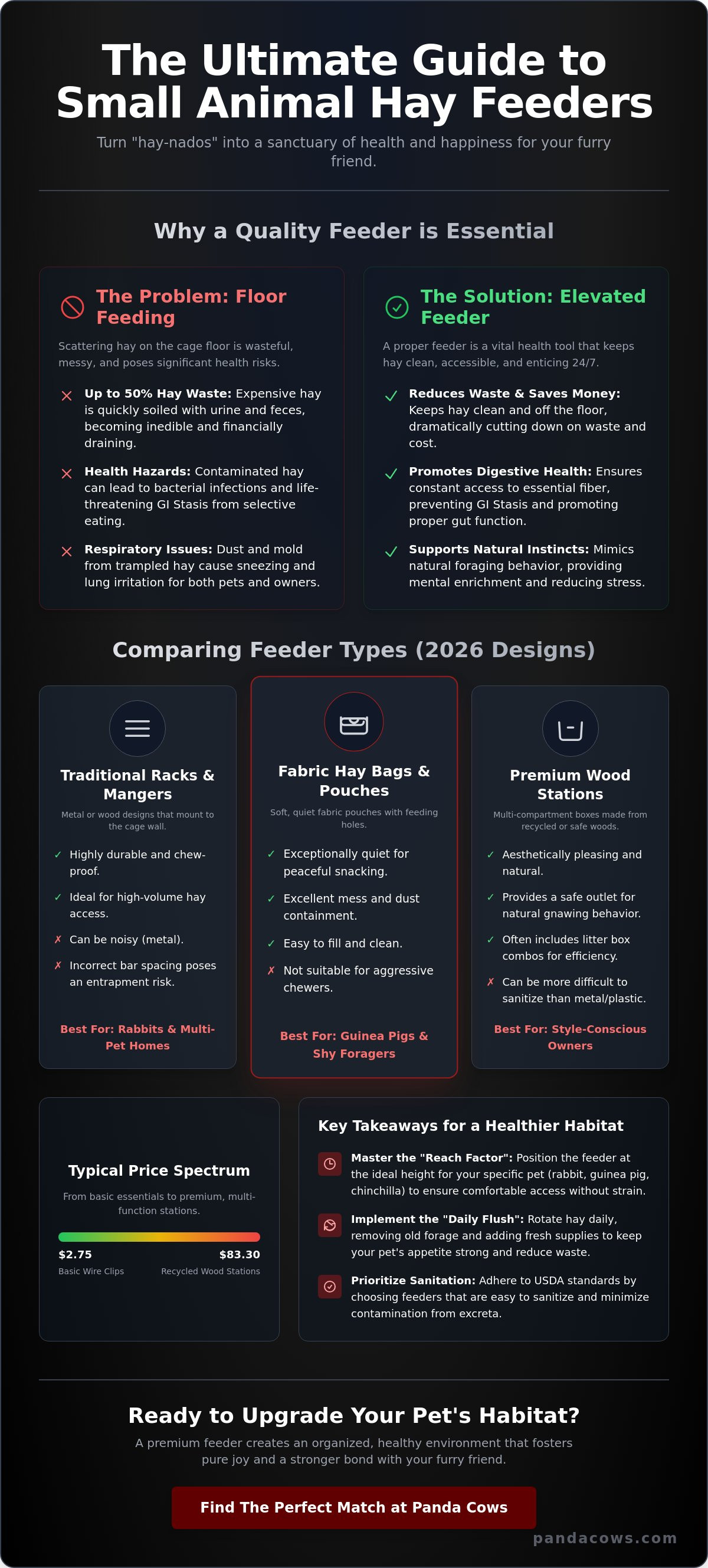
A quality small animal hay feeder serves as more than just a container; it's a vital health management tool for your companion. For small herbivores like rabbits, guinea pigs, and chinchillas, hay isn't just a dietary supplement. It's an essential requirement for survival. These animals need constant access to fiber to prevent Gastrointestinal (GI) Stasis, a dangerous condition where the digestive system slows or stops entirely. When you provide an elevated source of forage, you aren't just tidying up. You're ensuring that their primary food source remains clean, enticing, and available 24/7 to keep their systems moving.
The practice of rabbit husbandry and care, historically known as Cuniculture, emphasizes that sanitation is the bedrock of animal wellness. In a home setting, this means mimicking natural foraging instincts. In the wild, these animals don't eat off a soiled floor; they reach for fresh, upright grasses. An elevated feeder mimics this behavior, providing mental enrichment and strengthening the bond between you and your pet. It transforms a routine meal into a moment of pure joy and instinctual satisfaction.
The Problem with Floor Feeding
When hay is scattered on the floor, it becomes soiled with urine and feces within minutes. This isn't just a cleaning headache; it's a health hazard. The U.S. Department of Agriculture's Animal and Plant Health Inspection Service (APHIS) mandates in 9 CFR Part 3 that food receptacles must be located to minimize contamination by excreta. Beyond the risk of bacterial infections, floor feeding is financially draining. Owners often find that up to 50% of expensive Timothy hay is wasted when it's trampled into bedding. This "piling it up" method also encourages selective eating, where pets only pick out the tasty bits and leave the essential fiber behind, leading to nutritional gaps.
Respiratory Health and Dust Management
Small animals have incredibly sensitive respiratory systems. Dust and mold spores found in hay can lead to chronic sneezing and lung irritation for both pets and owners. A well-designed small animal hay feeder helps manage this by allowing dust to settle at the bottom of the tray rather than floating into the air every time your pet takes a bite. This setup provides peace of mind, knowing your pet is breathing easy. From preventing "dust-induced sneezing" to maintaining a pristine habitat, a dedicated feeder is a simple solution that delivers premium health benefits and holistic well-being for your furry friends.
Exploring the Types: From Hay Mangers to Hanging Pouch Feeders
Selecting the right small animal hay feeder in 2026 involves more than just picking a pretty color. It requires a thoughtful evaluation of your pet’s chewing habits, their physical size, and your own cleaning routine. Modern designs range from $2.75 basic wire clips to $83.30 multi-compartment recycled wood boxes. To find the perfect match, you should prioritize three main criteria: durability against sharp teeth, ease of sanitization to meet safety standards, and structural safety to prevent injury. Matching the material to your pet’s temperament ensures that their habitat remains a place of pure joy rather than a source of frustration.
Traditional Racks and Mangers
Metal wall-mounted racks are often the go-to for many owners because they are virtually chew-proof. However, wooden mangers offer a more natural aesthetic and provide a safe outlet for a rabbit's need to gnaw. When choosing a rack, pay close attention to bar spacing. A gap that is too wide can lead to "head entrapment," a serious safety risk for smaller breeds. Scientific guidelines on Rabbit housing and husbandry highlight that providing varied feeding heights and secure structures helps reduce stress in domestic environments. These traditional styles are ideal for multi-pet households where high-volume hay access is a daily necessity.
Hay Bags and Fabric Pouches
If your pet’s cage is located in a bedroom or quiet living space, fabric hay bags are an excellent "quiet" choice. Unlike clanging metal, these soft pouches make zero noise during midnight snacks. Most feature top-loading designs with reinforced portholes that allow for quick refills while keeping the mess contained. They are particularly well-suited for guinea pigs or shy foragers who feel safer eating from a "hidden" source. For those looking to upgrade their pet's environment, you can find a curated selection of premium accessories at Panda Cows that combine whimsical style with reliable function.
Combo Feeders: Hay and Pellet Stations
Integrated feeding stations are gaining popularity for their ability to streamline the morning routine. These combo units house both loose hay and a pellet bowl in one footprint, which helps establish a consistent feeding location. This organization reduces the footprint of "pet gear" in your home while keeping all food off the floor. For owners interested in high-tech solutions, our guide on automatic pet feeders explores how "Smart Feeders" are beginning to cross over into the small animal hay feeder market, offering portion control and peace of mind for busy schedules.
One Size Does Not Fit All: Choosing Feeders for Rabbits, Guinea Pigs, and Chinchillas
While many big-box retailers claim their hardware works for any pet, the biological needs of a ten-pound rabbit and a one-pound guinea pig are vastly different. Finding the right small animal hay feeder means considering the "Reach Factor." This is the specific height and angle at which your pet comfortably eats without straining their body. A chinchilla might enjoy a mid-air snack while perched on a ledge, but a guinea pig needs their forage close to the ground to avoid neck tension. Tailoring your choice to these physical abilities ensures your companion's mealtime is a moment of pure joy rather than a physical struggle.
Rabbit-Specific Feeding Needs
Rabbits are essentially grazing athletes with high metabolic demands. They require large-capacity mangers that hold enough hay to last through their most active twilight hours. One unique quirk of rabbit care is the "Litter Box Connection." Domestic rabbits often prefer to eat and use the bathroom simultaneously. By placing a small animal hay feeder directly above or inside the litter area, you encourage better litter habits and more consistent hay intake. Since rabbits often go through an intense chew-everything phase, especially during their first year, heavy-duty metal or thick kiln-dried wooden mangers are the most reliable choices for durability and owner peace of mind.
Guinea Pigs: The Low-Profile Foragers
Guinea pigs are ground-dwellers who lack the leaping ability of their rabbit cousins. They need feeders they can reach without stretching their necks or standing on their hind legs for long periods. A common issue for these piggies is the "hay poke." This happens when a stiff piece of Timothy hay irritates their large, sensitive eyes while they burrow into a pile. Using feeders with soft fabric openings or wider slats helps prevent these painful injuries. Because guinea pigs are highly social, choosing a wider feeder allows multiple companions to forage together. This reduces competition and fosters a happy, communal environment for your furry friends.
Chinchillas: The High-Altitude Snackers
Chinchillas are master jumpers who thrive in vertical environments. They often prefer high-altitude snacking, so mounting a feeder higher up on the cage wall encourages them to use their natural athletic abilities. However, safety is paramount for these sensitive creatures. Chinchillas have incredibly delicate paws and are aggressive chewers. You must strictly avoid plastic feeders; ingested plastic shards can be fatal for their sensitive GI tracts. Stick to stainless steel or safe woods like apple or pine. Additionally, because chinchillas are prone to respiratory issues, ensure their hay stays dry. In environments where humidity rises above 50%, a feeder with excellent airflow is essential to prevent mold growth and keep your pet healthy.
Reducing Waste and Mess: Practical Tips for Hay Management
Managing a small animal hay feeder effectively means moving beyond just stuffing it full. You should use the "Daily Flush" method to keep your pet engaged. Every morning, pull out the older, flattened strands and top them with fresh, crunchy stalks. This simple rotation keeps the scent strong and enticing, preventing your companion from losing interest in their essential fiber. To keep your habitat pristine, position the feeder so it hangs directly over a "drop zone" or a litter tray. This setup catches falling debris before it hits the bedding, saving you hours of cage scrubbing and reducing your monthly hay costs.
Even with the best setup, some hay will inevitably escape during an enthusiastic snack session. To protect your home, a waterproof pet mat acts as a safety net for your floors, catching stray strands and preventing moisture from seeping into your carpets. It's a practical solution that provides peace of mind while maintaining a cozy, organized space. By combining a reliable feeder with a smart floor barrier, you create an environment that's both healthy for your pet and easy for you to maintain.
The Foraging Mix Strategy
Variety is the spice of life for small herbivores. Mix different types of forage like Timothy, Orchard grass, and a pinch of Alfalfa to keep their palates excited. A well-designed small animal hay feeder prevents pets from "cherry-picking" only the soft flower heads, forcing them to work through the fibrous stalks that are essential for dental health. You can apply the same logic found in interactive cat toys; by making the hay slightly challenging to reach, you turn mealtime into a rewarding game of mental enrichment that strengthens the bond between you and your pet.
Maintenance and Hygiene
Hygiene isn't just about aesthetics; it's a requirement for animal wellness. The USDA’s Animal and Plant Health Inspection Service requires feeding receptacles to be sanitized at least once every 14 days. However, for a truly healthy home, we recommend a weekly deep-clean. Empty the feeder entirely to remove "hay dust" build-up, which can trigger respiratory irritation. Check the corners for any signs of mold, especially if the feeder is located near a water bottle or in a humid room. If you notice splintering wood or rusted metal, it’s time for an upgrade. Give them pure joy by choosing a premium, easy-to-clean feeder that keeps their health at the forefront.
Finding Your Pet’s Perfect Match: The Panda Cows Selection
After exploring the science of foraging and the art of mess management, it’s time to find an udderly pawsome solution that fits your home. We understand that pet care is not just a routine; it is a series of moments of connection. When you choose a small animal hay feeder from our curated selection, you aren't just buying hardware. You're investing in a tool that strengthens the bond between you and your companion. From daily maintenance to those quiet moments of connection, our products support every stage of your pet's journey toward living their best life.
Crafted with Care: The Panda Cows Standard
Every item in our catalog meets a high standard of durability and excellence. We prioritize non-toxic materials and pet-safe finishes because we believe your furry friends deserve the same quality as any other family member. Our designs focus on pet ergonomics, ensuring your rabbit or guinea pig can eat comfortably while maintaining the home aesthetics you love. This commitment to mindful eating mirrors our slow feeder dog bowl philosophy, where we prioritize digestion and health over convenience. Whether you need a heavy-duty metal rack for a determined chewer or a soft pouch for a shy forager, our collection is crafted with care to provide reliability and peace of mind.
Pure Joy in Every Bite
There is a unique emotional reward in seeing a tidy, happy pet habitat. A clean cage reflects the love you have for your companion, and the right feeder makes that cleanliness effortless. To ensure you find the perfect match for your home, we've compiled a final checklist for your first purchase:
- Material Safety: Does the material match your pet's chewing habits, such as avoiding plastic for chinchillas?
- Cleaning Access: Can you easily sanitize the feeder every 14 days to meet USDA health standards?
- The Reach Factor: Is the mounting height appropriate for your pet's specific physical abilities?
- Capacity: Does it hold enough hay to provide 24/7 access and prevent GI stasis?
Choosing the right small animal hay feeder is the first step toward a more organized and joyful life with your pet. By focusing on holistic well-being and premium quality, you ensure that every meal is a moment of pure joy. Shop with confidence and give them the sanctuary they deserve. Shop the collection today for the peace of mind that comes with premium pet care.
Transform Your Companion’s Habitat Today
Your journey toward a cleaner, healthier habitat starts with a single, thoughtful choice. By now, you understand that an elevated feeding station isn't just about tidiness; it's a vital tool for preventing GI stasis and protecting sensitive respiratory systems. Whether you're catering to the high-jumping needs of a chinchilla or the low-profile foraging of a guinea pig, the right small animal hay feeder ensures every bite is fresh and free from waste.
At Panda Cows, our whimsical experts have curated a premium selection designed to strengthen the bond between you and your furry friends. With over 10,000 "fur-tastic" reviews and dedicated US-based customer support, we provide the reliability you need for total peace of mind. It's time to stop fighting the "hay-nado" and start celebrating your pet's health and happiness in a more organized environment.
Give them pure joy with our Small Animal Hay Feeders and watch your companion thrive in their pristine new home. You're doing an amazing job as a pet parent, and we're here to support you every step of the way!
Frequently Asked Questions
What is the best material for a small animal hay feeder?
Stainless steel and kiln-dried wood are the most reliable materials for long-term health and durability. Stainless steel is virtually indestructible for aggressive chewers, while untreated wood provides a safe, natural outlet for your pet's instinctual need to gnaw. You should avoid thin plastic options, as 65% of small pets can easily shred these, leading to dangerous ingestion of sharp fragments.
How high should I hang my rabbit’s hay feeder?
You should position the feeder so the openings are at your rabbit's nose or eye level when they are standing naturally on all four paws. This height allows them to forage comfortably without straining their neck or spine. For senior rabbits with mobility issues, lowering the feeder by 1 or 2 inches can make a significant difference in their daily comfort and appetite.
Can I use a hay feeder for guinea pigs and rabbits together?
Yes, a shared small animal hay feeder works well in multi-species habitats as long as it accommodates the physical limits of both pets. You must mount the feeder low enough for the guinea pig to reach without stretching while ensuring it has the capacity to satisfy a rabbit's much larger appetite. Providing a wider feeder also prevents the larger rabbit from accidentally blocking the guinea pig's access during mealtime.
How do I stop my pet from pulling all the hay out at once?
Switching to a feeder with 1-inch to 1.5-inch bar spacing is the most effective way to slow down an enthusiastic "hay-puller." If your pet still creates a mess, try a fabric pouch with smaller reinforced portholes. This design turns foraging into a rewarding game of mental enrichment, forcing them to pull individual strands rather than dumping the entire contents onto the floor.
Is it safe for my chinchilla to chew on a wooden hay rack?
Chewing is perfectly safe and even encouraged if the rack is made from untreated, kiln-dried woods like apple, willow, or pine. Because a chinchilla's teeth grow throughout their entire life, gnawing on their feeder helps maintain proper dental length. Just ensure the rack is free from toxic glues, paints, or sap-heavy woods that could upset their sensitive digestive systems.
How often should I clean my small animal’s hay feeder?
A weekly deep clean is the best way to maintain a pristine environment and protect your pet's respiratory health. While the 14-day USDA standard is a baseline, a 7-day schedule prevents the buildup of fine hay dust and allergens. Use a 50/50 water and white vinegar solution to scrub the surfaces, ensuring the feeder is completely dry before you refill it with fresh forage.
What happens if my pet stops eating hay from the feeder?
If your pet ignores their small animal hay feeder for more than 12 hours, you should consult a veterinarian immediately. A sudden drop in hay consumption is often the first sign of dental pain or the beginning of GI stasis. If they are otherwise healthy, try moving the feeder to a new location or mixing in a different variety of grass to reignite their natural foraging curiosity.