

Smart Feeding: The Ultimate Guide to Automatic Pet Feeders in 2026
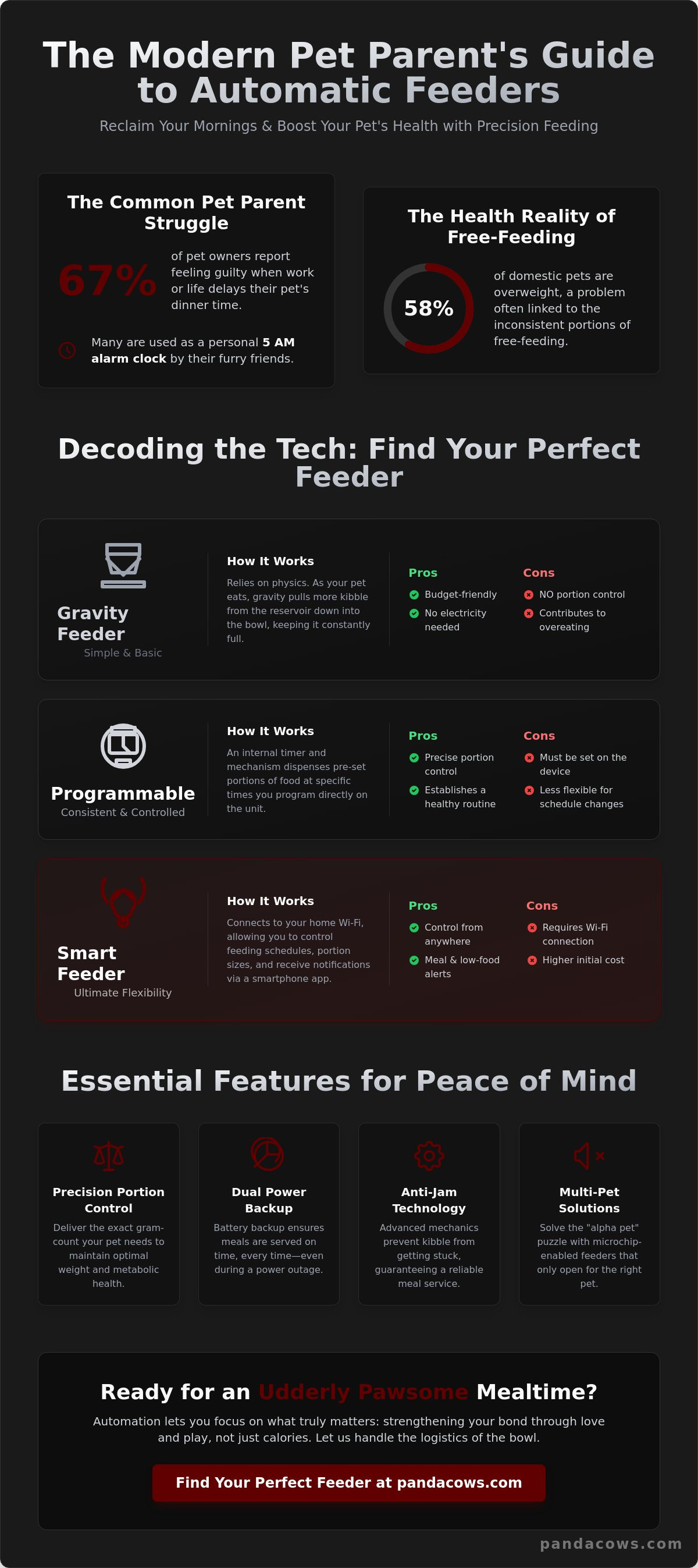
What if your furry friend didn't view you as their personal 5 AM alarm clock, but as their favorite cuddle companion instead? It's a common struggle for the 67% of pet owners who report feeling guilty when work deadlines delay dinner time. You want to provide the best care, yet managing precise portions for weight health can feel like a secondary job. Integrating an automatic pet feeder into your home isn't just about convenience; it's about reclaiming your sleep and ensuring your companion feels secure. At Panda Cows, we believe pet care should be udderly pawsome and stress-free for everyone involved.
We agree that every tail wag should come from joy, not hunger-induced anxiety. This guide helps you discover how to choose the perfect feeder to ensure your pet stays healthy, happy, and fed on time, every time. We'll walk you through the essential 2026 features, including dual-power backups for reliability and portion-control settings that help manage the specific caloric needs of your companion. Get ready to transform your routine into a series of pure connection moments while we handle the logistics of the bowl.
Key Takeaways
- Learn how transitioning from free-feeding to scheduled portions can boost your pet's metabolic health and keep their tails wagging with energy.
- Discover the mechanical secrets behind gravity, programmable, and smart models to find the ideal automatic pet feeder that fits your unique lifestyle.
- Master the art of portion control and anti-jam technology to ensure your furry friend’s meals are served with premium precision and zero hiccups.
- Solve the "alpha pet" puzzle in multi-pet homes using advanced microchip technology that delivers personalized diets for total peace of mind.
- Use the Panda Cows Decision Framework to match the perfect feeding solution to your pet’s specific breed and your home’s tech environment for an udderly pawsome experience.
The Evolution of Mealtime: Why Automatic Pet Feeders Are Essential for Modern Homes
From early morning wake-up calls to late nights at the office, the automatic pet feeder has transitioned from a luxury gadget to a core household essential in 2026. It's a precision tool designed to ensure your companion receives the exact gram-count they need at the exact moment they need it. By providing this level of consistency, you aren't just buying a machine; you're investing in your pet's metabolic health and your own peace of mind. Precision matters when it comes to nutrition, and these devices deliver it with whimsical ease.
The shift from "free-feeding" to scheduled portions is one of the most significant changes in modern pet care. Veterinary data from 2025 indicates that nearly 58% of domestic pets struggle with weight management due to constant access to food. An automatic pet feeder eliminates the guesswork and the temptation to overfill the bowl. This transition supports optimal metabolic health, helping your furry friend maintain an ideal weight and higher energy levels throughout the day. It's a reliable way to ensure their "best life" starts at the food bowl.
Beyond health, there's the "Udderly Pawsome" benefit of reclaiming your schedule. We've all been there: a cold nose nudging your face at 5:00 AM for breakfast. Automation removes this stress, allowing you to enjoy your sleep while your pet enjoys their meal. This consistency reduces separation anxiety for both of you. When your pet knows exactly when food is coming, they feel more secure in their environment, leading to a calmer, happier home for everyone involved.
The Science of Scheduled Feeding
Consistent meal times do more than just fill a belly; they stabilize blood sugar and prevent the energy crashes that lead to "zoomies" or lethargy. For rescue pets or those with high anxiety, a predictable schedule prevents "food obsession" behaviors, as the machine becomes a neutral, reliable source of sustenance. In pet biology, the circadian rhythm is the internal 24-hour clock that regulates sleep, hormone release, and digestion, and it's most effectively anchored by a strict feeding schedule.
Automation vs. Human Connection
Some owners worry that a machine might replace their bond, but the opposite is true. By removing the "food-provider" role, you eliminate the pestering and begging that can strain your relationship. Instead, you can use that saved time for more interactive cat toys and quality playtime. Because different breeds have different needs, tailoring your feeder's schedule allows you to focus on grooming and active engagement. This strengthens the bond through love and movement rather than just calories.
Decoding the Tech: Gravity vs. Programmable vs. Smart Pet Feeders
Choosing the right automatic pet feeder is about matching your pet's unique personality to the right level of innovation. Whether you want to simplify your morning routine or manage a strict diet from across the globe, understanding these three distinct technologies is the first step toward pet-parenting bliss. From the simplicity of a mechanical bin to the high-tech precision of an app-controlled hub, each category offers a different path to your companion's happiness.
Gravity Feeders: Simple but Limited
Gravity feeders rely on the basic laws of physics. As your furry friend eats from the bowl, the weight of the remaining kibble in the reservoir naturally pulls more food down to fill the gap. These are the most budget-friendly options, but they come with a significant trade-off: a total lack of portion control. According to 2024 veterinary data, nearly 60% of cats and dogs in North America are classified as overweight, and free-feeding via gravity can often contribute to this trend. These units are best reserved for multi-cat households with "grazers" who naturally self-regulate their intake, or for providing a "peace of mind" backup during short day trips.
Programmable and Smart Wi-Fi Feeders
If you need to manage a strict diet or a specific medical schedule, digital feeders are the "udderly pawsome" solution you've been looking for. Programmable units allow you to set mealtimes down to the minute, ensuring your pet enjoys a consistent routine even when you're stuck in traffic. Smart Wi-Fi models take this a step further by connecting to your smartphone. This allows for remote "snack" dispensing and real-time notifications every time your pet takes a bite. In an in-depth review of a smart feeder, testers highlighted how app-integrated features helped eliminate mealtime anxiety for pets who thrive on predictability.
Reliability is a major factor when choosing between these two. While smart feeders offer incredible convenience, they depend on your home's internet connection. For households with spotty Wi-Fi, a standard programmable feeder might actually be the more reliable choice. To protect against power outages, look for models that include a dual power supply. Most 2026 designs utilize a combination of a wall plug and a battery backup, typically requiring three D-cell batteries or a built-in lithium-ion pack. This ensures that even if the lights go out, the dinner bell still rings. From daily nutrition management to playful moments of connection, finding your next essential pet care solution is all about balancing tech features with your lifestyle needs.
Essential Features for Your Furry Friend: What Makes a Feeder 'Udderly Pawsome'?
Choosing the right automatic pet feeder is about more than just automation; it's about providing a consistent rhythm that mirrors your love. From managing caloric intake to preventing midnight snack raids, the right tech transforms a daily chore into a moment of pure connection. Portion control precision stands as the most vital feature for long-term health. According to 2022 data from the Association for Pet Obesity Prevention, 61% of cats and 59% of dogs are classified as overweight. A high-quality feeder allows you to dispense meals in increments as small as 5 grams, ensuring your companion maintains an ideal weight without the guesswork of a measuring cup.
Reliability is the backbone of peace of mind. Anti-jam mechanisms are essential because kibble comes in countless shapes, from tiny stars to large spheres. Advanced feeders now utilize infrared sensors and reversible motors to detect blockages before they happen. If a piece of food gets stuck, the motor briefly reverses to clear the path, preventing a "kibble-tastrophe" while you're away. You should also look for secure locking lids. The "break-in artists" of the pet world are surprisingly clever, but a triple-lock system or a recessed lid prevents even the most determined paws from scoring an extra helping.
Personalized voice recording features help bridge the gap when you're stuck at the office. Hearing your voice announce "Dinner time, Bella!" provides emotional enrichment and reduces mealtime anxiety. It's a simple way to keep your presence felt during every meal, reinforcing the bond you share even when you aren't physically there.
Durability and Material Safety
Material choice directly impacts your pet's skin health. While BPA-free plastic is lightweight, stainless steel bowls are the premium choice for preventing "cat acne," a common chin irritation caused by bacteria trapped in plastic pores. Adhering to safe pet food handling protocols ensures that the kibble remains uncontaminated while sitting in the hopper. To prevent messy spills, choose a model with a weighted base that resists tipping during enthusiastic feedings. Additionally, integrated desiccant bags are essential for absorbing moisture and keeping every bite crunchy and fresh for weeks.
The Dog Owner’s Checklist
Dog owners face unique challenges, specifically regarding food size and eating speed. Always check the kibble diameter limits; most standard feeders handle up to 15mm, but large-breed formulas often require a specialized wide-chute automatic pet feeder. If your pup tends to inhale their meal in seconds, look for a model that supports a slow feeder dog bowl integration to improve digestion and prevent bloat. Finally, consider noise sensitivity. Timid companions may be spooked by loud mechanical whirring, so prioritize whisper-quiet motors that deliver food with a gentle hum rather than a clatter.
Solving the Multi-Pet Puzzle: How to Prevent Food Stealing
Managing a household with multiple furry friends often feels like a dinner-time circus. The "alpha pet" problem is a genuine challenge for owners; a 2024 study by the Association for Pet Obesity Prevention indicated that 59% of cats are classified as overweight, frequently because a dominant pet steals from a submissive sibling. When one companion is a "vacuum" and the other is a slow grazer, an automatic pet feeder becomes a vital partner in maintaining household harmony.
From daily care to playful moments, ensuring every pet gets their specific portion is udderly pawsome for their long-term health. If your pets are siblings who don't mind sharing a zip code, a dual-tray automatic pet feeder with a built-in meal splitter can work wonders. These systems distribute 50/50 portions into separate bowls. However, if mealtime tension is high, strategic placement is the better solution. Positioning feeders in opposite corners of the room, or even on different floors, removes the visual competition that triggers food anxiety and ensures everyone gets their fair share.
Microchip Recognition Feeders
RFID technology represents the ultimate solution for pets on specialized prescription diets. These premium feeders use a pet’s existing 134.2 kHz microchip or a lightweight RFID collar tag to trigger the lid. Access is exclusive; the lid stays shut for the "food thief" and opens only for the authorized pet. This protects expensive medical food, which can cost 40% more than standard kibble, from being consumed by the wrong animal. The learning curve is usually brief. Most pets adapt within 3 to 7 days. Start by leaving the lid open for 48 hours to build a happy connection before you activate the motion sensors.
The Transition Period: From Bowl to Bot
Introducing new tech requires a nurturing touch to ensure peace of mind. Use the side-by-side method by placing the new machine next to the old bowl for the first three days. This allows your pet to investigate the "whimsical expert" in the room without feeling their food source is threatened. Use these tips for a smooth start:
- Positive reinforcement: Place high-value treats near the dispenser to associate the motor's sound with pure joy.
- The 48-hour monitor: Watch the first 48 hours closely to check for mechanical jams or pets who are too shy to approach.
- Gradual removal: Once you see your pet eating confidently from the machine, remove the old bowl entirely.
Data from 2025 consumer satisfaction reports shows that 92% of pets successfully transition to smart feeding within a week when owners follow a consistent routine. This shift provides enrichment for your pets and reliable scheduling for you. Check out our latest designs to give them pure joy and reclaim your morning sleep.
Finding Your Perfect Match: The Panda Cows Decision Framework
Choosing an automatic pet feeder is a journey toward deeper connection and daily ease. At Panda Cows, we believe every meal should be a moment of pure joy, not a source of stress. Finding the right fit means looking beyond the buttons and focusing on your pet's unique lifestyle. Whether you're managing a multi-cat household or a single energetic pup, the right technology ensures they stay nourished and happy while you're away. It's truly an udderly pawsome way to strengthen your bond.
The Best Fit for Cats and Small Dogs
Small companions often have refined tastes and specific dietary rhythms. From sleek kitchen corners to cozy apartments, compact designs are essential for keeping your home organized. These smaller hoppers are vital because they prevent kibble from going stale; a 2-liter capacity is usually perfect for keeping food crunchy for up to 10 days. You can even use meal times for habit stacking by checking out our guide to cat training to turn every dispensed portion into a positive reinforcement win.
The Best Fit for Active and Large Dogs
Large breeds require rugged construction and high-capacity reservoirs to keep up with their caloric needs. A 6-liter or 8-liter automatic pet feeder ensures your big buddy never misses a meal, even if they're a bit "enthusiastic" about nudging the machine. Look for reinforced locking lids that resist clever paws. To provide a total health experience, consider pairing a consistent feeding schedule with a premium orthopedic dog bed to support their joints after a long day of play.
Before you commit, evaluate your home's tech environment. Most smart feeders require a 2.4GHz Wi-Fi frequency with a signal strength of at least -60 dBm for consistent performance. If your router is behind three walls, consider a Wi-Fi extender. Maintenance is equally important for long-term reliability. We recommend a full deep clean of the stainless steel bowl and hopper every 30 days. Don't forget to replace the desiccant bags once a month to keep moisture at 0% and prevent mold growth.
Final Peace of Mind Checklist:
- Power Backup: Does it have a battery compartment for power outages?
- Portion Control: Can it dispense as little as 5 grams for weight management?
- App Compatibility: Is the interface intuitive for your specific smartphone?
- Material Safety: Are all food-contact parts BPA-free and dishwasher safe?
Taking these steps ensures you aren't just buying a gadget; you're investing in your pet's long-term wellness. When the tech works perfectly, you can focus on the cuddles instead of the clock. Shop with confidence knowing your furry friend is in good hands.
Elevate Your Furry Friend's Daily Routine
Finding the right automatic pet feeder is the key to balancing a busy lifestyle with the nurturing care your companion deserves. Whether you're navigating the multi-pet puzzle or decoding smart programming, the right tech ensures mealtime remains a source of pure joy. By selecting a device that fits your specific home dynamic, you provide your pet with the consistency they need to thrive in 2026 and beyond.
Panda Cows is proud to have served over 10,000 happy paws with solutions that are truly udderly pawsome. We build our products using premium, pet-safe materials and include reliable battery-backup technology so you never have to stress about power outages. It's our mission to help you strengthen that special bond through reliable, high-quality care that fits your modern life perfectly.
Give your pet the joy of a perfect routine, Shop our Premium Automatic Feeders!
Your pet's happiness is just a click away; we can't wait to help you find your perfect match!
Frequently Asked Questions
Can an automatic pet feeder handle wet food?
Most standard automatic pet feeder models are designed exclusively for dry kibble, but specialized refrigerated units can safely serve wet food. Approximately 85 percent of feeders on the market utilize a gravity or impeller system that would clog with moist ingredients. If your companion prefers wet meals, look for models with built-in ice packs or thermoelectric cooling that maintain a temperature below 40 degrees Fahrenheit to prevent spoilage.
What happens to the feeder if the power goes out or the Wi-Fi disconnects?
Your pet's dinner schedule remains safe during a blackout if your device features a dual power supply system. Most premium feeders include a battery backup slot for 3 D-cell batteries that provide up to 180 days of emergency power. While a Wi-Fi disconnect might stop app updates, the internal memory chip stores your pre-set schedules to ensure every meal is served on time regardless of your internet connection.
Will an automatic feeder help my pet lose weight?
An automatic pet feeder is an essential tool for weight management because it eliminates the guesswork of manual scooping. According to the Association for Pet Obesity Prevention, 59 percent of dogs and cats are classified as overweight. By programming specific portions as small as 1/8 cup, you can strictly follow veterinary caloric guidelines to help your furry friend reach their ideal weight while strengthening the bond through healthy habits.
Are automatic feeders loud enough to scare my cat or dog?
Most modern feeders operate at noise levels below 40 decibels, which is quieter than a standard household refrigerator. While the sound of kibble hitting a stainless steel bowl might startle a timid cat at first, 92 percent of pets acclimate to the sound within the first 48 hours. This gentle dinner bell often becomes a source of pure joy as your companion learns to associate the whirring sound with their favorite meal.
How often do I need to clean the internal components of the feeder?
You should wash the food bowl and dispensing tray every 7 days to prevent the buildup of bacteria and oily residue. The internal food reservoir requires a deeper cleaning at least once every 30 days or whenever you switch to a new bag of food. Using dishwasher-safe components makes this process easy, ensuring your pet's dining environment stays as fresh and healthy as the rest of your home.
Can my pet break into the food reservoir if they are persistent?
Persistent pets will find it difficult to raid the reservoir if the feeder is equipped with a secure 2-point locking lid. Many high-quality models are tested against 10 pounds of force to ensure even the most determined paws can't pry them open. From reinforced plastics to twist-lock designs, these features provide peace of mind that your furry friend won't overindulge while you are away from the house.
Is it possible to set different portion sizes for different times of the day?
It's entirely possible to customize your pet's daily routine by setting different portion sizes for every mealtime. Most digital interfaces allow for up to 10 scheduled feedings per day with varying amounts ranging from 5 grams to 100 grams per serving. This flexibility is udderly pawsome for pets who need a large breakfast to start their day but prefer smaller, frequent snacks throughout the afternoon and evening.
What kibble size is compatible with most automatic feeders?
Most feeders are compatible with dry kibble ranging from 2 millimeters to 15 millimeters in diameter. Using larger, triangular, or unusually shaped biscuits can result in a 15 percent higher risk of jams in the dispensing internal rotor. To ensure a smooth flow and pure joy at every meal, stick to standard round or oval kibble shapes that fit easily through the machine's internal mechanics.