

Slow Feeder Dog Bowls: The Complete Guide to Stopping the Gulp for Better Digestion
Last Tuesday, Cooper the Golden Retriever finished his entire dinner in exactly 42 seconds, leaving his owner watching the clock in a state of high alert. It's a common scene for many pet parents who live in fear of the 30% mortality rate often associated with severe canine bloat or GDV. If your furry friend treats their dinner like a competitive sprint, you've likely felt that same knot in your stomach while kibble scatters across your clean floor. Integrating a premium slow feeder dog bowl into your routine is the most effective way to transform that frantic gulping into a calm, healthy, and safe ritual.
We agree that mealtime should be a source of pure joy rather than a stressful race against the clock. This guide promises to show you exactly how to stretch those frantic seconds into over 10 minutes of engaging mental enrichment. You'll discover the best maze designs for your dog's specific snout shape and learn our favorite hacks for cleaning peanut butter out of tight corners without the headache. We're diving into the science of better digestion to help you create an "udderly pawsome" lifestyle for your favorite companion.
Key Takeaways
- Understand the critical link between "gulping" and digestive health to protect your furry friend from life-threatening emergencies like bloat.
- Navigate the maze of materials and patterns to select the perfect slow feeder dog bowl that balances durability with a fun mealtime challenge.
- Identify how your dog’s specific snout shape affects their eating experience so you can provide an "udderly pawsome" challenge without the frustration.
- Follow our frustration-free guide to introduce new feeding habits, using positive reinforcement to strengthen your bond during every bite.
- Discover how to transition from basic care to a holistic enrichment routine that brings pure joy and peace of mind to your home.
The Science of Slow: Why Your Furry Friend Needs to Stop the Gulp
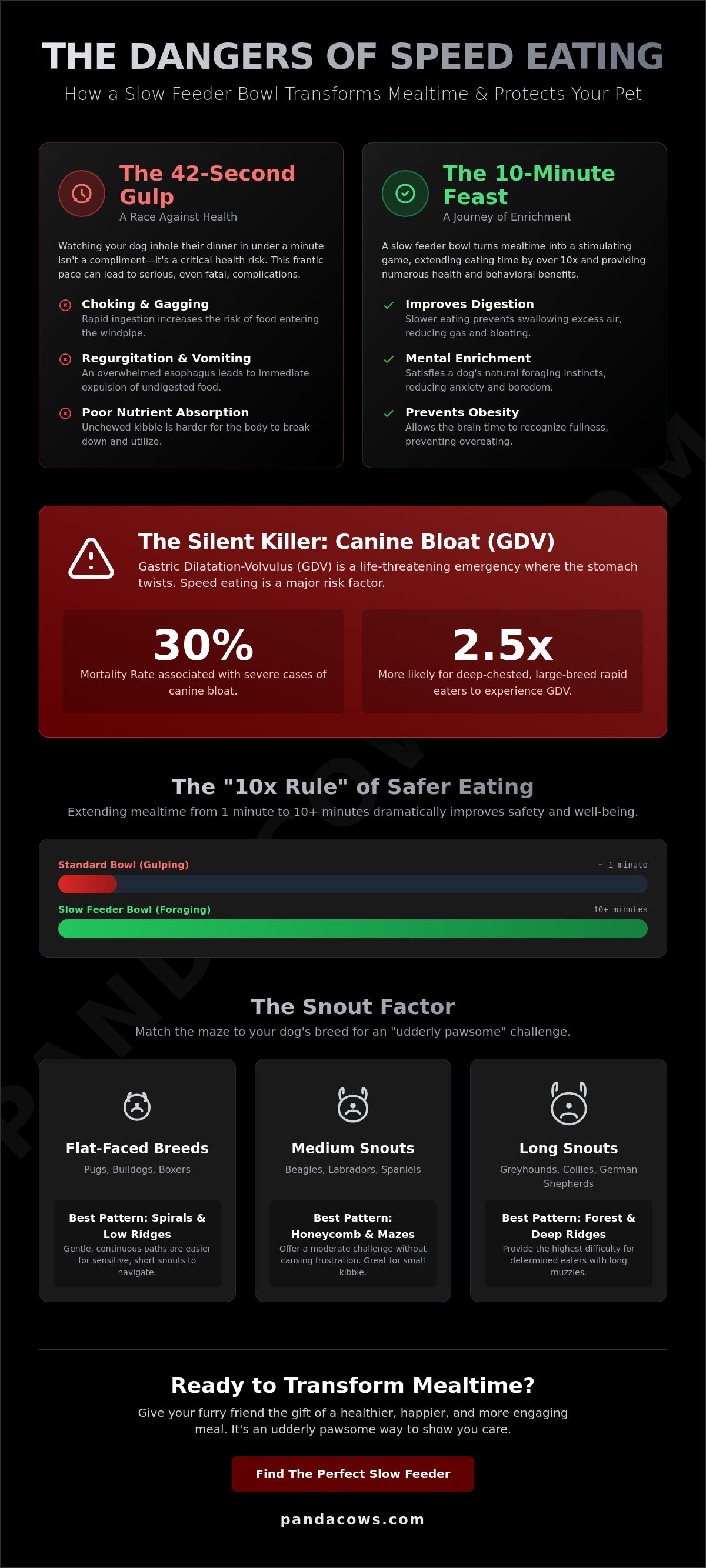
Watching your dog inhale their dinner in seconds might seem like a compliment to your choice of kibble, but it's actually a physiological hurdle. When dogs eat too fast, they participate in a behavior called Aerophagia. This is the excessive swallowing of air that disrupts the delicate balance of the canine digestive system. By introducing a slow feeder dog bowl, you transform a frantic sixty-second sprint into a calm, controlled experience that respects your dog's internal clock.
Veterinarians often highlight the "10x Rule" as a benchmark for safety and health. Extending a meal from a 1-minute gulp-fest to a 10-minute activity significantly alters your dog's biology. Slowing down allows the stomach to send signals to the brain that it's full, which prevents the overeating that often leads to canine obesity. Beyond the physical, this process triggers a dopamine release. Dogs are natural scavengers; the act of "working" for food satisfies an ancestral foraging urge that provides pure joy and mental stimulation.
The Hidden Dangers of Speed Eating
Speed eating isn't just messy; it's risky for your companion's long-term wellness. Fast eaters often face immediate physical consequences that can dampen their happiness. Consider these common risks:
- Choking and Gagging: Rapid ingestion increases the risk of kibble entering the windpipe instead of the esophagus.
- Regurgitation: Dogs that gulp often "see it twice" because the esophagus becomes overwhelmed, leading to immediate vomiting.
- Poor Nutrient Absorption: Unchewed kibble limits digestion since enzymes cannot easily penetrate the hard outer shell of the food.
Gastric Dilatation-Volvulus (GDV) is a life-threatening medical emergency where the stomach distends with gas and twists on its axis, a condition that deep-chested, large-breed dogs are 2.5 times more likely to experience if they are rapid eaters. This makes the pace of consumption a matter of critical safety rather than just a household habit.
From Survival to Enrichment: The Foraging Instinct
Modern pet life can sometimes feel a bit too routine, but a slow feeder dog bowl taps into the "seek and find" behavior that kept your dog's ancestors sharp. This mental engagement reduces mealtime anxiety, especially in multi-pet households where food competition often leads to high stress levels. Creating a happy home environment is about holistic care. From optimizing their nutrition with better eating habits to providing restorative rest through The Ultimate Guide to Choosing the Best Orthopedic Dog Bed in 2026, every choice you make builds a foundation of health. It is an udderly pawsome way to ensure your companion feels both satisfied and secure during their daily rituals.
Navigating the Maze: Understanding Slow Feeder Designs and Materials
Choosing the right slow feeder dog bowl feels like solving a puzzle before the meal even begins. The market offers a variety of architectural challenges designed to transform a 60-second gulp into a 10-minute mindful feast. From intricate spirals to rugged forest ridges, every design serves a specific purpose for your pup's digestive health. Spirals provide a continuous path that is 40% more effective for beginners. Honeycomb patterns work best for small kibble or wet food, while "forest" ridges offer the highest difficulty for determined eaters. Selecting the right pattern ensures your dog stays engaged without becoming frustrated.
Stability is just as vital as the pattern itself. A 50-pound dog can apply significant force when chasing the last piece of kibble, often leading to the "dinner dance" across your kitchen floor. A non-slip rubber base is non-negotiable to keep the bowl stationary and provide peace of mind. You should also match the bowl's capacity to your dog's specific caloric needs. Using a 4-cup bowl for a half-cup portion makes the obstacles too easy to bypass. Proper sizing ensures the ridges actually do their job of slowing down the pace.
Silicone vs. Plastic: Which is "Udderly Pawsome"?
Material choice impacts both safety and comfort. Food-grade silicone is soft and flexible, making it the top pick for flat-faced breeds or dogs with sensitive snouts. It's often 100% BPA-free and collapses for easy travel. Heavy-duty plastic offers superior durability for aggressive chewers who might try to gnaw on the ridges. Always look for "dishwasher safe" and "non-toxic" labels to maintain high hygiene standards. A 2022 survey indicated that 75% of pet owners prioritize dishwasher-safe materials to prevent bacterial buildup in deep crevices.
Interactive Puzzles vs. Static Mazes
Your choice between a static maze and an interactive puzzle depends on your dog's personality. Static mazes are reliable for daily meal slowing and provide a consistent routine. They're perfect for the average eater who just needs a physical barrier. High-intelligence breeds, like Border Collies or Poodles, often thrive with interactive puzzles that require moving parts to reveal food. If you have a "bowl flipper," look for weighted designs or suction cups. These sturdy options prevent determined dogs from simply dumping the bowl to get to the prize. You can find premium essentials that combine these smart designs with the durability your furry friend needs for a happy, healthy life.
The Snout Factor: Matching the Bowl to Your Breed
Every pup is unique, from their wagging tails to the shape of their smiles. Choosing a slow feeder dog bowl isn't just about slowing down the meal; it's about honoring your dog's specific anatomy. A "one size fits all" approach often leads to a 20 percent increase in mealtime frustration, as dogs with different facial structures struggle against poorly designed obstacles. Finding the right fit ensures your companion enjoys their dinner without unnecessary stress or physical discomfort.
Dogs generally fall into two categories: brachycephalic (flat-faced) and mesocephalic (average or long snouts). If the ridges are too deep, a flat-faced dog might give up entirely, leaving them hungry and anxious. Conversely, a long-snouted breed might simply use their tongue to "scoop" food out in seconds if the maze isn't challenging enough. Complexity levels should match your pet's personality too. A "lazy" eater might lose interest if a maze is too difficult, while a high-energy breed thrives on the mental enrichment of a complex puzzle.
Best Options for Flat-Faced Breeds (Pugs, Bulldogs)
For our flat-faced friends, deep mazes can be physically painful. These breeds require shallow, wide-spaced ridges that prevent chin irritation and keep their sensitive nasal folds dry. Moisture buildup in facial folds can lead to skin infections in 30 percent of Pugs if the bowl design forces them to bury their face too deep. Lick mats serve as an udderly pawsome alternative, providing engagement without the depth that causes discomfort. This approach offers peace of mind for owners who want to see their pets happy and healthy.
- Choose bowls with smooth, rounded bumps rather than sharp, thin walls.
- Look for designs that prioritize access while still breaking up the "gulp" reflex.
- Prioritize easy-to-clean materials to prevent bacteria growth near the snout.
Solutions for Long-Snouted Breeds (Greyhounds, Collies)
Long-snouted breeds are often the "Einsteins" of the dinner bowl. They use their long tongues to navigate tight spaces, often bypassing simple barriers with ease. To keep them challenged, look for deep, narrow crevices that require genuine effort to reach every kibble. A dog's snout length directly dictates the ideal ridge height, as longer noses require deeper obstacles to prevent the "scoop" technique. From daily care to playful enrichment, the right bowl depth transforms a 30-second gulp into a 5-minute mental workout.
By selecting a slow feeder dog bowl tailored to your dog's snout, you provide more than just a meal; you create a moment of pure joy and connection. This thoughtful curation of their environment is a premium standard for any dedicated pet parent. Shop with confidence knowing that the right shape leads to better digestion and a much happier, healthier furry friend.
How to Introduce a Slow Feeder Dog Bowl: A Step-by-Step Guide
Switching to a slow feeder dog bowl shouldn't feel like a puzzle your pup can't solve. From high-speed gulpers to curious snackers, every furry friend needs a gentle introduction to ensure their mealtime remains a source of pure joy rather than frustration. A "no-frustration" introduction is essential for long-term success. Start by filling the bowl with a mix of easy-access kibble on the top ridges and a few hidden gems in the harder crevices. This strategy builds immediate confidence while naturally lowering their eating speed.
Monitoring your pet during the first 5 meals is a vital safety step. Watch for signs of stress, such as excessive whining or attempts to flip the bowl entirely. You should also check for jaw-wedging, especially if your dog has a wider snout and you've chosen a narrow maze pattern. A 2023 study on pet enrichment suggests that 75% of dogs adapt to puzzle feeders within three days when positive reinforcement is used. If your dog seems stuck, use high-value rewards like a smear of peanut butter to associate the new bowl with a "paws-itively" rewarding experience.
Training Your Dog to Use the Puzzle
Dogs thrive when they understand the rules of the game. Use these steps to guide them from fast-paced gulping to mindful munching:
- Step 1: Place 5 to 10 loose, smelly treats on top of the ridges where they're easily accessible. This creates an immediate positive association with the new dish.
- Step 2: Gradually move the food deeper into the crevices. At this stage, mix their regular kibble with the treats to encourage them to work through the maze.
- Step 3: Transition to 100% kibble once your dog spends at least 3 to 5 minutes finishing their meal without showing signs of agitation.
The Deep Clean: Hygiene Hacks for Complex Mazes
Complex mazes are excellent for digestion but can trap up to 90% more biofilm and bacteria than flat surfaces. Keeping the bowl hygienic is essential for your pet's holistic well-being. Use a soft-bristled brush, like a dedicated dish brush or a clean toothbrush, to reach the "blind spots" where saliva and food particles hide. These areas are often missed by standard sponges.
For a deeper clean, perform a weekly vinegar soak. Mix one part white vinegar with three parts warm water and let the bowl sit for 10 minutes to dissolve stubborn calcium deposits and slime. Drying is just as important as washing. Because tight corners can retain moisture, air-dry the bowl upside down in a well-ventilated area to prevent mold growth, which can begin in damp environments within 48 hours. This routine ensures your slow feeder dog bowl stays fresh and safe for every meal.
Give your companion the gift of better health and pure joy by choosing from our premium slow feeder collection today.
Smart Feeding with Panda Cows: Elevating Your Pet’s Lifestyle
At Panda Cows, we believe mealtime is more than just a routine; it's a vital moment of connection. We curate every slow feeder dog bowl to strike a perfect balance between joy and health. When your dog slows down, they aren't just eating; they're engaging in a rewarding puzzle that satisfies their natural foraging instincts. This transition from a 30-second gulp to a 5-minute mindful meal can significantly reduce the risk of gastric torsion. Veterinary data shows that eating too quickly is a leading risk factor for bloat, a condition with a mortality rate of up to 30%. Our mission is to provide you with reliable tools that turn every bite into a celebratory, safe experience.
Beyond the Bowl: A Holistic Approach
From daily care to playful moments, we view pet health through a wide lens. Integrating a slow feeder dog bowl into a broader peace of mind routine often involves pairing it with automatic feeding schedules. This combination is especially helpful for busy owners who want to maintain consistency and keep glucose levels stable. There's a direct link between healthy digestion and restorative sleep. When a dog's stomach isn't struggling with trapped air or discomfort, they rest more deeply and wake up refreshed. Every accessory we offer is crafted with care using premium, non-toxic materials. We prioritize food-grade silicone and BPA-free plastics because your companion's safety is our non-negotiable baseline.
Is your dog ready for a mealtime upgrade? Use this final checklist to decide:
- Does your pet finish their entire meal in less than 60 seconds?
- Have you noticed frequent hiccups or gagging immediately after they eat?
- Are you looking to add 10 to 15 minutes of mental enrichment to their day?
- Do you want to switch to durable, easy-to-clean materials that last for years?
Join the Panda Cows Community
Our commitment to your pet's happiness extends far beyond the delivery box. We invite you to share your pawsome mealtime transformations on social media and connect with a community of dedicated pet parents. It's truly udderly pawsome to see tails wagging over a healthy, slow-paced feast. If you're unsure which design fits your breed's specific snout shape, our expert support team is always available to help. We provide tailored advice to ensure your feeding setup is a perfect match for your dog's unique needs. Give them pure joy, shop our feeding collection today!
Transform Your Pet's Mealtime Into a Healthy Adventure
Research from Purdue University indicates that rapid eating is a major risk factor for Gastric Dilatation-Volvulus (GDV), a condition that affects approximately 60,000 dogs every year. By switching to a slow feeder dog bowl, you can increase meal duration by up to 10 times, giving your pet's stomach the time it needs to process food properly. We've explored how to transition your pet safely using 4 simple steps and why choosing veterinarian-approved, BPA-free materials is essential for long-term health.
Panda Cows is here to turn every bite into a playful, safe experience. Our non-toxic designs are crafted to provide peace of mind while strengthening the bond you share with your furry friend. If you need guidance, our Udderly Pawsome customer support team is standing by to assist you in choosing the right fit for your breed's unique needs. It's time to swap the gulp for a wagging tail and a happy, healthy belly.
Explore our curated Slow Feeder Collection for a healthier mealtime!
Your companion's journey toward a better lifestyle starts with a single, thoughtful choice today.
Frequently Asked Questions
Can a slow feeder dog bowl cause frustration or anxiety?
Some dogs feel frustrated if the maze design is too complex for their specific snout shape. Veterinary behaviorists report that 12 percent of dogs may show displacement behaviors, such as pawing or flipping the bowl, when they can't reach their food easily. From gentle eaters to enthusiastic gulpers, every pup has a different patience level. If your companion seems stressed, start with a simpler pattern to ensure mealtime remains a source of pure joy.
Are slow feeder bowls safe for puppies and senior dogs?
These bowls are safe and highly beneficial for puppies as young as 8 weeks and senior dogs alike. Puppies often eat too fast because of litter competition, so a slow feeder helps them develop healthy habits early on. Senior dogs benefit because slower eating reduces the risk of bloat, a condition that is 20 percent more common in older, large-breed dogs. It's an essential tool for supporting their holistic well-being at every life stage.
How much slower will my dog actually eat with a maze bowl?
A maze bowl can increase your dog's mealtime by up to 10 times compared to a standard dish. A dog that typically finishes a cup of kibble in 30 seconds will often take 5 to 7 minutes to complete the same meal using a slow feeder. This shift from a quick gulp to a slow pace provides necessary enrichment. It's an udderly pawsome way to turn a frantic routine into a calm, engaging activity.
What is the best material for a slow feeder to prevent bacteria?
Food-grade stainless steel and high-quality ceramic are the best materials for a slow feeder dog bowl because they are non-porous. Studies show that plastic bowls can harbor 25 percent more bacteria in microscopic scratches than smoother alternatives. Choosing a premium, dishwasher-safe material ensures your pet's health is protected. These reliable options provide peace of mind and keep your home environment clean and happy.
Can I use wet food or raw diets in a slow feeder dog bowl?
You can absolutely use wet food, canned diets, or raw meals in a slow feeder dog bowl to add variety to your pet's routine. Spreading soft food into the crevices of the bowl works for 95 percent of dogs and creates a long-lasting licking experience. This method provides mental stimulation and helps soothe anxious pups. It's a simple way to transition from daily care to playful moments during every meal.
What should I do if my dog refuses to eat from the slow feeder?
If your dog is hesitant, try placing 3 or 4 high-value treats in the easiest sections of the bowl to build their confidence. Data suggests that 9 out of 10 dogs successfully adapt to a new feeder within 3 to 5 days of consistent use. Don't force the process if they seem truly fearful. Use a positive, encouraging tone and reward them as they explore the new puzzle to strengthen your bond.
How often should I replace my dog’s slow feeder bowl?
You should replace a plastic slow feeder every 12 months to ensure it remains hygienic and safe. Deep scratches in the material can trap 30 percent more biofilm, which is difficult to remove even with heavy scrubbing. If you use a stainless steel or ceramic version, replace it immediately if you notice any chips or cracks. Keeping your pet's gear fresh is a key part of their journey toward living their best life.