

The Udderly Pawsome Guide to Dog Bowls: Choosing the Perfect Dish in 2026
Did you know that your pup's dinner dish is actually a sophisticated health-delivery system rather than just a simple container? While the global pet food bowl market is valued at $4.08 billion in 2026, many owners still ask if the specific style of dog bowls they choose truly impacts their pet's well-being. You likely feel the daily frustration of scrubbing away stubborn biofilm or mopping up messy spills left by an enthusiastic eater. It's often difficult to tell if "pet-safe" marketing provides real protection, especially as the FDA's May 2026 proposed rule change now requires mandatory safety notices for all materials that touch your furry friend's food.
We agree that your companion deserves an udderly pawsome mealtime experience that prioritizes their health and happiness. This guide promises to help you find a durable, non-toxic dish that prevents digestive issues and keeps your feeding area spotless for total peace of mind. From premium stainless steel to enrichment-focused slow feeders, we are exploring the essential features that turn a daily routine into a moment of pure connection.
Key Takeaways
- Identify the hidden dangers of biofilm and learn how to keep your companion’s dining area truly hygienic and bacteria-free.
- Navigate the hierarchy of materials to choose dog bowls that offer maximum durability without the health risks associated with cheap plastics.
- Uncover how specialized slow feeders can prevent life-threatening bloat while providing your furry friend with a fun, udderly pawsome mental challenge.
- Match the perfect dish height and shape to your dog’s unique breed to ensure comfortable posture and a much cleaner feeding station.
- Discover how selecting the right feeding tools can strengthen your bond and turn every meal into a moment of pure connection and joy.
The Science of the Supper: Why Your Dog's Bowl Choice Matters
Many owners view their pet's dish as a simple static object, yet it's actually a critical piece of health equipment. From providing essential hydration to delivering life-sustaining nutrients, the Dog Bowl you select serves as a constant touchpoint in your companion's life. We believe every meal should be a moment of pure connection, but that joy is only possible when the tools you use are crafted with care and professional insight. Choosing the right dog bowls means looking beyond the aesthetic to understand how material and design impact your pup's internal well-being and daily comfort.
The Hidden Danger of Bacteria and Biofilm
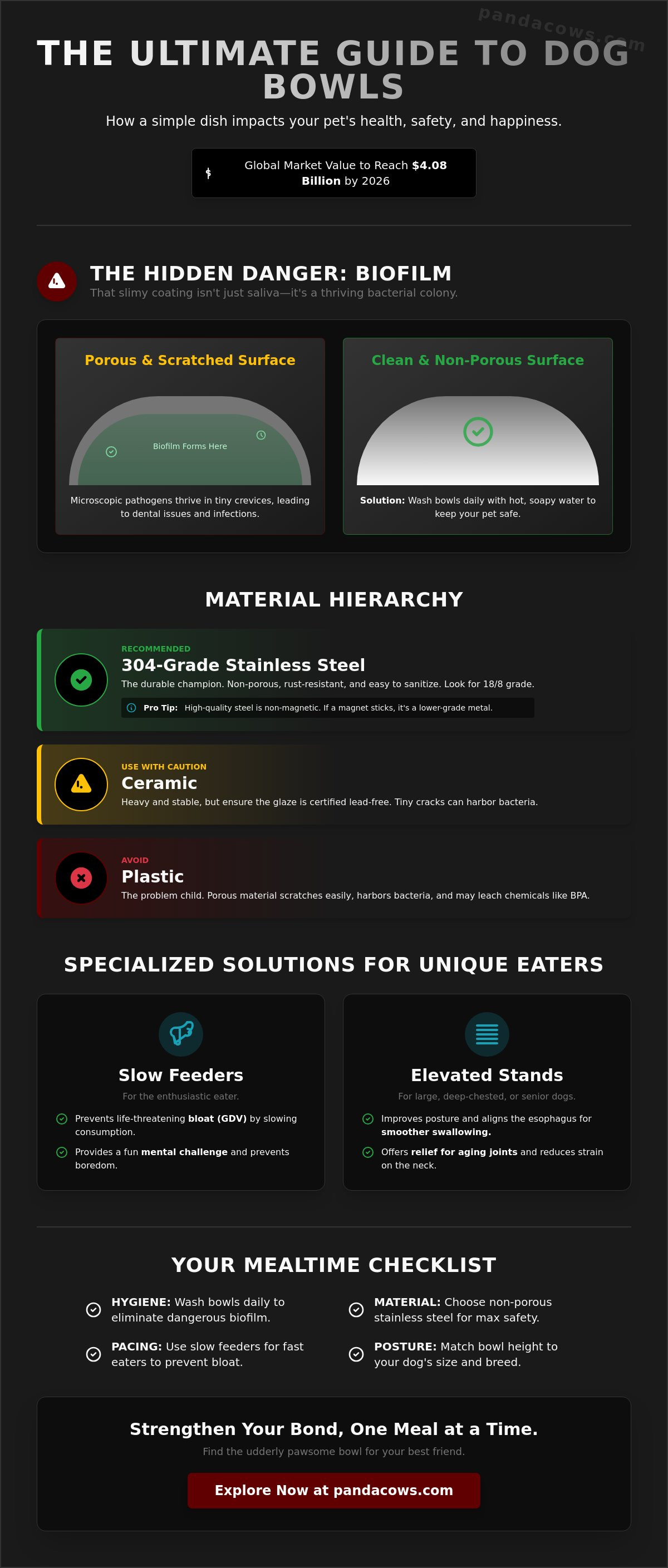
If you've ever felt a slippery, slimy coating on the bottom of your pet's dish, you've encountered biofilm. This isn't just harmless saliva; it's a sophisticated bacterial colony that adheres to surfaces. Porous materials like low-grade plastic or poorly glazed ceramic trap microscopic pathogens within tiny crevices, making them nearly impossible to sanitize through a simple rinse. These bacteria don't just stay in the dish. They transfer to your dog's mouth, potentially leading to periodontal disease, chronic bad breath, and even systemic infections. To maintain an udderly pawsome environment, daily cleaning is the gold standard for pet health. Washing your pet's bowl every 24 hours with hot, soapy water removes these microscopic threats before they can harden into a dangerous matrix that resists standard cleaning.
Digestion and Posture: More Than Just Eating
How your dog stands while eating can be just as important as what they are consuming. Proper alignment of the neck and esophagus ensures that food travels smoothly to the stomach without unnecessary strain on the skeletal system. For deep-chested giant breeds like Great Danes or Labs, an elevated feeder might offer relief for aging joints and improve the swallowing mechanism. Smaller pups, however, often thrive with traditional floor-level dishes that allow for a more natural grazing posture. Gastric Dilatation-Volvulus (GDV) is a life-threatening emergency often linked to rapid eating habits. Whether you choose an elevated stand or a floor-level dog bowls, the goal is to promote a calm, steady pace that prevents the gulping of excess air. By matching the bowl height to your dog's specific anatomy, you provide them with the peace of mind they need to enjoy their supper in total comfort.
Material Matters: Decoding Stainless Steel, Ceramic, and Silicone
Selecting the right material for your companion's dish is the first step toward a healthy, happy home. While the market is flooded with endless options, not all dog bowls provide the same level of protection for your furry friend. We believe in a hierarchy of safety that puts your pet's well-being first. Plastic is often the most accessible choice, yet it remains the "problem child" of the industry. These porous containers scratch easily, and those tiny grooves quickly become microscopic apartments for bacteria. Many low-cost plastics also contain BPA or phthalates, which can leach into food over time. For total peace of mind, it's best to move from temporary plastic solutions to durable, medical-grade materials that stand the test of time.
Stainless Steel: The Durable Champion
Professional breeders and health-conscious parents consider 304-grade stainless steel the gold standard for a reason. Often labeled as 18/8, this material contains 18% chromium and 8% nickel, making it incredibly resistant to rust and corrosion. It's non-porous and easy to sanitize, ensuring that every meal is as fresh as the first. You can easily test the quality of your dish at home with a simple magnet. High-quality 304 stainless steel is generally non-magnetic or only very weakly magnetic; if a magnet sticks firmly to the side, you likely have a lower-grade steel that's prone to rusting. Pair these premium dishes with a non-skid rubber base to keep the bowl from sliding across the kitchen during an enthusiastic dinner. To ensure you are following the best hygiene practices, refer to the FDA guidelines on the safe handling and cleaning of pet food bowls.
Ceramic and Silicone: Style vs. Portability
Ceramic dishes offer a heavy, stable base that's perfect for dogs who like to "push" their food around the room. They are visually stunning and can complement any home decor, but they require a watchful eye. You must ensure the glaze is certified lead-free to prevent heavy metal toxicity. Even a tiny, microscopic crack in the finish can harbor bacteria, so it's essential to replace ceramic dog bowls the moment they chip. On the other hand, silicone is the ultimate companion for active pups on the go. It's lightweight, collapsible, and virtually indestructible. High-quality food-grade silicone provides a flexible feeding solution for mountain hikes or road trips, though it isn't quite durable enough for daily use with heavy chewers. To keep your feeding station udderly pawsome and dry, consider placing your dishes on waterproof pet mats that catch every stray splash. Give your companion the gift of pure joy by choosing a reliable, crafted-with-care setup from Panda Cows today.
Specialized Solutions for Unique Eaters: Slow Feeders vs. Elevated Stands
Mealtime isn't just about the "what" or the "where" but also the "how fast." Many pups treat their dinner like a race, leading to the dangerous "Gulping" problem where they swallow excessive air alongside their kibble. This frantic habit puts your companion at risk for choking and gastric distress. While traditional dog bowls work well for calm eaters, unique diners require specialized solutions to ensure their safety and happiness. We believe every meal is a moment of connection, and using the right tools can transform a frantic feeding session into a peaceful, enriching experience.
Slow Feeders: Turning Mealtime into a Game
If your furry friend finishes their meal before you've even put the bag away, a slow feeder is an essential tool for your home. These dishes feature maze-like patterns that force your dog to use their tongue and nose to navigate around obstacles. This design provides several critical digestive benefits, such as reduced gas and better nutrient absorption. These maze-like patterns stimulate the dog's brain while slowing their pace, turning a thirty second sprint into a five minute engagement. By challenging your pet to work for their food, slow feeders mimic natural foraging behavior for better mental health and reduced boredom. For a deep dive into choosing the right pattern for your pup, check out our slow feeder dog bowl guide. Additionally, for owners who need to manage portions throughout the day, an automatic pet feeder offers the advantage of consistent scheduling for total peace of mind.
Elevated Feeders: Relief for Senior Paws
While some dogs need to slow down, others need a little help reaching their food comfortably. Elevated stands are particularly beneficial for giant breeds, senior dogs with arthritis, and pups diagnosed with megaesophagus. These stands lift dog bowls off the floor to promote better neck alignment and reduce pressure on the front joints. To find the perfect height, follow the chest-level rule: the top of the bowl should be roughly level with your dog's lower chest. This ensures they don't have to hunch or strain while eating. It's vital to perform a safety check with your vet first, as some deep-chested breeds at high risk for bloat may find that elevated feeders actually increase the risk of GDV. Choosing the right height is about balancing comfort with medical safety to give them pure joy during every meal. To keep your feeding station udderly pawsome, always monitor your pet's eating style before committing to a specific stand.
The Breed & Size Blueprint: Matching the Dish to the Dog
Thinking that any container will do for your pup is a common mistake that can lead to daily discomfort. In reality, "one size fits all" is a myth that ignores the vast anatomical differences between a three pound Chihuahua and a hundred pound Great Dane. With the North American market expected to account for 34.9% of the global pet food bowl market in 2026, the variety of specialized dog bowls available is greater than ever. Choosing a dish that matches your pet's specific physical blueprint is essential for their long term health and happiness.
Deep-Chested and Large Breeds
Large and deep-chested breeds like Labs and Golden Retrievers require high walled designs to keep kibble contained during vigorous eating. These powerful pups often possess a stronger bite force; therefore, heavy duty materials like 304-grade stainless steel are non-negotiable for safety. High capacity dishes prevent the need for overfilling, which reduces the chance of spills and floor messes. For large breed droolers, a wider rim helps manage the inevitable moisture, keeping your floors dry and your home life udderly pawsome. Providing a stable, heavy base ensures that even the most enthusiastic eater won't send their dinner sliding across the room.
Short-Nosed and Long-Eared Specialists
Brachycephalic breeds, such as Pugs and French Bulldogs, face unique challenges due to their flat facial structure. Standard deep dishes can make it difficult for them to breathe while eating, often leading to gas or frustration. Slanted dog bowls provide an easier angle of approach, allowing these short nosed friends to access their food without pressing their faces against a high wall. This small adjustment can significantly improve their comfort and digestion during every meal.
Similarly, Spaniels benefit from deep, narrow "cone" shaped bowls that keep their long, silky ears from dipping into water or wet food. For the tiniest companions, shallow dishes are the gold standard to prevent whisker fatigue. This condition occurs when a dog's sensitive facial hairs constantly brush against the sides of a deep container, causing sensory overload. Matching the dish to the dog ensures every meal is a moment of pure connection rather than a physical struggle. Shop with confidence for the perfect fit at Panda Cows to give your pet the best life possible.
Panda Cows’ Udderly Pawsome Picks for Every Furry Friend
Panda Cows acts as a thoughtful curator for your home, bridging the gap between whimsical fun and premium reliability. We believe that choosing the right dog bowls is more than a routine; it's a series of moments that strengthen the bond between you and your pet. By 2026, the global pet food bowl market is expected to reach $4.08 billion, yet our focus remains on the individual happiness of your companion. Every product we offer is crafted with care to ensure your pup lives their best life. Our "Udderly Pawsome" signature is more than a pun. It's a linguistic handshake that promises quality and compassion in every purchase.
Our top pick for health-conscious parents is the Panda Cows Slow Feeder. This essential tool transforms a frantic meal into a slow, enriching game that promotes better digestion. It's the perfect solution for dogs who treat dinner like a race. For those who love the great outdoors, our Portable Pet Water Bottle ensures your furry friend stays hydrated during every hike or road trip. These premium solutions provide the peace of mind you need while delivering pure joy to your pet.
The Best of Panda Cows for 2026
We've curated a selection that prioritizes durability and high-standard quality markers. Our "Udderly Pawsome" promise means every item is tested for safety and crafted to fit seamlessly into a modern, stylish home environment. The pet food bowl market is projected to grow at a CAGR of 5.6% between 2026 and 2033, and we are leading that growth by focusing on the humanization of pets. From daily care to playful moments, our catalog is designed to support your pet's holistic well-being. We understand that a happy home environment starts with reliable essentials that look as good as they perform.
Final Checklist for a Happy Feeding Station
Creating a perfect mealtime setup involves more than just a dish. To keep your floors pristine, pair your dog bowls with a waterproof pet mat that catches every stray splash. If you live in a multi-pet household, don't forget to provide enrichment for your feline friends as well. Pairing your dog's routine with interactive cat toys ensures that every pet in the house feels included in the fun. These small additions create a harmonious environment where every tail wags with excitement.
Give your companion the pure joy they deserve. Shop with confidence and choose the tools that turn daily care into a celebration of connection. Your pet's happiness is our ultimate mission, and we are here to support every wagging tail with premium care.
Transform Every Meal into a Moment of Connection
Choosing the right dog bowls is a small decision that makes a massive impact on your companion's long term health. As the global pet food bowl market moves toward an expected value of $5.97 billion by 2033, it's clear that owners are prioritizing quality over convenience. You now have the tools to navigate the FDA's May 2026 safety standards and select materials that prevent the buildup of dangerous biofilm. Whether you are managing a fast eater with a slow feeder or supporting a senior pet's posture with an elevated stand, your choice reflects a commitment to their happiness.
Panda Cows is here to act as your whimsical expert and trusted guardian. We offer a curated selection of premium, durable hardware and health-first designs crafted to strengthen the bond between you and your furry friend. Our udderly pawsome customer support team is always ready to provide the peace of mind you deserve. Give your pup pure joy with our premium dog bowl collection! We can't wait to help your pet live their very best life, one delicious and safe bite at a time.
Frequently Asked Questions
Is stainless steel or ceramic better for dog bowls?
Professional 304-grade stainless steel is the superior choice for hygiene and long-term durability. While ceramic offers a cozy, decorative look, it can develop microscopic cracks that harbor harmful bacteria even after a thorough wash. We recommend premium steel for your daily dog bowls to ensure a rust-free, non-toxic experience that brings you total peace of mind. If you prefer ceramic, always verify that the glazes are certified lead-free before use.
How often should I actually wash my dog's bowl?
You should wash your pet's dish every single day with hot, soapy water to prevent the formation of slimy biofilm. A March 4, 2026, health report confirms that daily cleaning is the gold standard for preventing bacterial buildup that causes oral disease and chronic bad breath. Simply rinsing the dish isn't enough to break down the bacterial matrix. Using a dishwasher or a dedicated scrub brush keeps your furry friend's mealtime udderly pawsome and safe.
Can a slow feeder bowl really prevent bloat?
Slow feeders are highly effective at reducing the speed of consumption, which is a primary risk factor for Gastric Dilatation-Volvulus (GDV). By turning a thirty second meal into a five minute puzzle, these specialized dog bowls prevent the dangerous gulping of excess air. The global market for these feeders is projected to reach $0.82 billion in 2026. This growth reflects a massive shift toward enrichment-based feeding that prioritizes digestive health and mental stimulation.
Do elevated dog bowls cause bloat in large breeds?
The relationship between elevated feeders and bloat remains a controversial topic in veterinary medicine. While these stands provide relief for senior dogs with arthritis or megaesophagus, some studies suggest they might increase the risk of GDV in deep-chested breeds. It's vital to consult your veterinarian before making the switch. They can help you balance the lifestyle benefits of better posture against the specific health risks of your dog's breed and history.
What size bowl does my puppy need as they grow?
Puppies benefit from shallow dishes that match their current size to prevent neck strain during their early development. As your companion grows toward their 2026 adult weight, you should transition to a larger bowl with a capacity that matches their increased nutritional needs. Choosing a dish with high walls for larger breeds helps contain kibble and prevents messy spills. This ensures your growing friend enjoys every bite in total comfort and joy.
Are plastic dog bowls safe if they are BPA-free?
Even BPA-free plastic can be risky because the material is soft and extremely prone to deep scratches. These tiny grooves act as microscopic breeding grounds for pathogens that a standard sponge cannot reach. Under the FDA's May 2026 proposed rule change, manufacturers face stricter requirements for food contact materials. Moving from porous plastic to non-porous stainless steel or food-grade silicone provides a much more reliable and sanitary feeding solution for your home.
How do I stop my dog from moving their bowl across the floor?
The most effective way to anchor a sliding dish is to choose a model with a heavy, weighted bottom or a non-skid rubber base. You can also place the feeding station on a waterproof pet mat to provide extra traction while protecting your floors from enthusiastic eaters. These practical solutions turn a chaotic dinner into a peaceful moment of connection. Strengthening the bond with your pet is much easier when you aren't chasing their dinner across the kitchen.
What is 'whisker fatigue' and does it affect dogs?
Whisker fatigue is a sensory overload that occurs when a pet's sensitive facial hairs constantly touch the high sides of a narrow dish. While it is a common concern for cats, small dog breeds with short snouts can also experience this physical stress. Switching to a wide, shallow bowl allows your furry friend to access their food without irritating their whiskers. This small change delivers pure joy and comfort to your pet during every single meal.