

Lightweight Dog Carrier Backpack for Air Travel: Your 2026 Guide to Stress-Free Flying
What if the heaviest part of your holiday journey wasn't the flight delay, but the literal weight on your shoulders? We've all been there, sweating at the gate while wondering if our gear meets the strict 18 by 11 by 11 inch standards or if our backs will survive the trek to Terminal B. It's stressful to worry that a bulky bag might lead to a boarding denial, especially when you just want your furry best friend to feel like they're flying "fur-st class." Finding the right lightweight dog carrier backpack for air travel is no longer just about meeting a checklist; it's about finding that perfect synergy between ergonomic comfort for you and a cozy sanctuary for your pup.
You deserve a hands-free experience that lets you breeze through TSA with total confidence. We'll show you how to pick a carrier that balances durability with a feather-light design, ensuring you stay under those common 20-pound combined weight limits. This 2026 guide covers everything from updated airline dimensions to the secret of keeping your dog calm in cramped spaces. From checking the latest carrier fees to mastering the "fit test" under the seat, we're here to ensure your next adventure is nothing but blue skies and happy tails.
Key Takeaways
- Define the 2026 standard for a lightweight carrier and discover how a bag under 3.5 lbs provides a seamless, hands-free "paws-port" through the terminal.
- Identify the "squish factor" and safety features like claw-proof mesh that allow your backpack to adapt to varying under-seat heights across different airlines.
- Prioritize your own comfort with ergonomic sternum clips and moisture-wicking panels that distribute weight evenly and prevent the dreaded "sweaty back" during boarding.
- Master the two-step measurement guide to ensure your lightweight dog carrier backpack for air travel offers enough room for your pup to sit and curl up comfortably.
- Learn the "Scent Trick" and acclimation strategies to transform the carrier into a familiar, "fur-st class" sanctuary long before you reach the gate.
Why a Lightweight Dog Carrier Backpack is Your Secret Weapon for Air Travel
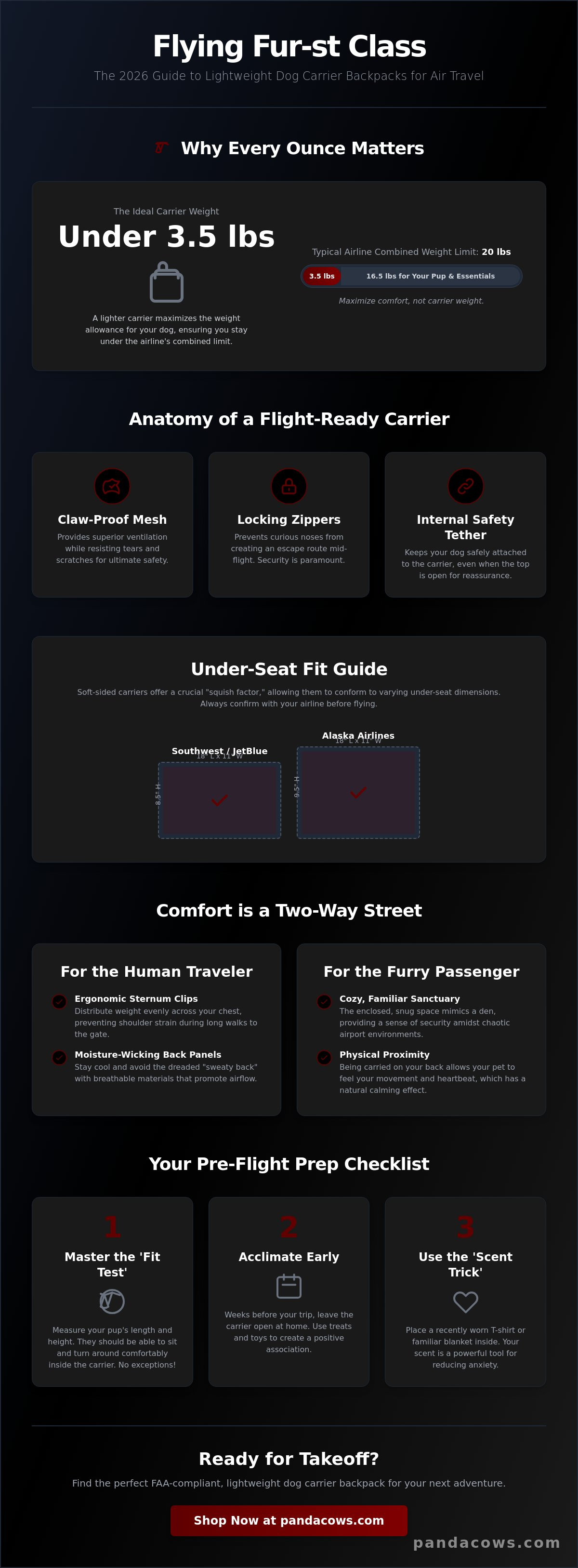
In the bustling world of 2026 terminals, your gear can either be a heavy burden or your greatest ally. Choosing a lightweight dog carrier backpack for air travel is the savvy traveler's way of saying goodbye to clunky, lopsided shoulder bags that make every gate change feel like a marathon. A true "lightweight" model in today's market tips the scales at under 3.5 pounds. This weight is crucial when you consider that major airlines like Delta, United, and American often enforce a strict combined weight limit of 20 pounds for the pet and carrier. By shaving off those extra ounces of unnecessary bulk, you're effectively giving your pup more "snack allowance" or room for a plushier interior without risking a "denied boarding" at the gate.
Think about the pure, hands-free magic during a tight layover. Instead of struggling with a sliding strap while balancing a double espresso and your digital boarding pass, you're mobile, balanced, and ready for anything. This design keeps your companion snug against your back, where they can feel the rhythmic thumping of your heart. This physical proximity acts as a natural sedative, lowering their anxiety levels as you move through the hum of security. It's a win-win for your posture and their peace of mind, turning a potentially scary trek into a shared bonding experience that feels more like a stroll than a struggle.
The Evolution of Pet Travel in 2026
The landscape of air travel has shifted dramatically over the last few years. With major U.S. airlines almost entirely phasing out standard cargo programs for companion animals, in-cabin travel has become the primary path for our small explorers. We've moved past the era of rigid, heavy plastic crates that bump against your shins and refuse to fit under the seat. Modern travelers now rely on an airline-approved pet carrier made from advanced ripstop nylon and flexible mesh. These materials offer incredible durability and "claw-proof" safety without the weight, ensuring your lightweight dog carrier backpack for air travel remains a sturdy sanctuary for years to come.
Backpack vs. Traditional Carrier: The Comfort Showdown
If you've ever hiked to a distant terminal gate with a traditional shoulder carrier, you know the "one-sided ache" all too well. Backpacks distribute your dog's weight across both shoulders, using your body's natural center of gravity to keep you upright and agile. This stability prevents the "swinging cage" effect that often leaves pets feeling nauseous or panicked during movement. Additionally, many backpacks offer superior visual access. You can choose a mesh-heavy design for the curious explorer who wants to see the sights, or a more enclosed style for the shy traveler who prefers a quiet, dark den while navigating the crowds. It's about finding that "fur-st class" fit that makes the journey as joyful as the destination.
The Anatomy of a Flight-Ready Backpack: Features That Fly
Every inch counts when you're preparing for takeoff, especially when dealing with the "squish factor." While rigid crates are unforgiving, a high-quality lightweight dog carrier backpack for air travel offers the flexibility needed to adapt to varying cabin architectures. For instance, Southwest and JetBlue both require carriers to fit within an 8.5 inch height limit, while Alaska Airlines allows for a slightly taller 9.5 inches. A soft-sided backpack can gently compress to meet these tight clearances under the seat in front of you, ensuring your pup stays tucked away safely without the bag getting stuck or rejected by a vigilant gate agent. Adhering to FAA regulations ensures that your journey begins with a green light from the flight crew, giving you one less thing to worry about during boarding.
Safety at 30,000 feet involves more than just a sturdy floor. Look for "claw-proof" mesh that resists frantic scratching and locking zippers that prevent a curious nose from nudging its way out. An internal safety tether is another non-negotiable, as it keeps your dog secured to the bag's frame even if you need to open a top flap for a quick head-scratch or a water break. To keep your travel essentials organized, choose a model with streamlined side pockets. These are perfect for stashing a leash, treats, or your passport, keeping everything within reach without adding unnecessary bulk to your silhouette. For a truly seamless experience, you might explore a Pet Carrier Backpack designed specifically to marry these technical needs with a touch of whimsical style.
Breathability and the 'Three-Side' Rule
Airlines and TSA agents often look for carriers with mesh on at least three sides to ensure your pet is visible and well-ventilated. This isn't just for security; it's vital for temperature regulation in a crowded, heated cabin where airflow can be stagnant. Optimal airflow for a dog carrier is achieved when multiple mesh panels allow for consistent cross-ventilation throughout the cabin environment. This keeps your dog cool and reduces the "cabin fever" that leads to whining or restlessness during long hauls.
Structural Integrity: Lightweight but Paws-itively Sturdy
Don't let the word "lightweight" fool you into thinking the bag will collapse like a pancake on your pup. Modern lightweight dog carrier backpack for air travel designs utilize thin fiberglass rods to create an internal skeleton that maintains its shape even under pressure. The base should be firm, padded, and waterproof to handle any mid-flight "oops" moments with grace. In 2026, the best bags are crafted from high-denier nylon or recycled PET fabrics, providing a durable, eco-friendly sanctuary that stands up to the rigors of terminal trekking while remaining soft enough for a cozy snooze.
Navigating the Terminal: Ergonomics for the Human Traveler
While your pup is busy dreaming of mid-flight treats in their cozy nook, your own physical comfort shouldn't take a back seat. Navigating a bustling airport is essentially a low-intensity workout, and a lightweight dog carrier backpack for air travel transforms that trek into a paws-itively painless experience. High-quality designs feature thick, padded shoulder straps and adjustable sternum clips to ensure the load stays centered on your torso. This prevents the bag from swaying while you're rushing to catch a tight connection, keeping both you and your pet stable. Following FAA regulations for pet carriers ensures the bag fits the plane, but these ergonomic features ensure the bag fits your lifestyle.
Nobody wants the "sweaty back" look while checking in at the gate or standing in a long security line. Modern backpacks utilize moisture-wicking mesh panels on the rear to create a vital buffer of air between your clothing and the carrier. This cooling effect is a lifesaver during the summer travel season or in humid tropical terminals. Additionally, quick-access pockets provide a dedicated sanctuary for your phone, ID, and flight info. You won't have to dig through kibble bags or toy stashes when the gate agent asks for your boarding pass, keeping the line moving and your stress levels low.
For those moments when your shoulders need a complete break, the "luggage sleeve" hack is a total game-changer. This built-in fabric strap allows you to slide the backpack securely over the handle of your rolling suitcase. It turns your entire travel setup into a single, cohesive unit, allowing you to glide through the terminal without any weight on your spine. It's a simple solution that makes a massive difference during long layovers or those endless walks from the parking garage to the terminal entrance.
Weight Distribution and Spinal Health
Carrying a poorly designed bag puts immense pressure on your trapezius muscles and can lead to tension headaches or shoulder strain. High-end pet backpacks often include a waist belt, similar to professional hiking gear, which shifts the primary weight to your hips. This protects your spinal health and allows you to carry your companion for longer periods without fatigue. By choosing a lightweight dog carrier backpack for air travel, you're reducing the total load on your joints, ensuring you arrive at your destination feeling refreshed rather than exhausted.
The 'Panda Cows' Approach to Human Comfort
Our philosophy at Panda Cows centers on the idea that travel is a series of meaningful interactions between you and your animal. We design our products for the pet parent's active lifestyle, ensuring every buckle and strap feels intuitive and reliable. We use durable hardware that won't snap under pressure but remains light enough to keep your journey effortless. You can explore our detailed guide on finding an airline approved dog carrier to see how we prioritize both safety and high-end ergonomic standards for your next adventure.
The 'Fit Test': Measuring Your Pup for In-Cabin Success
Achieving a stress-free flight starts with a precise tape measure and a bit of patience. Unlike traditional carriers where dogs mostly lie flat, a lightweight dog carrier backpack for air travel relies on vertical space to keep your companion comfortable. To ensure your pup has a "fur-st class" experience, you must look beyond the "small dog" label and get down to the actual inches. Airlines are increasingly strict about pet comfort, and a dog that looks cramped is a dog that might be grounded at the gate. Follow these five steps to ensure your pet is ready for their paws-port stamps.
- Sitting Height: Measure from the paws to the top of the head while your dog is in a natural seated position. This is their primary posture while you're walking through the terminal.
- Length: Measure from the chest to the base of the tail. This ensures they have enough room to curl up for a nap once you're cruising at 30,000 feet.
- Weight Check: Most major airlines, including Delta and United, have a combined weight limit of 20 pounds for the pet and carrier. Staying in the 15 to 20 pound sweet spot ensures you won't face extra scrutiny during check-in.
- Internal Volume: Always compare your dog's measurements to the interior dimensions of the bag, as the external shell and frame can take up an inch of usable space.
- Under-Seat Verification: Check your specific airline's dimensions before booking. While American Airlines recommends 18 by 11 by 11 inches for soft-sided bags, Southwest and JetBlue require a much lower 8.5 inch height clearance.
Backpack-Specific Sizing Nuances
Dogs often prefer the vertical orientation of a backpack because it allows them to sit up and maintain eye contact with you through the mesh. This reduces separation anxiety and makes them feel like part of the adventure rather than cargo. Use the "Two-Finger" rule to verify the fit; you should be able to slide two fingers between your dog and the bag's wall at all times. For those with uniquely shaped companions, our guide on the best dog carrier backpack for pitbull mix offers deeper insights into handling different proportions with ease.
Common Measuring Mistakes to Avoid
Don't rely on breed generalizations. "My dog is a small terrier" isn't a measurement that a gate agent will accept. If your dog is particularly fluffy, press the fur down slightly when measuring their height. Hair doesn't need its own headroom, but their actual skull does. Finally, perform the "turn-around" test in your living room. If your dog can't comfortably change positions or spin in a circle inside the lightweight dog carrier backpack for air travel, it's time to size up. You can find the perfect, roomy sanctuary for your next trip by browsing our Pet Carrier Backpack collection today.
Pre-Flight Prep: Ensuring a Smooth Journey with Your Panda Cows Gear
The final countdown to your adventure is an exciting time, yet it requires a bit of thoughtful choreography to ensure your pup feels secure. Using a lightweight dog carrier backpack for air travel is a fantastic start, but the bag itself needs to become a familiar friend rather than a strange cage. Start the acclimation process at least 14 days before your departure by leaving the carrier open in your living room. By turning the bag into a permanent fixture of their environment, you strip away the "scary new thing" factor and replace it with a sense of routine. It's much easier for a dog to relax at 30,000 feet if they've already spent a dozen naps inside their travel den at home.
One of our favorite "Scent Tricks" involves taking a t-shirt you've recently worn and placing it at the base of the carrier. Your scent provides a powerful emotional anchor for your dog, especially when the ambient noise of the terminal starts to rise. This small gesture of love acts as a sensory hug that keeps them calm while you handle the logistics of boarding. Regarding security, TSA protocols require you to remove your dog from the carrier before you reach the front of the line. You'll carry them through the metal detector while the backpack goes through the X-ray machine. It's a quick process, but having a well-fitted harness on your dog ensures they stay safely in your arms during the hustle.
Once you're on the plane, in-flight etiquette is all about tranquility. Keep the carrier zipped and tucked under the seat as required by airline policy. If your pup gets restless, a gentle foot tap against the bag or a whispered word of encouragement can work wonders. Avoid the temptation to pull them out mid-flight; keeping them in their secure den is the safest way to travel at altitude. It also ensures you stay on the good side of the flight crew and your fellow passengers.
Carrier Training 101
Transforming the backpack into a rewarding space is easy with a pocketful of high-value treats. Toss a few snacks inside and let your dog explore the interior on their own terms. Once they're comfortable, practice short "house carries" to get them used to the sensation of being off the ground. The 'Safe Haven' technique involves feeding your dog their favorite meals inside the carrier to solidify a deep, positive connection between the backpack and feelings of fulfillment. By the time you reach the airport, your lightweight dog carrier backpack for air travel will feel like a second home.
The Panda Cows Travel Checklist
A successful trip is all in the details, so we've put together a quick list to help you pack like a pro:
- Ensure your portable pet water bottle is filled after you pass through security to keep your explorer hydrated.
- Pack a calming pet blanket to provide a soft, familiar texture that dampens cabin vibrations.
- Double-check all locking zippers and safety tethers before you leave for the airport to ensure total security.
- Keep a few small, silent toys handy to distract them during takeoff and landing.
Ready to take to the skies with confidence? Shop our curated collection of lightweight travel gear to find everything you need for a joyful, stress-free journey.
Ready for Takeoff with Your Furry Co-Pilot
Flying with your best friend shouldn't feel like a logistical hurdle. By mastering the "fit test" and choosing a lightweight dog carrier backpack for air travel, you've already cleared the biggest obstacles to a smooth journey. You've learned that true comfort is a two-way street; it's about a cozy sanctuary for your pup and ergonomic "parent-first" padding for your own shoulders. These thoughtful details turn a standard flight into a celebration of your bond, allowing you to focus on the destination rather than the weight on your back.
Our TSA-friendly designs have been tested by over 10,000 happy travelers who value both whimsy and high-end standards. Whether you're navigating a busy terminal or settling in for a cross-country haul, having reliable gear makes every mile feel lighter. It's time to stop worrying about gate agents and start dreaming about the adventures waiting at the other end of the runway. Adventure awaits! Grab your lightweight Panda Cows backpack here. We can't wait to be a part of your next journey toward a life filled with vitality and shared joy. Safe travels and happy tails to you and your favorite explorer!
Frequently Asked Questions
Is a backpack carrier actually allowed on most major airlines?
Yes, backpack carriers are widely accepted by major airlines like Delta, United, and American provided they are soft-sided and fit within the designated under-seat space. These carriers must comply with IATA Live Animals Regulations, which mandate that the bag is secure, leak-proof, and well-ventilated. Since aircraft configurations can vary, it is always a "paws-itive" idea to confirm the specific dimensions with your airline before you head to the terminal.
How do I know if the backpack will fit under the seat in front of me?
You can verify the fit by comparing the backpack's external dimensions to your airline's specific cabin requirements. While many major carriers allow heights up to 11 inches, airlines like Southwest and JetBlue require a lower profile of 8.5 inches. Choosing a flexible, soft-sided lightweight dog carrier backpack for air travel allows for the necessary "squish factor" to clear these tighter spaces without compromising your pup's internal headroom.
What is the maximum weight a lightweight dog backpack can carry?
Most high-quality backpack models are engineered to support pets weighing up to 15 or 20 pounds safely. However, the ultimate limit is often defined by the airline's combined weight policy, which typically caps the pet and carrier at a total of 20 pounds. Exceeding these limits can lead to structural strain on the bag's hardware and might result in a "ruff" conversation with the gate agent during check-in.
Can my dog stay in the backpack for an 8-hour flight?
Your dog can stay in the carrier for the duration of a long-haul flight, but you must ensure they have adequate ventilation and hydration. Use a portable pet water bottle to offer drinks during the journey and include a calming pet blanket to keep them cozy. If your pup is well-acclimated to their backpack as a "safe haven" before the trip, they will likely spend most of those eight hours dreaming of their destination.
Do I need to take my dog out of the backpack at the TSA checkpoint?
Yes, TSA protocols require you to remove your dog from the carrier so the bag can pass through the X-ray machine independently. You will be asked to carry your pet through the metal detector in your arms while the backpack is screened. Wearing a secure, reflective dog harness during this process provides an extra layer of safety, ensuring your companion stays close and calm in the busy security environment.
What happens if my dog is slightly over the weight limit for the backpack?
If your dog exceeds the weight limit, you risk structural failure and potential denial at the boarding gate. Airlines use the weight limit to ensure the carrier can be handled safely by the owner and fits within the safety parameters of the aircraft. It is always better to prioritize a bag with a higher weight capacity or a reinforced frame to ensure your "fur-st class" passenger remains safe and secure.
How do I clean a lightweight fabric dog backpack after a flight?
Cleaning your lightweight dog carrier backpack for air travel is usually a simple matter of spot cleaning with a damp cloth and mild, pet-safe soap. Most premium models feature removable, waterproof base liners that can be wiped down or hand-washed after a journey. For a deeper refresh, you can use a pet grooming vacuum to remove loose fur and dander from the mesh panels and interior corners before your next adventure.
Are backpack carriers better for anxious dogs than traditional bags?
Backpack carriers are often superior for anxious dogs because they keep your pet snug against your back, where they can feel the rhythmic thumping of your heart. This physical proximity provides a sense of security and tranquility that traditional, swinging shoulder bags often lack. Additionally, the vertical orientation allows your pup to maintain eye contact with you through the mesh, turning a scary flight into a shared bonding experience.