

How to Measure a Dog for a Carrier Backpack: The Ultimate Tail-ored Guide
Since road trips involving pets have increased by 25% since 2020, ensuring your furry co-pilot stays comfortable is no longer just a luxury; it's a travel essential. We all want our pups to experience the world by our side, yet the fear of restricted breathing or a dog slipping out of an ill-fitted bag can turn a dream hike into a stressful ordeal. You shouldn't have to guess whether back length includes the tail or where the chest girth actually starts. It's time to trade that uncertainty for a "paws-itive" plan that prioritizes your dog's spinal health and holistic well-being.
This guide will show you exactly how to measure a dog for a carrier backpack with tail-ored accuracy, transforming that potential cramped enclosure into a cozy, mobile sanctuary. From the bustling airport terminal to the quietest mountain trail, the right fit ensures your pet remains a happy participant in your active lifestyle. We'll break down the essential anatomy of a perfect fit, clarify confusing terminology, and help you select a Pet Carrier Backpack that keeps your best friend safe. By the end of this read, you'll have the confidence to choose gear that fosters deep emotional connections on every journey.
Key Takeaways
- Understand the vital difference between a bag that just "fits" and one that provides anatomical support for a truly "paws-itive" journey.
- Master the art of how to measure a dog for a carrier backpack by focusing on the "Big Three" metrics; this ensures your pup's mobile sanctuary is just right.
- Adapt your math based on the specific carrier style, ensuring that "seated height" or "limb spacing" is properly accounted for before you hit the trail.
- Learn the professional "compression trick" to accurately size extra-fluffy breeds without letting thick fur skew your final data.
- Use your precision measurements to confidently select a Pet Carrier Backpack that meets both your pup's comfort needs and strict airline regulations.
Why Precision Sizing is the Secret to a 'Paws-itive' Adventure
Learning how to measure a dog for a carrier backpack is the first step in honoring the deep emotional tie you share with your pup. While many owners look at weight capacity as the gold standard, the true magic of a safe journey lies in the dimensions. A backpack that is too small can lead to restricted breathing and compressed ribs; conversely, a carrier that is too large allows your pet to shift unexpectedly. This instability forces their muscles to work overtime to stay upright, which often results in unnecessary strain on the canine vertebral column. By mastering precision sizing, you ensure that every journey is a celebration of vitality rather than a test of endurance.
When you prioritize a "tail-ored" fit, you're doing more than just buying a bag. You're investing in your dog's long-term orthopedic health. A well-sized Pet Carrier Backpack provides the structural integrity needed to keep your dog's spine neutral, preventing the micro-traumas that occur from constant jostling. It's a harmonious blend of leisure and care that allows you to explore the world together without compromising your best friend's physical well-being.
The Risks of 'Guesstimating' Your Dog's Size
When you guesstimate, you risk the "slumping" effect common in soft-sided designs. Without a firm floor supported by the correct measurements, your dog's spine may curve unnaturally during long carries. This lack of stability isn't just uncomfortable; it causes significant muscle fatigue for both you and your pet. Since there are different types and styles of pet carriers available, choosing one based on your dog's specific height and length is the only way to guarantee a smooth ride. Remember, weight capacity is only half the story. A 15-pound Terrier and a 15-pound Dachshund have vastly different structural needs, and only precise measurements can bridge that gap.
Creating a Mobile Sanctuary for Your Pup
A perfectly fitted carrier acts as a cozy mobile sanctuary that reduces travel anxiety. When a dog feels the gentle, snug pressure of a well-sized bag, it provides a sense of security similar to a calming blanket. This psychological comfort is only possible when there is enough wiggle room for proper airflow around the chest. When your pet associates their carrier with physical ease and fresh air, they'll be much more enthusiastic about your next big adventure. By choosing gear that respects their anatomy, you transform a simple outing into a meaningful interaction that strengthens your bond.
The Essential Toolkit: Gathering Your Dog’s 'Tail-ored' Measurements
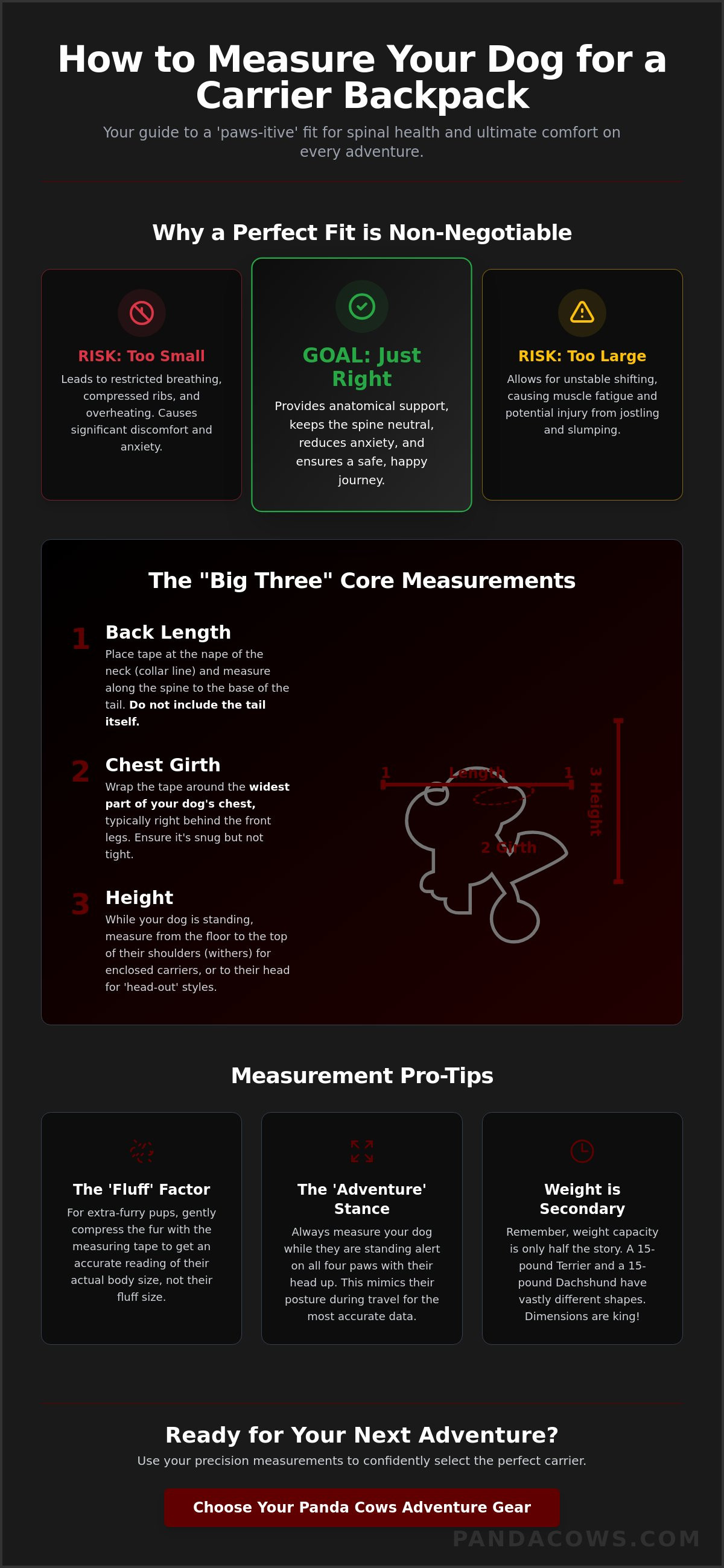
Preparing for a grand adventure starts with the right gear, but before you browse, you need a blueprint of your pup's unique shape. Understanding your dog's exact size is the only way to ensure their new mobile home feels like a sanctuary rather than a squeeze. To get started, gather a flexible measuring tape, a handful of high-value treats to reward cooperation, and a stable, flat surface. Always measure your dog while they are in their "adventure stance." This means they should be standing alert on all four paws with their head up. This position mimics how they will naturally distribute their weight while traveling, which gives you the most accurate data for your size chart.
Recording these numbers in both inches and centimeters is a smart move for navigating global size charts. Since different manufacturers use different units, having both on hand saves you from mid-purchase math stress. If you're already checking your kit, you might also want to ensure you have a Portable Pet Water Bottle ready for the journey. Once you have your tools and your pup is ready for their "tail-ored" session, you can begin capturing the Big Three metrics that define a perfect fit.
Measuring Length: From Nape to Tail-Base
To find the length, place the start of the tape at the nape of the neck. This is essentially the "collar line" where the neck meets the back. Run the tape along the spine, keeping it flat against the fur, and stop exactly at the base of the tail. Do not include the tail itself in this measurement, as it doesn't contribute to the structural space your dog needs to sit or stand. If your pup is a bit of a "wiggler," use a treat to keep their nose pointed forward. This keeps the spine straight and prevents the measurement from being artificially shortened by a curved back.
Measuring Girth: The Widest Part of the Chest
Girth is perhaps the most critical metric for ensuring your dog can breathe deeply and comfortably during a long hike. Locate the deepest part of your dog's ribcage, which is usually right behind the front legs. Wrap the tape all the way around the torso. While you want a snug fit, you must follow the "two-finger rule." If you can't comfortably slide two fingers between the tape and your dog's fur, it's too tight. This extra bit of breathing room is essential for your pet's vitality and prevents the carrier from feeling like a cage.
Measuring Height: From Paw to Shoulder
For most carriers, height is measured from the floor to the "withers," which is the highest point of the shoulder blades. This tells you how much vertical space the dog needs to stand comfortably. However, if you are eyeing a rucksack-style carrier where your dog sits upright, you should also measure from the floor to the top of their head while they are in a seated position. This ensures they won't have to hunch their neck. Knowing how to measure a dog for a carrier backpack properly means accounting for every possible posture they might take during your travels.
Sizing for Style: How Different Backpack Designs Change the Math
While you’ve mastered the basics of the "Big Three," the silhouette of your chosen gear significantly alters how to measure a dog for a carrier backpack. A sleek rucksack and a playful "legs-out" front carrier might both claim to fit a ten-pound pup, but the anatomical math behind them is worlds apart. Choosing the wrong style for your dog’s build can lead to dangling limbs or a cramped spine, turning a joyful outing into a "ruff" afternoon. It’s essential to match the measurement method to the specific geometry of the bag to ensure your pup remains in a state of tranquil vitality.
Different adventure designs prioritize different postures. Some carriers encourage a natural standing stance, while others are built for a vertical, seated position. By understanding these nuances, you can ensure your dog’s weight is distributed evenly, which protects their joints and your own back during long treks. When you align your measurements with the bag's intended style, you're acting as a thoughtful curator of your pet's comfort.
The Vertical Sit: Measuring for Rucksacks
In a rucksack-style Pet Carrier Backpack, your dog typically sits in a vertical, human-like posture. This design requires you to measure your dog while they are in a natural sitting position, focusing specifically on the distance from the floor to the top of their head. It's vital that the backpack floor supports the entire pelvic area to prevent "slumping," which can lead to spinal discomfort. By ensuring the base matches your dog's seated footprint, you balance the center of gravity for your own comfort while providing a stable, secure throne for your co-pilot. Don't forget to check the placement of the tail hole; a well-positioned opening allows for a natural tail carriage, which is essential for your dog's communication and tranquility. A perfectly sized rucksack makes every mile feel like a breeze for your furry friend.
The Front-Facing Carrier: Limb and Neck Clearance
Front-facing carriers, often called "legs-out" designs, prioritize visibility and closeness, making them a "fur-tunate" choice for smaller, lighter breeds. However, these require two specific measurements that standard bags often ignore: limb spacing and neck circumference. You must measure the distance between the front and back legs to ensure the leg holes align with your dog's natural gait. If the holes are too far apart, it strains the hip joints; if they're too close, it causes chafing. Additionally, check the neck opening to prevent any "choking" sensations or rubbing. A snug but soft fit around the neck ensures your pup stays securely tucked in without sacrificing their respiratory health. By selecting a Pet Carrier Backpack that respects these unique dimensions, you're not just buying a bag; you're deepening the emotional connection you share on every journey.
The 'Fluff' Factor: Pro Tips for Measuring Squirmy or Extra-Furry Pups
Let’s be honest: your dog isn’t a store mannequin. While we’ve already explored the fundamental "Big Three" metrics, the reality of a "fur-midable" double coat or a "wiggle worm" personality can make the process feel like a minor circus act. Learning how to measure a dog for a carrier backpack requires a bit of extra finesse when you’re dealing with a Pomeranian’s cloud of fluff or a Husky’s dense undercoat. You want a fit that is snug enough for security but loose enough to celebrate their vitality and ensure proper airflow. Precision is the bridge between a cramped enclosure and a mobile sanctuary, and getting it right means looking past the fluff to the pup underneath.
Because accuracy can be elusive with a moving target, follow the rule of three: measure, reward, and repeat. Taking the average of three separate attempts helps account for small shifts in posture or tail-wags that might skew your data. This ritual of care ensures that your final numbers reflect your dog’s true dimensions, giving you the confidence to select gear that supports their holistic well-being on every journey.
Dealing with the Double Coat
When you’re measuring a fluffy friend, you must master the "compression trick." Fur creates significant visual volume that doesn't represent your dog's actual skeletal size. To find the skin-level girth, gently pull your measuring tape through the fur until it makes light contact with the skin. If you skip this step, you might buy a bag that is two sizes too large, which leads to the dangerous instability we discussed earlier. However, remember that thick coats trap heat. For these high-volume breeds, heat dissipation is a major concern. Selecting a carrier with ample mesh panels allows for better ventilation around that beautiful coat. To make the measuring process even smoother, you can use a Self-Cleaning Slicker Brush to tidy up their fur beforehand, ensuring the tape lays as flat as possible against their body.
Calming the Measuring Jitters
If your dog thinks the measuring tape is a scary yellow snake, it’s time to change the narrative. Use high-value treats to create a positive association with the toolkit. For length measurements, the "wall trick" is a lifesaver. Gently place your dog’s nose toward a wall or door to keep them standing straight while you run the tape from their nape to their tail-base. This prevents the "curled spine" that often results in under-measuring. If the tape measure's clicking sound or texture still causes anxiety, use a soft piece of string instead. Mark the points on the string with a pen, then lay the string flat against a ruler afterward. By transforming a chore into a series of meaningful interactions, you ensure your dog feels like a partner in the adventure from day one.
From Measurements to Miles: Choosing Your Panda Cows Adventure Gear
Now that you've mastered how to measure a dog for a carrier backpack with pinpoint accuracy, you're ready to explore the Panda Cows carrier collection. This step is about more than just a transaction; it's the moment you match your pup's unique blueprint to a design that celebrates their vitality. By using the "Big Three" metrics you've gathered, you can select a mobile sanctuary that honors their anatomy and deepens the emotional tie you share during every outdoor excursion.
If your aspirations involve the friendly skies, our airline approved dog carriers require even stricter adherence to your recorded data. Current 2026 regulations mandate that your pet must be able to stand up and turn around comfortably within the enclosure. While common guidelines for soft-sided carriers often hover around 18 inches long by 11 inches wide, your specific measurements ensure you won't face any stressful surprises at the boarding gate. A well-fitted bag keeps your dog calm and secure, turning a busy terminal into a place of tranquility.
If your dog happens to fall exactly between two sizes, we generally recommend choosing the larger option. This "Adventure Guarantee" ensures your pet has enough room to shift positions without feeling confined. Extra space also allows you to tuck in a Calming Pet Blanket to help soothe any travel jitters. Prioritizing their comfort over a slightly smaller bag size is a simple way to act as a thoughtful guardian of their well-being.
Navigating the Size Chart Like a Pro
When you review a size chart, always prioritize the girth measurement over length or height. If the bag is long enough but too tight around the chest, it can restrict your dog's breathing and lead to overheating. It's also vital to distinguish between "Max Weight" and "Comfort Dimensions." While a bag might safely hold 20 pounds, the internal measurements determine if your dog can actually enjoy the ride. For those traveling with sturdier companions, our guide on the best dog carrier backpack for pitbull mix explains why heavy-duty support and reinforced floors are essential for muscular builds and broader frames.
Preparing for the First Trip
Before you embark on a "fur-tastic" hike, conduct a dry run in the comfort of your living room. Allow your dog to explore their new Pet Carrier Backpack at their own pace, perhaps placing a few treats inside to create a celebratory association. Once they're settled, adjust the straps on your own shoulders to ensure the weight is distributed across your hips. This prevents human back pain and ensures the ride remains stable for your passenger. Don't forget to pack a Portable Pet Water Bottle for easy hydration on the go. With your tail-ored measurements and a perfectly fitted bag, you can book your next adventure with absolute confidence and joy.
Ready for Your Next 'Fur-tastic' Journey?
Precision measuring is more than a chore; it's a "paws-itive" ritual that honors your dog's unique anatomy and holistic well-being. By mastering how to measure a dog for a carrier backpack, you've taken the most important step toward ensuring every mile is filled with comfort rather than constraint. You now understand how to look past the fluff, account for the "Big Three" metrics, and choose a style that supports your pup's natural posture. Whether you're navigating a busy airport or a serene mountain trail, your pet can now experience the world from the safety of a cozy mobile sanctuary.
We've spent years perfecting the balance between durability and delight, serving over 10,000 happy tails with our ergonomic designs. Our gear utilizes adventure-grade materials to protect your pup while offering the necessary support for the human carrier. It's time to turn those measurements into meaningful memories and deeper emotional connections. Explore the Panda Cows Adventure Collection and find your pup's perfect fit! Your next great story is waiting just around the bend, and we're honored to be part of your journey toward a higher quality of life together.
Frequently Asked Questions
What if my dog is between sizes on the backpack chart?
If your pup falls right between two sizes, it is usually "fur-tunate" to choose the larger option. A slightly bigger bag ensures your dog has enough room to adjust their position and allows for better airflow around their body. You can always add a Calming Pet Blanket to fill any extra space, which provides a sense of security without compressing their ribs or spine.
Do I need to measure my dog differently for a front-facing carrier?
You certainly do, as "legs-out" designs rely on precise limb spacing and neck clearance to maintain your pet's vitality. Measure the distance between the front and back legs to ensure the openings align with your dog's natural gait. This specific step prevents joint strain and chafing, ensuring their head remains at a safe, comfortable height while you enjoy a close, bonding stroll together.
How tight should the measuring tape be around my dog's chest?
Always follow the "two-finger rule" to ensure the tape is snug but allows for deep, natural breaths. You should be able to slide two fingers comfortably between the tape and your dog's fur. This extra bit of wiggle room is vital for their respiratory health and prevents the carrier from feeling like a restrictive enclosure during your long, sun-drenched hikes.
Does my dog's weight matter more than their physical measurements?
Physical dimensions are actually the "real heroes" for comfort, though weight acts as the safety limit for the bag's structural integrity. A long-bodied Dachshund and a stocky Bulldog might weigh exactly the same but require completely different backpack shapes. Understanding how to measure a dog for a carrier backpack ensures the bag fits their unique anatomy rather than just supporting their mass.
Can I use a regular school ruler to measure my dog?
A rigid school ruler is quite difficult to use because it cannot contour to your dog's beautifully curved body. Instead, use a flexible tailor's tape or a piece of soft string that you can later lay flat against a ruler. This "paws-itive" approach captures the true girth of the chest and the natural slope of the spine with much higher accuracy for a "tail-ored" fit.
How do I measure my dog's seated height for a rucksack?
Measure from the floor to the very top of your dog's head while they are in a natural, relaxed sitting position. This "seated height" ensures they have enough vertical space to sit upright without hunching their neck. It is the most critical metric for rucksack-style carriers where your pup views the world from a vertical throne, ensuring they remain a happy participant in your active lifestyle.
What part of the dog is the 'nape' for measuring length?
The "nape" is the base of the neck where it meets the top of the shoulders, essentially right where their collar naturally rests. Starting your measurement here instead of the top of the head ensures you are capturing the actual length of the spine. This provides a stable foundation for the backpack floor to support their entire back from the neck down to the base of the tail.
Should I measure my dog while they are wearing a harness?
It's best to measure your dog without a harness to get an accurate reading of their true physical dimensions. A bulky harness can add unnecessary inches to the girth measurement, which might lead you to buy a carrier that is too loose and unstable. If you plan to use a Reflective Dog Harness inside the bag, simply ensure the carrier has enough internal volume to accommodate both the pup and their gear.