

Best Cat Carrier for Nervous Cats: Turn Scaredy-Cats into Adventure-Pals (2026)
It starts with the soft click of a closet door, and suddenly, your usually bold companion has vanished into a secret "purr-tective" hiding spot. If the mere sight of a travel bag turns your afternoon into a frantic search and your arms into a map of scratches, you're certainly not alone. Many devoted owners struggle with the stress of a feline friend who views every car ride as a looming "paws-aster" rather than a chance for connection.
We believe that every journey should strengthen the bond between you and your pet, yet it's difficult to feel that emotional tie when your cat is howling or panting in the backseat. Finding the best cat carrier for nervous cats is about more than just transport; it's about providing a portable sanctuary that mimics a natural feline hidey-hole. By choosing a design that prioritizes holistic well-being and security, you can trade the loading-day drama for a tranquil experience where your cat feels safe enough to nap during travel.
This guide will show you how to identify high-standard features like 16% minimum ventilation and privacy panels that soothe anxious minds. You'll learn about the latest Center for Pet Safety (CPS) certified options for 2026 and discover how the right setup turns a scary crate into a cozy home away from home.
Key Takeaways
- Understand why front-entry designs often trigger a feline's flight response and how top-loading "gravity-assist" features can create a much more "purr-fectly" peaceful loading process.
- Evaluate the pros and cons of hard-shell versus soft-sided materials to find the best cat carrier for nervous cats that balances durability with a soothing, den-like atmosphere.
- Discover the "Living Room Integration" strategy to help your cat view their carrier as a permanent, familiar sanctuary rather than a signal of an impending "paws-aster."
- Identify the essential 2026 safety checklist items, including privacy panels and scent-swapping techniques, that ensure your pet feels secure and "udderly" relaxed during transit.
- Learn why a specialized pet carrier backpack can be a game-changer for anxious felines by providing a stable, elevated view that satisfies their natural curiosity while keeping them close to your heart.
The Psychology of the Scaredy-Cat: Why Traditional Carriers Fail
Your heart sinks the moment you see those dilated pupils and a tail tucked tight. It’s a familiar scene for many owners: the "Owner-Pet Anxiety Loop." When you feel stressed about an upcoming trip, your feline friend picks up on that energy, creating a feedback loop that turns a simple vet visit into a full-blown "cat-astrophe." Most traditional carriers fail because they ignore the fundamental "denning" instinct that governs a cat's sense of security. Instead of a safe haven, a front-loading plastic box feels like a trap with no escape route.
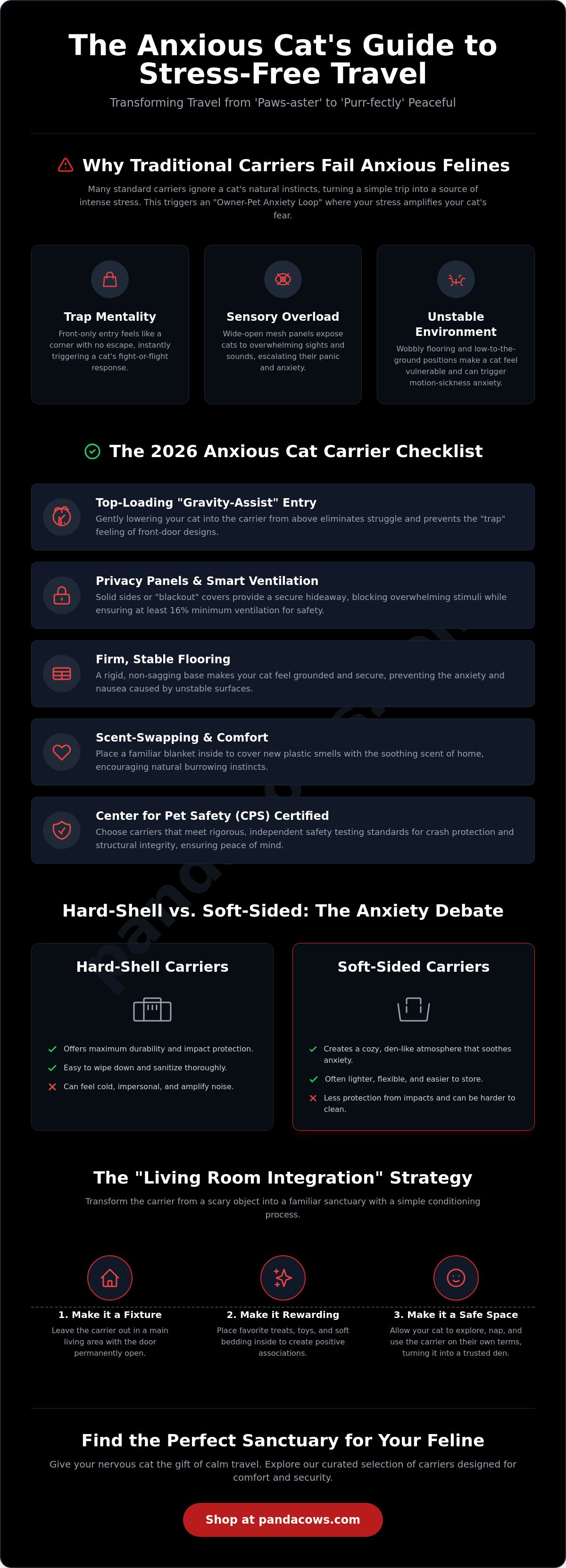
Traditional front-only entrances trigger a cat’s flight response almost instantly. When you try to nudge a reluctant kitty through a small door, they feel cornered. This "trap mentality" is often worsened by sensory overload. While humans might appreciate a panoramic view, wide-open mesh panels can escalate feline panic by exposing them to every passing shadow or loud noise. To find the best cat carrier for nervous cats, we must look for designs that offer privacy and a sense of "purr-sonal" space.
Lingering smells from previous stressful trips also keep cats on edge. A cat's nose is incredibly sensitive; if a carrier still holds the scent of fear or clinic chemicals, your pet will associate the bag with danger before they even step inside. Validating your own stress is the first step toward a solution. A worried human leads to a worried kitty, so choosing a carrier that simplifies the process is a gift to both of you.
The Fight-or-Flight Response in Small Spaces
A deep dive into understanding cat behavior reveals that whiskers are sophisticated sensors, not just decorative fluff. In tight, unfamiliar enclosures, these sensors can go into overdrive, sending "danger" signals to the brain. This creates a negative reinforcement cycle that begins in early kittenhood. You might notice "tell-tale" signs of a nervous traveler, such as heavy panting or frantic pawing at the seams. These aren't just "bad behaviors"; they are desperate attempts to regain control over their environment.
The Importance of Vertical and Horizontal Safety
Nervous felines instinctively prefer to be elevated. Being on the floor makes them feel vulnerable to "predators" like the family dog or a vacuum cleaner. A carrier that allows for a stable, slightly raised position provides a 360-degree sense of security. Stable flooring is equally vital. If the base of the carrier wobbles or dips, it triggers "motion-sickness anxiety." A firm, level surface ensures your cat feels grounded and "udderly" secure, even when the world outside is moving.
Essential Features for the Anxious Feline: A 2026 Checklist
Finding the best cat carrier for nervous cats requires a shift in perspective from mere luggage to a cozy mobile fortress. In 2026, the gold standard for travel security involves more than just a sturdy handle or a locking zipper. Top-loading access is a game-changer for "scaredy-cats" who resist traditional entry. This "gravity-assist" method allows you to gently lower your pet into their sanctuary instead of engaging in a wrestling match at the front door. It transforms a high-stress confrontation into a smooth transition, ensuring the journey starts on a peaceful note.
Privacy panels are another non-negotiable feature for felines who feel exposed in transit. While ventilation is critical for safety, too much visibility often leads to sensory overload. The goal is to find the "Goldilocks" zone: enough airflow to keep them cool, but enough coverage to block out the scary sights of the highway. Solid sides or "blackout" curtains act as a nervous cat’s best friend by providing a visual buffer from the outside world. This sense of enclosure helps maintain their internal "tranquil-purr" even in busy environments.
Scent is the language of security for cats. Adding a calming pet blanket inside the carrier helps mask the "new plastic" smell with familiar, soothing aromas from home. This tactile comfort encourages burrowing, which is a natural feline defense mechanism against anxiety. If your cat likes to keep a close eye on you while feeling tucked away, you might consider our versatile pet carrier backpack for a more integrated travel experience.
Entry Points: The More, The Merrier
Multiple entry points offer versatility for different "anxiety archetypes." A "Vet-Ready" removable top is particularly valuable because it allows a clinician to perform an exam while the cat remains in the safety of their carrier base. Stress-free loading is a process of choice, not force. Having side, front, and top options gives your pet a sense of agency and reduces the "trap" feeling discussed earlier. Following veterinary-approved travel tips can further refine this entry process and help you choose the right opening for your cat's specific personality.
Material Matters: Soft Sided vs. Hard Shell
Soft-sided carriers provide plush linings that are perfect for cats who love to hide and burrow. However, nervous bladders are a reality of travel for many anxious pets. A waterproof pet mat is a travel essential that makes clean-up easy without sacrificing the "safe-den" comfort. Hard shells offer superior protection and are easier to deep-clean after fear-induced accidents. When searching for the best cat carrier for nervous cats, consider your pet's specific "accidental" history and how much structural security they need to feel safe.
Hard Shell vs. Soft-Sided: The Great Anxiety Debate
Choosing between a rigid fortress and a plush cocoon is often the biggest hurdle for owners seeking the best cat carrier for nervous cats. It’s not just a matter of aesthetics; the material impacts how your pet perceives their environment. A hard shell provides a literal barrier against the world, while a soft-sided option offers a tactile embrace that can lower cortisol levels in high-stress situations. Each cat has a unique "purr-sonality," and the right choice depends on whether they find safety in structural strength or soft, burrow-able surfaces.
Durability is a major concern for those with "scratchers." If your cat tends to express their panic through their claws, a soft carrier needs reinforced mesh to withstand the assault. Conversely, the weight of the carrier affects your own posture and movement. A heavy, swinging box can make your cat feel like they're on a turbulent ship, whereas a lightweight, stable design keeps the journey smooth and "paws-itively" predictable. Modern hybrid solutions are now bridging the gap by offering a hard, waterproof base with soft, breathable walls, providing the "wash-ability" of plastic with the lightweight comfort of a tote.
The Case for Hard Carriers
For cats that tend to "lunge" or claw their way out during a stressful car ride, a hard-shell carrier is often the most reliable choice. These rigid structures provide maximum protection during potential impacts and are "udderly" easy to disinfect after fear-based accidents. Because they don't collapse, they maintain a consistent internal volume that helps a panicked cat feel less smothered. If you're just starting your journey toward peaceful travel, following expert advice on cat carrier training for nervous cats can help turn this plastic box into a trusted retreat rather than a source of dread.
The Case for Soft Carriers and Backpacks
Soft-sided designs excel in providing a "safe-den" feeling through plush linings and flexible walls. They are the gold standard for in-cabin air travel because they can compress to fit under seats without losing their structural integrity. For many, a pet carrier backpack is the ultimate solution for high-anxiety pets. By carrying your cat on your back, you keep them close to your heartbeat for constant reassurance while reducing the jarring "swinging" motion that often accompanies hand-held bags. This proximity helps maintain a steady emotional link, ensuring your companion feels supported throughout the journey.
Carrier Conditioning: From "Hiding Under the Bed" to Happy Travels
Most owners treat the travel bag like a guest who only visits for bad news, but you can change that narrative by making the bag a "purr-manent" part of your home decor. The "Living Room Integration" strategy involves placing the carrier in a high-traffic, sunny spot where your cat already feels safe. By leaving the door open and removing the "threat" of the closet, you transform the best cat carrier for nervous cats into a cozy piece of furniture rather than a signal for a vet visit. This simple shift in environment helps your pet see the carrier as a trusted retreat.
Scent-swapping is your next secret weapon for building an emotional link with the travel space. Mask the "new plastic" smell by placing a familiar shirt or a used blanket inside to create a comforting "cat-mosphere." You can then use the Treat-Trail Technique to reward curiosity without adding any physical pressure. Drop a high-value snack near the entrance, then just inside, and eventually at the very back. This allows your pet to explore at their own pace, ensuring they feel in control of the interaction. Once they are comfortable lounging inside, start Short-Burst Training sessions. This involves sitting in the car with the engine running but without actually moving, which helps desensitize your feline to the vibrations and hum of the vehicle before you ever leave the driveway.
Step-by-Step Desensitization
Success is found in small, incremental victories that build confidence over time. Start with Phase 1 by keeping the carrier stationary with the door off or tied open for at least one week. In Phase 2, begin feeding all daily meals inside the carrier to create a strong positive association with the space. Finally, move to Phase 3 by practicing closing the door for 10 seconds while they eat, gradually increasing this time to a full minute. This rhythmic progression ensures your cat feels "udderly" secure as they adapt to the enclosure.
Advanced Bonding Tactics
By incorporating cat training through play and positive reinforcement, you can turn the carrier into a "trick" reward rather than a source of dread. Use synthetic pheromones to send a chemical "calm-down" signal throughout the interior, which mimics the natural scents cats use to mark safe zones. If your pet still shows signs of extreme distress after consistent training, it is wise to consult a professional about travel-specific anxiety medication. To find the perfect tools for your next peaceful journey, browse our curated collection at Panda Cows.
The Panda Cows Choice: Comfort on the Go for Your Feline
At Panda Cows, we believe that your pet is a cherished family member whose emotional well-being is our top "purr-suit." We curate our collection specifically to honor the natural "denning" instinct, transforming every trip into a celebratory experience rather than a stressful chore. Finding the best cat carrier for nervous cats requires a "tail-ored" approach that prioritizes reliability and tranquility, ensuring your companion feels both delighted and secure. By selecting carriers that mimic a natural hidey-hole, we provide a sense of domestic peace even when you're miles from home. This focus on sensory and comfort-oriented language isn't just about fluff; it's about providing a reliable environment for a creature that thrives on routine and safety.
Our dedication to a high quality of life means we only offer gear that anchors itself in durability and excellence. For 2026 travel, navigating airline-approved regulations is a breeze with our high-standard selections that meet the 16% minimum ventilation requirements while offering the privacy your pet craves. We don't just sell products; we provide tools for deepening emotional connections, so every journey becomes a series of "paws-itive" interactions that reflect your deep bond. Whether you're heading to a routine check-up or a cross-country move, our curated travel sanctuaries are designed to protect the "tranquil-purr" of your home life during transit.
Why a Backpack Might Be the Secret Weapon
A pet carrier backpack is often the secret weapon for felines who feel vulnerable when carried at knee-height. Keeping your cat at chest level reduces the feeling of being "prey" to floor-level stressors like barking dogs or bustling crowds. The ergonomic benefits are "udderly" fantastic for owners, too. Hands-free carrying allows you to offer reassuring words or adjust a privacy panel while maintaining a rhythmic, steady pace that calms a nervous heart. Integrated safety tethers provide an extra layer of protection, preventing a frantic "Great Escape" during a busy vet check-in or a crowded airport terminal.
Joining the Panda Cows Community
We invite you to join a community of enthusiasts who recognize that care is a series of meaningful interactions rather than just a routine. Our promise is one of reliability and tranquility, delivered with a touch of whimsy that makes pet ownership truly fulfilling. We're here to help you "moo-ve" past the anxiety loop with gear that supports a vibrant, holistic lifestyle for your four-legged friends. We understand that a peaceful loading process and a cat that feels safe enough to sleep during travel are the ultimate goals for any dedicated owner. Explore our curated travel collection and find your cat’s new sanctuary!
Embark on a Journey of Tranquil Travels
Transforming a "paws-aster" into a peaceful parade is entirely possible when you prioritize your pet's unique perspective. You've learned that a successful trip starts with a sanctuary that honors the "denning" instinct and uses "living room integration" to build trust long before the car engine starts. By choosing empathetic designs that feature privacy panels and top-loading access, you give your feline friend the agency they need to feel secure in any environment. Finding the best cat carrier for nervous cats is about more than just mobility; it's about nurturing the emotional tie that makes every journey together meaningful.
At Panda Cows, we've supported thousands of happy, tranquil pet journeys with gear curated for 2026 safety standards. Our mission is to provide reliable tools that ensure every four-legged traveler enjoys a high quality of life. Whether you're heading to the vet or across the country, we are here to support your animal's journey with a blend of whimsy and professional excellence. Find the Purr-fect Sanctuary for Your Nervous Traveler and discover how the right gear creates lasting confidence. Your companion is ready for a world of "udderly" delightful adventures by your side.
Frequently Asked Questions
Is a hard or soft carrier better for a cat that hates the vet?
Hard carriers are often superior for vet visits because they allow for easy disassembly during exams. A top-loading hard kennel lets the clinician examine your pet while they remain in their "safe-den" base. This minimizes the trauma of being pulled out through a narrow door and helps maintain a sense of security throughout the appointment.
How do I get a nervous cat into a carrier without getting scratched?
Use the "gravity-assist" method to ensure a scratch-free loading experience for both you and your feline. By placing the carrier vertically on its end and lowering your cat in tail-first, you reduce their ability to brace against the sides. This technique turns a frantic struggle into a swift, "udderly" smooth transition that keeps your arms safe.
Can I use a calming spray inside the cat carrier?
Yes, synthetic pheromone sprays are excellent tools for creating a "purr-fectly" tranquil environment inside any travel bag. Spray the interior 15 minutes before travel to allow the alcohol base to evaporate, leaving only the soothing scent behind. This chemical signal helps your cat associate the best cat carrier for nervous cats with security rather than the stress of the unknown.
What is the best airline-approved carrier for an anxious cat in 2026?
The best cat carrier for nervous cats traveling by air in 2026 is one that meets the IATA 16% ventilation standard while offering privacy panels. Look for soft-sided models with mesh that can be partially covered by built-in fabric flaps. These features satisfy airline safety requirements while protecting your pet from the sensory overload of a busy, loud airport terminal.
How long can a nervous cat stay in a carrier during a long trip?
Most cats can safely stay in a carrier for up to 6 to 8 hours during a long journey. It is vital they have access to a clean, absorbent surface and a way to stay hydrated. For trips exceeding this timeframe, plan for "paws-itive" breaks in a secure, enclosed area where they can stretch and use a portable litter box.
Should I cover my cat’s carrier with a towel while driving?
Covering the carrier with a light towel is often the secret to a quiet and "moo-ving" car ride. By blocking out the fast-moving visual stimuli of the road, you help your cat feel hidden and protected from "predators." Just ensure you don't block the ventilation holes, as consistent fresh airflow is vital for their respiratory health and temperature regulation.
How do I clean a carrier after my cat has a fear-based accident?
Use an enzymatic cleaner to completely break down the pheromones left behind by fear-based accidents. Standard soaps might smell clean to humans, but lingering scent markers can trigger anxiety during the very next trip. Using a waterproof pet mat as a liner can also act as a first line of defense to make these deep-cleaning sessions much easier.
What features should I look for in a carrier for a large, nervous cat?
Look for reinforced flooring and wide, top-loading doors when selecting a carrier for a robust, anxious feline. Stability is key; if the bottom of the bag sags under their weight, it creates a "wobble-worry" that escalates panic. Seek out a sturdy frame that maintains its shape even when your large companion shifts their weight during the journey.