

The Ultimate Guide to Hypoallergenic Dog Bed Materials: A Breath of Fresh Air for Your Pup
What if the very spot where your pup seeks comfort is actually the secret source of their persistent scratching and sneezing? It is a heart-tugging cycle when those frequent vet visits for "itchy skin" never seem to provide a permanent fix. You deserve the peace of mind that comes with a non-toxic rest, yet many standard cushions are hidden havens for dust mites and chemical off-gassing. By understanding the science behind hypoallergenic dog bed materials, you can finally create a sneeze-free sanctuary that keeps your four-legged friend resting in total tranquility.
We know you want a home that feels as fresh as a spring morning, so we have curated a guide to materials that refuse to host microscopic squatters. You'll discover how a "sandwich" of barrier technology and breathable natural fibers like bamboo, a material in a textile market valued at $1.2 billion in 2026, can stop the itch at its source. We will walk you through the importance of certifications like CertiPUR-US and Oeko-Tex to ensure your Orthopedic Dog Bed is safe and restorative. Get ready to trade those midnight scratching sessions for a sanctuary that is easy to disinfect and a pup that sleeps soundly through the night.
Key Takeaways
- Learn why standard beds often act as "allergen sponges" and how to identify the low-allergy triggers that keep your pup’s tail wagging instead of their paws scratching.
- Discover the science-backed hypoallergenic dog bed materials that offer a perfect "sandwich" of barrier technology and breathable comfort for even the most sensitive skin.
- Uncover the structural secrets of bed construction to block hidden entry points like zippers and seams where dust mites love to hide.
- Balance the durability of synthetic barriers with the cooling properties of natural fibers to prevent the common "hot sleeper" issue during naptime.
- Master a holistic approach to pet wellness by pairing a clean sanctuary with regular grooming to significantly reduce the overall allergen load in your home.
What Does Hypoallergenic Actually Mean for Your Dog’s Bed?
Is your pup waking up more "ruff" than rested? If they spend their mornings nibbling at their paws instead of chasing dreams, the culprit might be right under their belly. Understanding What 'hypoallergenic' means in the pet world is the first step toward a sneeze-free snooze. In the context of pet furniture, it refers to products designed to be "low-allergy-triggering" rather than entirely "allergy-proof." While no bed can claim to be 100% immune to every environmental irritant, choosing specific hypoallergenic dog bed materials significantly reduces the triggers that lead to discomfort.
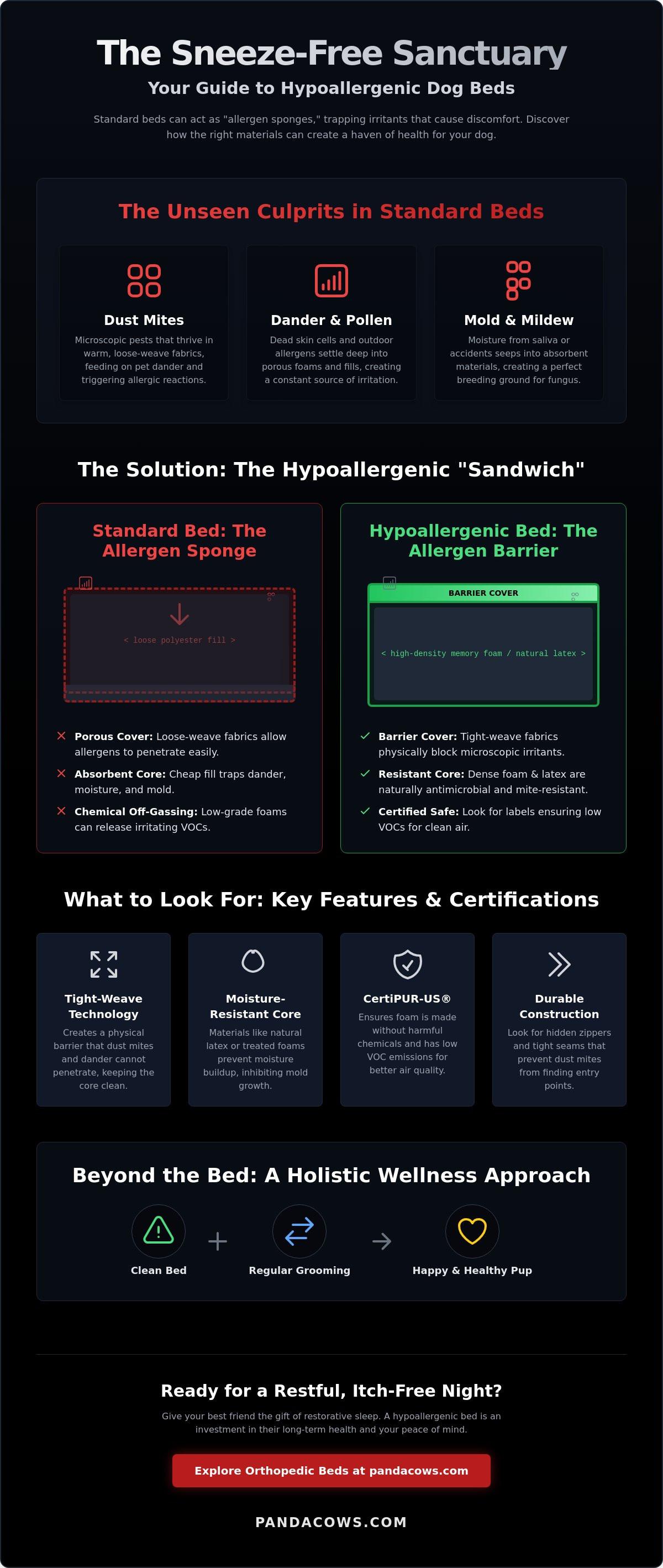
Standard dog beds often transform into "allergen sponges" over time. They trap dander, saliva, and household dust within their loose fibers, creating a microscopic cocktail of irritation. This buildup is a major factor in atopic dermatitis, a chronic skin condition that leaves your four-legged friend with red, inflamed skin and a persistent urge to scratch. By switching to materials that resist these particles, you provide a sanctuary that supports long-term health and vitality. It's about creating a barrier that keeps the bad stuff out so the good rest can get in.
The Three Main Culprits: Dust Mites, Dander, and Mold
Dust mites are the primary uninvited guests in your home, and they love a good snack. They feed on the pet dander trapped in loose-weave fabrics, multiplying rapidly in the warm, dark layers of a cushion. If your pup has a little "accident" or licks their paws frequently, that moisture seeps into porous foam, creating a perfect breeding ground for mold and mildew. This creates a heavy bio-burden, which is the cumulative weight and concentration of biological irritants living inside the cushion over time. High-quality hypoallergenic dog bed materials use tight weaves and moisture-resistant cores to ensure these microscopic squatters never find a place to settle.
Why Your Current Bed Might Be Making Your Pup Itchy
Your current cushion might be "paws-itively" problematic if it relies on cheap polyester fill or low-grade foam. These materials break down quickly, creating fine dust and releasing chemical odors through a process called off-gassing. This can irritate a dog's sensitive respiratory system, leading to sneezes and runny eyes even if they don't have skin-based allergies. Additionally, a "dirty dirty dog" coming in from a romp outside brings pollen and grass spores directly into their sleeping space. Without a protective barrier, these outdoor allergens settle deep into the fill, keeping the itch-cycle alive long after the walk is over. Investing in an Orthopedic Dog Bed with a specialized cover helps trap these external irritants on the surface where they can be easily wiped away.
Top-Tier Hypoallergenic Dog Bed Materials: From Cover to Core
To create a truly sneeze-free sanctuary, you have to look at your pup's sleep space as a high-tech sandwich. The outer shell acts as the first line of defense, while the inner core provides the structural integrity needed to keep allergens at bay. Selecting the right hypoallergenic dog bed materials for both layers ensures that irritants like mold and chemical vapors don't stand a chance. A critical component of this defense is "tight-weave" technology. When fabric fibers are woven incredibly close together, they create a physical barrier that microscopic irritants simply cannot penetrate, keeping the internal cushion pristine.
The Gold Standard: Organic Latex and High-Density Memory Foam
When it comes to the heart of the bed, 100% natural latex is a "top-dog" choice because it is inherently antimicrobial and resistant to dust mites. Unlike traditional polyester clusters that have large gaps for dander to settle into, high-quality orthopedic dog beds utilize dense foam structures that refuse to host unwanted guests. This density is vital because it prevents the bio-burden from sinking deep into the cushion. For owners worried about chemical sensitivities, looking for a CertiPUR-US certification is a must. This ensures the foam has low VOC emissions and is made without ozone depleters, providing a breath of fresh air for pups with sensitive respiratory systems.
Barrier Fabrics: Microfiber, Tightly Woven Cotton, and Hemp
Choosing the right cover material is a "fur-tunate" opportunity to stop itching before it starts. While microfiber is a popular synthetic choice for its durability and tight weave, natural hemp is gaining traction for its impressive antibacterial properties. The most important metric to watch is the pore size of the fabric. To effectively block mites, you want a pore size under 10 microns. This level of precision keeps the core clean and makes it much easier to manage the environment. Since even the best materials collect surface pollen, having a removable cover that is high-heat washable is essential for knowing how to kill dust mites in bedding effectively. To add an extra layer of protection for your home, you might consider pairing the bed with a Waterproof Pet Mat to catch any moisture before it reaches your floors.
Beyond the fabric itself, a waterproof liner serves as a secondary barrier for the core. This prevents saliva or moisture from seeping into the foam, which is exactly how mold and mildew start their "ruff" takeover. By combining a tight-weave outer shell with a protected, high-density core, you create a sleep space that stays fresh, clean, and non-toxic for years to come. This multi-layered approach is the secret to a dog that wakes up feeling vibrant instead of itchy.
Natural vs. Synthetic Materials: Which is Better for Sensitive Skin?
Choosing between synthetic armor and natural comfort is a major decision for any pet parent. While synthetic barriers offer incredible durability, natural fibers provide the breathability that keeps a "hot sleeper" from panting through the night. When evaluating hypoallergenic dog bed materials, you'll find that the best choice depends on whether your dog struggles more with environmental dust or sensitive, reactive skin. Medical experts often recommend allergen-proof bedcovers to manage dust mite sensitivities, but the material composition determines how comfortable that cover actually feels for a long winter’s nap.
Regardless of your choice, search for the OEKO-TEX Standard 100 label. This certification ensures that every thread and zipper has been tested for over 100 harmful substances. It is a non-negotiable marker for safety; it gives you peace of mind that your pup isn't inhaling hidden toxins while they dream of squirrels. This standard is especially vital for beds with high-density cores, as it verifies the materials are safe for close, prolonged contact with your dog's skin and respiratory system.
Synthetic Superstars: Microfiber and Nylon
Synthetics like microfiber are the heavy hitters of allergen blocking. Because the fibers are so fine, they can be woven into a surface that is nearly impenetrable to microscopic particles. These materials are "tail-waggingly" easy to clean and stand up to heavy digging from enthusiastic nesters. However, they can trap body heat. If your dog already runs warm, a purely synthetic bed might lead to midnight repositioning. These are ideal for dogs with severe environmental allergies who need a fortress against pollen and dust.
Natural Wonders: Cotton, Hemp, and Bamboo
Natural fibers offer a cooling, biodegradable alternative that feels as soft as a cloud. Bamboo-derived fabrics are particularly impressive; they are naturally hypoallergenic and wick moisture away from the skin. There is a growing consumer preference for these eco-friendly alternatives in 2026, as they provide a soothing surface for dogs prone to overheating. While materials like hemp and organic cotton are exceptionally breathable and free from harsh dyes, they do require more frequent washing to prevent dander buildup in the fibers. They are the perfect match for dogs with chemical sensitivities who need a gentle, airy place to rest. You can even layer a Calming Pet Blanket over their favorite spot to add a touch of natural coziness without sacrificing the hypoallergenic benefits.
The Structural Secret: How Bed Construction Blocks Irritants
Even if you invest in the most advanced hypoallergenic dog bed materials, your efforts are wasted if the bed's construction has more gaps than a block of Swiss cheese. Think of construction as the fortress walls of your pup's sanctuary. If there is a crack in the gate, those microscopic squatters will find their way in. Zippers, seams, and even decorative vents are often the "hidden" entry points where dander and dust mites congregate. To ensure your four-legged friend stays truly comfortable, you need a design that seals these vulnerabilities while allowing for effortless maintenance. A "paws-itive" outcome depends on a build that is as smart as it is soft.
A "hypoallergenic-ready" bed should meet a strict set of criteria to maintain its integrity over time. When you are shopping for a new resting spot, look for these specific features:
- Internal waterproof liners to stop mold-inducing moisture.
- Overlocked or reinforced seams to prevent mite migration.
- 360-degree zippers that make removal and washing a breeze.
- Screened or filtered vents that allow airflow without letting in dust.
Sealed Seams and Internal Liners
The "double-case" method is a game-changer for dogs with atopic dermatitis. This involves placing an allergen-proof inner cover directly over the foam core, tucked neatly under the decorative outer shell. This extra layer ensures that even if a few irritants sneak through the first zipper, they cannot settle into the support layers. Utilizing overlocked or sealed seams is equally vital; these reinforced edges act as a "no-fly zone" for dust mites trying to reach the foam. A waterproof liner is the best defense against mold-inducing moisture, ensuring that a little drool or an accidental spill does not turn into a big problem for your dog's skin health.
Washability: The Ultimate Allergen Killer
A bed that is impossible to clean is just a countdown to a skin flare-up. To maintain the efficacy of your hypoallergenic dog bed materials, you must wash the components frequently. Research indicates that allergens must be washed away at a temperature of 140°F (60°C) to kill dust mites effectively. We recommend beds with 360-degree zippers because they allow you to strip the cover in seconds, making weekly maintenance a routine activity rather than a chore. For an added layer of defense, you can use waterproof pet mats to catch surface allergens and moisture before they ever reach the main cushion. By keeping the surface clean, you reduce the overall bio-burden and keep your home smelling fresh.
Are you ready to give your pup the sneeze-free sleep they deserve? Explore our range of Orthopedic Dog Beds and accessories designed for ultimate comfort and durability.
Sleep Tight, Don’t Let the Dust Mites Bite: A Holistic Approach
Providing a safe space for your companion is more than just a purchase; it's a series of meaningful interactions that deepen your bond. While selecting the right hypoallergenic dog bed materials is the cornerstone of a sneeze-free life, viewing the bed as one part of a "Total Comfort Zone" ensures long-term success. By managing the air your pup breathes and the dander they carry, you create an environment where health and happiness can truly thrive. This holistic mindset transforms a simple piece of furniture into a vital tool for wellness and tranquility.
To keep the allergen load at an all-time low, consider how the rest of your home interacts with your dog's sanctuary. High-efficiency air purifiers work beautifully alongside a clean bed to trap airborne particles before they settle into the fabric. You should also pay close attention to your dog’s behavior after switching to a new material. A noticeable reduction in paw-licking or face-rubbing is a clear sign that your new setup is doing its job. When your four-legged friend can finally rest without the constant interruption of an itch, you gain the peace of mind that comes from knowing their environment is truly non-toxic.
The Grooming Connection: Reducing Dander at the Source
A clean dog means a longer-lasting hypoallergenic sanctuary. Using a pet grooming vacuum allows you to capture loose fur and skin cells before they ever hit the bed. This proactive step is especially important after outdoor adventures where your dog might become a "pollen-hitchhiker," bringing grass spores and environmental irritants back to their sleeping quarters. Regular brushing with a Self-Cleaning Slicker Brush works in tandem with your bed's barrier technology to ensure that the hypoallergenic dog bed materials stay effective for years to come. By removing the debris at the source, you protect the integrity of the bed's tight-weave fibers and keep the "bio-burden" at a minimum.
Choosing the Right Panda Cows Solution
Our mission is to support your animal's journey toward a high quality of life with products that are as reliable as they are delightful. Our Orthopedic Dog Bed and Waterproof Pet Mat options align perfectly with your hypoallergenic goals, offering the dense support and moisture barriers needed to repel irritants. Whether your pup is a "hot sleeper" who needs the breathability of natural fibers or a senior dog requiring the pressure relief of high-density foam, we have a solution that fits your lifestyle. A happy, itch-free dog is a "tail-wagging" success that makes every effort worthwhile. Explore our curated collection of comfort-first dog beds! and give your pup the restorative, sneeze-free sanctuary they deserve.
Give Your Pup the Gift of Sneeze-Free Dreams
Your journey toward a more comfortable home starts with understanding how the right environment impacts your dog's vitality. By choosing premium hypoallergenic dog bed materials and prioritizing smart construction features like sealed seams, you're doing more than just buying a cushion. You're building a sanctuary that protects their skin and respiratory health from microscopic irritants. We've explored how high-density cores and breathable barrier fabrics work together to stop the itch-cycle before it begins.
Our collection features CertiPUR-US Certified Foams and high-density orthopedic support to ensure your furry friend wakes up refreshed rather than restless. Join the thousands of happy, itch-free pups who've already made the switch to a cleaner way of sleeping. It's time to trade those midnight scratching sessions for peaceful, restorative rest that strengthens the bond you share.
Shop Our Sneeze-Free Sanctuary: Hypoallergenic & Orthopedic Dog Beds
Here's to many more "fur-tunate" mornings and deep, dreamy naps for your favorite four-legged companion.
Frequently Asked Questions
Can a dog bed really be 100% hypoallergenic?
No bed can be 100% allergy-proof because "hypoallergenic" simply means it is less likely to cause a reaction. While it is "paws-itively" impossible to eliminate every environmental trigger, choosing high-quality hypoallergenic dog bed materials drastically reduces the presence of dust mites and mold. It creates a much safer sanctuary for your four-legged friend by minimizing the "bio-burden" that typically accumulates in standard pet furniture over time.
How often should I wash a hypoallergenic dog bed cover?
You should wash the cover at least once a week to keep allergens from building up on the surface. Using water at 140°F (60°C) is the most effective way to neutralize dust mites that might be hitching a ride on your pup's fur. Regular maintenance ensures the "sneeze-free" promise of the bed stays intact, providing a consistently fresh and nurturing place for your companion to rest their weary head.
What is the best material for a dog with skin allergies?
Organic latex and high-density memory foam are the top choices for dogs with sensitive skin. These hypoallergenic dog bed materials are naturally resistant to microscopic irritants because their dense structures don't allow dander to settle deep inside. Pairing these with a tight-weave cover made of hemp or bamboo provides a cooling, breathable surface that feels gentle against inflamed skin while acting as a reliable barrier against common household triggers.
Are memory foam dog beds good for dogs with allergies?
High-density memory foam is excellent for allergic dogs because its solid structure leaves no room for dust mites to nest. Unlike cheap polyester fill that acts like an "allergen sponge," solid foam cores remain clean and supportive for years. Look for CertiPUR-US certified options to ensure the bed is also low in VOC emissions, which helps protect your pup's sensitive respiratory system from chemical off-gassing while they sleep.
Do dust mites live in dog beds?
Yes, dust mites frequently colonize dog beds where they feed on the shed dander and skin cells trapped in the fabric. These microscopic squatters thrive in warm, dark environments with loose-weave covers that allow them to move freely. Choosing a bed with a "tight-weave" outer shell and a waterproof liner is the best way to evict these uninvited guests and keep your pup's sleep space "tail-waggingly" clean.
How can I tell if my dog is allergic to their bed material?
Watch for signs like persistent scratching, red skin, or watery eyes that occur shortly after your dog lies down. If your pup seems "ruff" around the edges or nibbles at their paws specifically after naptime, their bed might be the source of the irritation. Switching to a non-toxic sanctuary can help you determine if the material was the culprit, giving your companion the tranquil and itch-free rest they truly deserve.
Does "hypoallergenic" mean the bed is chemical-free?
"Hypoallergenic" primarily means the product is less likely to trigger an allergic reaction, but it doesn't automatically mean it's free of all chemicals. To ensure a truly non-toxic experience, you must look for specific markers like OEKO-TEX Standard 100 or CertiPUR-US certifications. These high-standard quality markers verify that the materials have been tested for harmful substances, providing you with the peace of mind that your dog's bed is both safe and restorative.
Can I use a regular pillowcase as a hypoallergenic cover for my dog bed?
A regular pillowcase is not a suitable substitute because its fabric pores are usually too large to block microscopic allergens. While it might feel cozy, a standard weave allows dust mites and dander to pass through easily, rendering the core of the bed vulnerable. You need a specialized barrier fabric with a pore size under 10 microns to create a "fortress" that effectively shields your pup from the triggers that cause sneezing and itching.