

The Ultimate Guide to Hands-Free Dog Slings for Puppies: Comfort on the Go
Did you know that nearly one third of puppies receive minimal socialization during their most critical developmental weeks? This often happens because balancing "paws on the ground" safety with the need for exploration feels like a high stakes juggling act. You want your new best friend to experience the world, but puppy fatigue is real and carrying a wiggly furball while managing your daily chores is a recipe for a sore back. It's completely natural to feel a bit "paws-itively" overwhelmed by the demands of keeping your pup close while staying productive.
Choosing a high quality hands-free dog sling for puppies transforms these stressful outings into a mobile nursery experience where your pup stays snug against your heart. This guide shows you how to select a carrier that prioritizes both your comfort and your pet's safety, allowing you to reclaim your mobility while providing a calming environment for a nervous pup. We'll walk through the essential safety features to look for and how to use your sling to socialize your puppy before they're fully vaccinated. Get ready to turn every errand into a bonding adventure that nurtures your puppy's well being and keeps your hands free for whatever life throws your way.
Key Takeaways
- Understand why a hands-free dog sling for puppies acts as a vital developmental bridge, offering security for your "velcro puppy" while you tackle your daily to-do list.
- Learn the "Goldilocks" secret to selecting breathable materials and ensuring the perfect depth, which prevents overheating and keeps your pup snugly supported.
- Master the art of proper spinal alignment and temperature monitoring to ensure every outing is as safe as it is cozy; your puppy's wellness is always the top priority.
- Discover how to use the "Safe Observation Deck" strategy to build your puppy's confidence through positive reinforcement, all while keeping their paws safely off the ground.
- Identify the signs that your growing explorer is ready to graduate from a soft sling to a more structured Pet Carrier Backpack for those longer hikes and travel adventures.
The Puppy Paradox: Why a Hands-Free Sling is a Game-Changer
Welcoming a new puppy into your home is a whirlwind of joy and chewed sneakers. But new owners quickly encounter the "Puppy Paradox": your little explorer is desperate to see the world, yet their tiny legs simply can't keep up. A hands-free dog sling for puppies isn't just a stylish accessory; it's a specialized crossbody developmental tool that solves this dilemma. By providing a secure pouch, you allow your pet to experience the sights and sounds of the neighborhood without overtaxing their developing bodies. This type of Pet carrier acts as a bridge between the safety of the nursery and the excitement of the great outdoors.
Young puppies are essentially "velcro" creatures who thrive on proximity for emotional security during their first few months. Because their joints are fragile and their stamina is low, long walks are often out of the question until they're much older. This is where "passive socialization" becomes your secret weapon. Since the critical socialization window is between 3 and 14 weeks, using a sling allows them to observe traffic, people, and other dogs from a safe, elevated vantage point. It's a wonderful way to ensure they grow into confident, well-adjusted adults without the physical strain of keeping pace on a leash.
The Emotional Link: Strengthening the Human-Animal Bond
When your puppy is tucked against your chest, they can feel the rhythmic thrum of your heartbeat. This physical closeness is a powerful tool for reducing cortisol levels and soothing the "new home" jitters that many pups experience. The "fourth trimester" for puppies is a vital transitional period where they require constant reassurance and warmth to build a lasting foundation of trust. By acting as a safe harbor, the sling helps your pup process new environments without feeling vulnerable or abandoned. This nurturing approach ensures that their early experiences are filled with tranquility rather than fear.
Practical Freedom for the Modern Pet Parent
Life doesn't stop just because you have a new four-legged roommate. A hands-free dog sling for puppies lets you navigate busy farmers markets, crowded coffee shops, or public transit with total confidence. You'll avoid "paws-asters" in high-traffic areas where tiny feet might get stepped on or where unvaccinated pups shouldn't touch the ground. Even at home, these slings are life-savers for multi-tasking. You can fold laundry or answer emails while your sleepy pup snoozes soundly against you, ensuring they stay calm while you stay productive. It's the ultimate solution for the parent who wants to provide elite care without sacrificing their daily rhythm.
Anatomy of the Perfect Hands-Free Dog Sling for Puppies
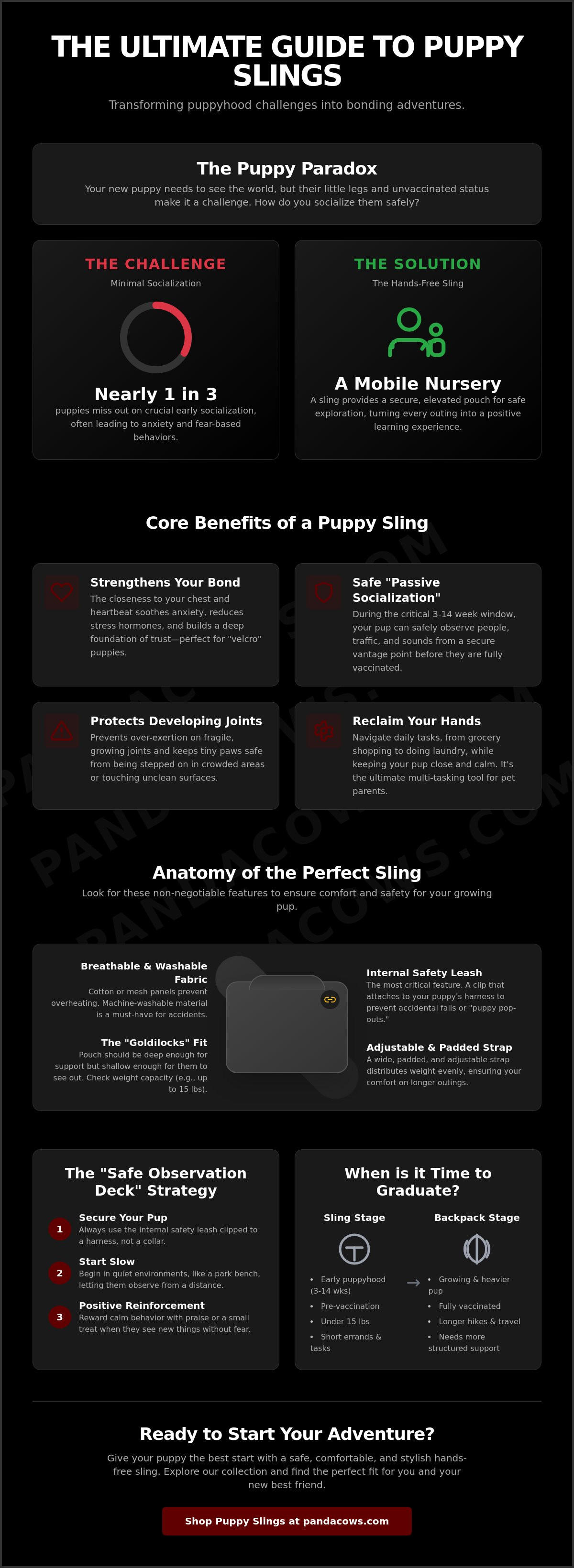
Selecting the right hands-free dog sling for puppies is a bit like choosing a favorite sweater; it needs to be soft, breathable, and a perfect fit. Since puppies can't regulate their body temperature as efficiently as adult dogs, material choice is paramount. Look for high-quality cotton or specialized mesh panels that allow for maximum airflow. These fabrics prevent your little one from overheating during those warm afternoon errands. While you are out and about, a machine-washable fabric becomes a non-negotiable feature. Puppies are prone to the occasional "paws-aster" or nervous accident, so being able to toss the carrier into the wash ensures a fresh and hygienic environment for your next trip.
The depth of the pouch is another critical factor in achieving the "Goldilocks" fit. If a sling is too deep, your puppy might feel swallowed by the fabric, which limits their view of the world. Conversely, a shallow sling increases the risk of them wiggling out. Aim for a design that allows their head to peek out comfortably while their weight is evenly supported. Since puppies grow at an astonishing rate, check the weight capacity early on. Many slings are designed for pets up to 15 pounds, but always plan for that inevitable growth spurt to ensure your investment lasts more than a few weeks.
Safety Features You Cannot Skip
The most vital component of any sling is the internal safety leash. This small clip attaches to your puppy's harness, effectively preventing the "puppy pop-out" if they get startled. Depending on your pet's temperament, you might prefer a drawstring closure for a snugger fit or an open pocket for more freedom. For those evening strolls where safety is paramount, pairing your sling with a LED Dog Collar ensures you both stay visible and vibrant. High-visibility reflective strips on the sling itself also help keep you safe near traffic.
Ergonomics for the Human Half of the Equation
Your comfort is just as important as your puppy's. A hands-free dog sling for puppies should feature wide, padded shoulder straps that distribute weight across your torso rather than digging into your neck. This crossbody design protects your lower back and allows for true hands-free mobility. Early Puppy Socialization is much easier when you aren't constantly adjusting a slipping strap. By choosing a carrier with adjustable lengths, you can ensure the pup sits at the ideal height against your heart, fostering tranquility for both of you.
Safety First: Preventing Paws-asters on the Go
While the construction of your carrier is crucial, the way you actually use your hands-free dog sling for puppies determines whether your outing is a success or a "paws-aster." Safety goes beyond just clicking a buckle; it requires a keen eye for your puppy's physical posture. One common mistake is allowing a pup to slouch into a tight "C-curve" for extended periods. While they look like a little bean, staying in that position can put unnecessary pressure on their developing spine. Instead, ensure their weight is supported across their entire bottom and thighs, much like a well-designed baby carrier. This ergonomic support keeps them comfortable while preventing long term structural issues.
When choosing a safe and comfortable dog carrier, you must also prioritize thermal regulation. Since puppies are tucked into a fabric pouch against your own body heat, they can warm up quickly. Perform regular temperature checks by feeling their ears or belly. If they start panting or seem restless, it's time for a break. Use the "Two-Finger Rule" to check the tightness of any internal safety straps or harnesses; you should be able to slide two fingers comfortably between the strap and your pup's body. This ensures they are secure without being constricted. Don't forget that even the most comfortable pup needs a "paws" from the pouch. Every 30 to 60 minutes, find a safe spot to let them out for a quick stretch and a potty break. This prevents stiffness and helps with house training by keeping their elimination schedule on track.
Puppy Positioning 101
Finding the right balance between "sitting" and "lying" depends on your puppy's age and size. Younger pups often prefer to lie down, while older, curious ones might want to sit up and watch the world go by. Regardless of the stance, their head must always remain visible with clear, unobstructed airways. If your sling feels a bit deep for a tiny breed, you can use a calming pet blanket to pad the bottom. This adds a layer of plush comfort and lifts them just enough to see over the edge, turning a potentially scary dip into a cozy observation deck that smells like home.
Environmental Awareness
Being a "sling parent" means you are the guardian of your puppy's personal space. You'll likely encounter "leash-reactive" dogs or enthusiastic strangers who want to pet your pup. Keep a respectful distance to prevent your puppy from feeling trapped or overwhelmed. Teach your pup that entering and exiting the hands-free dog sling for puppies happens only on your command. This prevents them from trying to leap out the moment you stop walking. Finally, be mindful of your surroundings; low-hanging branches or shop displays can easily snag the fabric. A little bit of vigilance ensures your "snuggle-fest" on the go remains a safe and tranquil experience for everyone involved.
Socialization Strategies: Using Your Sling to Build Confidence
The "Socialization Gap" is a silent challenge for many new owners. While you're waiting for those final rounds of shots, your puppy's critical learning window is wide open. A hands-free dog sling for puppies serves as a "Safe Observation Deck," allowing your pet to witness the chaos of a busy street corner without the fear of being trampled. By keeping them at chest height, you're helping them build neutrality toward screeching bus brakes, zooming bicycles, and barking neighbors. This exposure is vital for preventing future reactivity and ensuring your dog remains unbothered by the hustle and bustle of city life. It's a "paws-itively" brilliant way to introduce the world while keeping them snug against your heart.
Positive reinforcement is the secret sauce to a successful sling session. Keep a pocket full of high-value treats and reward your pup every time they calmly observe a new stimulus. If a loud truck passes and they remain relaxed, a tiny nibble of chicken confirms that they are safe and doing a great job. Start with short five-minute "living room tours" to get them used to the fabric before graduating to the driveway, then the park. This gradual approach prevents sensory overload and keeps the experience celebratory rather than stressful. You're not just carrying them; you're actively coaching them through life's big moments.
The Vaccination Gap Solution
Veterinarians often warn against letting young pups walk in high-traffic areas due to ground-borne risks like Parvo. However, staying indoors until 16 weeks can lead to a "socialization deficit" that is hard to correct later. The hands-free dog sling for puppies offers a brilliant compromise by keeping paws safely off the pavement while still engaging their senses. You should always consult your vet about the specific risks in your neighborhood, but most professionals agree that "paws-in-sling" exploration is a fantastic way to bridge the gap between birth and full immunity. It allows for a world of discovery without the "paws-asters" of early illness.
Transitioning to Independence
As your puppy grows more confident, you'll notice signs they're ready for more "paws-on-ground" time. They might start wiggling more or looking toward the floor with intense curiosity. When this happens, it's time to start mixing sling time with a reflective dog harness for short, controlled walks. The sling then becomes a valuable "reset" tool; if the environment gets too loud or they become overstimulated, simply tuck them back into their safe harbor to decompress. This back-and-forth approach ensures they never feel overwhelmed as they graduate toward full independence. Explore our curated collection of puppy essentials to find everything you need for these early adventures.
Beyond the Sling: Choosing Your Next Adventure Gear
As your pup graduates from those wobbly first steps to confident strides, you'll notice they're getting a bit too "paws-some" for their starter pouch. While the hands-free dog sling for puppies was the ideal mobile nursery for those early weeks of life, your pet's inevitable growth spurt eventually demands more "paws-bust" support. Investing in quality travel gear that evolves with your dog’s lifestyle ensures that your bonding adventures don't have to stop just because they've hit a double-digit weight. Transitioning to a more structured option, such as a pet carrier backpack, allows you to maintain that heart-to-heart closeness while providing the spinal stability required for longer excursions. This transition marks an exciting new chapter in your pet's journey toward adult independence and outdoor exploration.
The shift from a soft sling to a structured carrier is often driven by the increasing physical needs of a developing dog. While a hands-free dog sling for puppies is unmatched for tranquility and early socialization, a backpack provides the necessary frame to support a heavier pet without causing uneven shoulder strain for you. This is especially important during the transition period when your pup is too big for a sling but hasn't yet developed the full stamina for five-mile hikes. By choosing gear that prioritizes ergonomics for both of you, you're setting the stage for a lifetime of comfortable, stress-free travel that nurtures your bond every step of the way.
Backpacks vs. Slings: Which Wins?
Choosing the right gear often depends on the "vibe" of your adventure and the specific physical traits of your breed. For larger or more muscular breeds like a Pitbull mix, the even weight distribution of a backpack is a total game-changer for your posture and back health. These structured carriers also offer superior storage capacity for your outing essentials. You can easily tuck away a Portable Pet Water Bottle and extra poop bags without feeling weighed down. While the sling remains the champion of quick errands and "velcro" bonding at home, the backpack is your best friend for navigating "ruff" terrain and all-day city travel where you need to be prepared for anything.
The Panda Cows Quality Promise
We understand that the "puppy shark" teething phase is a real test for any fabric, which is why we anchor our designs in excellence and durability. Our collection is built to withstand curious nibbles and enthusiastic wiggles alike, ensuring your gear stays vibrant and safe through every growth spurt. We curate our selection to celebrate the unique emotional link you share with your animal, focusing on holistic well-being and high-end standards. Our carriers aren't just tools for transport; they are instruments for creating meaningful interactions and a high quality of life. Ready to find your next favorite travel tool? Explore our whimsical and reliable carrier collection today!
Step into a World of Paws-ibility
Navigating the "fourth trimester" with your new companion doesn't have to mean choosing between their safety and your mobility. You've discovered how a hands-free dog sling for puppies serves as a vital bridge for socialization, helping your pet observe the world while staying snug against your heart. By prioritizing ergonomic alignment and breathable fabrics, you ensure their early adventures are filled with tranquility rather than stress. As your little explorer grows, transitioning into more structured gear will keep the momentum of your shared journey alive.
Panda Cows is dedicated to being your partner in this beautiful bond. Our offerings are curated for durability and comfort, designed by pet enthusiasts who truly understand the nuances of pet ownership. We believe that every interaction is a chance to deepen your connection and improve your pet's quality of life. Find the perfect snuggle-spot in our Pet Carrier Collection and take advantage of free shipping on all orders over $50. We can't wait to see where your next adventure takes you both!
Frequently Asked Questions
At what age can I start using a hands-free dog sling for my puppy?
You can begin using a hands-free dog sling for puppies as soon as your new friend arrives home, typically around the eight-week mark. This early introduction helps them feel secure during the "velcro" stage of their development. While they are tiny, ensure they are well-supported and can breathe easily. It's a "paws-itive" way to start bonding immediately while keeping your hands free for those necessary puppy-proofing tasks around the house.
How long can a puppy stay in a carrier sling at one time?
Puppies should ideally stay in a sling for no more than 30 to 60 minutes at a single stretch. Even the most content pup needs a "paws" to stretch their legs, hydrate, and take a potty break. Since their joints are still developing, regular movement is essential for their physical health. Watch for signs of restlessness or overstimulation, which indicate your little one is ready for some floor time or a nap.
Is a dog sling better than a pet carrier backpack for small puppies?
A sling is often superior for very young puppies because it keeps them against your chest, providing heart-to-heart comfort that reduces anxiety. This proximity is vital for early socialization and building trust. However, as your pet grows and gains weight, transitioning to a Pet Carrier Backpack is a "fur-tunate" choice for your own back health. Backpacks offer better weight distribution for longer walks once your pup has outgrown the soft sling.
Will using a sling make my puppy too clingy or cause separation anxiety?
Using a sling actually helps build a confident, secure foundation rather than creating a "clingy" dog. By providing a safe harbor during their early weeks, you're teaching them that the world is a non-threatening place. This security eventually leads to more independence as they grow. Balance sling time with independent play to ensure they become well-adjusted adults who feel "paws-itively" comfortable both in your arms and on their own.
How do I clean a dog sling after a puppy potty accident?
Most high-quality slings are machine washable, making them easy to refresh after a puppy "paws-aster." Use a gentle cycle with cold water and a pet-safe detergent to remove any odors or stains. It's best to air dry the fabric to maintain its shape and durability. For a quick fix between deep cleans, you can place a Waterproof Pet Mat at the base to catch small drips and keep the carrier fresh for your next outing.
Can I use a hands-free sling for a puppy that hasn’t had all its shots yet?
Yes, a hands-free dog sling for puppies is one of the best tools for exploring before they are fully vaccinated. It allows your pet to experience the sights and smells of the neighborhood without their paws touching potentially contaminated ground. This "safety first" approach lets you maximize the critical socialization window while protecting them from ground-borne risks. Always check with your vet for specific local health advice before heading out.
What should I do if my puppy tries to jump out of the sling?
Always secure the internal safety clip to your puppy's harness to prevent any unexpected leaps. If they seem wiggly, use positive reinforcement like small treats to reward calm behavior while they are inside. You might also try shorter walks to prevent them from becoming overstimulated. A calm, reassuring voice goes a long way in turning a jumpy pup into a relaxed passenger who enjoys the view from their Safe Observation Deck.