

Pitbull Harness for Strong Dogs: The Ultimate Guide to Control and Comfort in 2026
Did you know that in a 30 mph collision, a 50-pound dog can exert more than 1,500 pounds of force against their restraints? It's a staggering number that highlights why a standard strap just won't cut it for your muscular companion. You've likely felt that raw power on the other end of the leash, perhaps even dealing with the frustration of a pitbull harness for strong dogs that snaps under pressure or leaves painful chafing on your pup's sensitive skin. It's exhausting when a walk meant for bonding turns into a struggle to keep your furry friend from backing out of their gear.
We believe every walk should be filled with pure joy rather than worry. This guide helps you choose a harness that handles your Pitbull's strength while protecting their unique, barrel-chested build. From exploring the new ASTM F3725-25 safety standards published in November 2025 to identifying escape-proof designs, we'll show you how to achieve a secure fit that provides total peace of mind. Get ready to transform your daily outings into an udderly pawsome experience for both you and your strong, loving companion.
Key Takeaways
- Learn how to navigate the unique "barrel chest" challenge by measuring the widest part of the ribs for a secure, escape-proof fit.
- Discover why tactical-grade hardware and box-X stitching are essential features for a reliable pitbull harness for strong dogs.
- Master the difference between front-clip and back-clip mechanisms to choose the right control style for your daily adventures.
- Protect your companion’s sensitive skin from friction using premium padding like neoprene to ensure every walk is pure joy.
- Apply the "Two-Finger Rule" to find that udderly pawsome balance between a snug hold and breathable comfort.
Why Standard Harnesses Struggle with Muscular Pitbull Anatomy
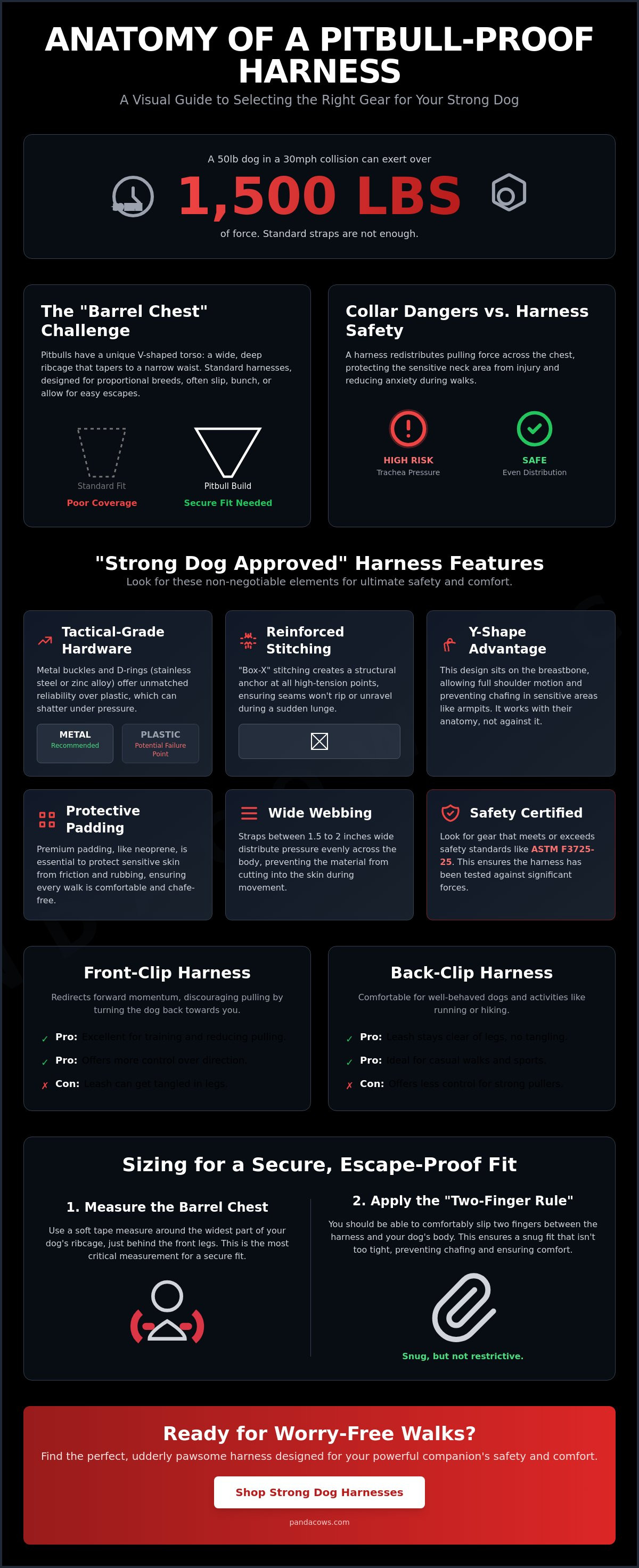
Pitbulls are often called "velvet burritos" for their cuddly nature, but their physical build is pure athlete. They possess a distinct barrel-chested anatomy, featuring a wide, deep ribcage that tapers sharply into a narrow waist. This unique "V-shape" or "conical" torso is exactly why standard gear fails so often. Most generic options are designed for proportional breeds like Labradors, meaning they frequently slide sideways or bunch up when a Pittie starts to move. Finding a reliable pitbull harness for strong dogs requires looking beyond basic straps to find gear that respects these specific biomechanics.
These dogs also boast a low center of gravity combined with incredible explosive power. When a Pitbull decides to move, they use their entire muscular frame, not just their legs. This creates massive tension on high-impact points. If a harness isn't crafted with heavy-duty materials, the force of a sudden lunge can cause standard plastic buckles to shatter or seams to rip. Additionally, their powerful, sloping shoulders are a challenge for security. Without a snug, custom-fit design, a determined escape artist can simply shrug their shoulders and back out of a loose vest in seconds.
From daily strolls to high-energy hikes, your gear must provide a secure connection without compromising your companion's health. Understanding different dog harness types is the first step toward ensuring your furry friend lives their best, most comfortable life. Choosing the right fit ensures you maintain control while your dog enjoys the freedom to explore safely.
The Problem with Neck-Leash Tension
Relying on a neck collar for a strong puller is more than just a control issue; it's a health risk. When a dog lunges, a collar puts direct pressure on the trachea and thyroid gland. This often triggers a gag reflex that doesn't just cause physical discomfort but also spikes the dog's anxiety levels. High tension around the neck can actually exacerbate pulling behavior as the dog tries to "outrun" the pain. A quality harness redistributes this force across the sternum and chest plate, protecting the throat and keeping your walks calm and happy.
Anatomical Fit: The Y-Shape Advantage
The Y-shape design is the gold standard for muscular breeds. This structure sits directly on the breastbone, allowing for a full range of motion in the shoulders. Unlike restrictive no-pull harnesses that use a horizontal band across the front legs, the Y-shape ensures your dog can run and jump without their gait being hindered. This design also prevents the material from sliding into the sensitive armpit area, which is a common cause of harness burn or chafing. By choosing a fit that follows the natural lines of their body, you provide both comfort and the peace of mind that your gear is working with their anatomy, not against it. It’s an udderly pawsome way to strengthen the bond during every outdoor adventure.
Heavy-Duty Hardware: What Makes a Harness "Strong Dog" Approved
When you're dealing with the raw power of a bully breed, the hardware is your first line of defense. A high-quality pitbull harness for strong dogs isn't just about the fabric; it's about the hidden points of failure. You should always look for "box-X" stitching at every junction where straps meet. This specific pattern creates a structural anchor by sewing a square with a cross in the middle, ensuring the seams won't unravel when your companion spots a squirrel. For owners who prioritize peace of mind, these reinforced zones are the difference between a controlled walk and a broken leash.
The choice of buckle material is equally vital for your furry friend's safety. While many brands use high-impact plastic, tactical-grade metal buckles offer unmatched reliability for power pullers who tend to lunge. You want D-rings made from stainless steel or zinc alloy to ensure they won't snap. This is especially critical given the data from the October 2025 ASTM F3725-25 safety standards, which remind us that a 50-pound dog can exert more than 1,500 pounds of force during a sudden impact or stop. Investing in premium metals ensures that your gear remains udderly pawsome and secure regardless of the tension applied.
Webbing width plays a dual role in durability and comfort. Straps that are 1.5 to 2 inches wide are far superior to thin cords because they distribute pressure across a larger surface area of the dog's body. This prevents the harness from cutting into the skin during a spirited walk. A harness that properly fits the dog while utilizing these wider bands will keep them happy and safe. For added security during late-night adventures, pairing your heavy-duty gear with an LED dog collar is a brilliant way to keep your companion visible and protected.
Understanding Tensile Strength for Power Breeds
Tensile strength is the maximum load a strap can handle before failing or snapping. It's a crucial metric because even a 60lb Pitbull can exert hundreds of pounds of force when they're excited. Look for weather-resistant nylon webbing that maintains its integrity in rain or snow. This ensures your gear stays reliable for years, providing a consistent sense of connection and joy during every outing.
The Role of the Control Handle
The "traffic handle" located on the back of the harness is a game-changer for busy sidewalks or crowded parks. It allows for immediate, close-quarter redirection, helping you guide your dog through high-distraction environments with ease. These handles are also excellent for "paws-itive" reinforcement during training sessions. If you have an aging companion who needs a little extra lift into the car, a sturdy handle provides the support they need while keeping your bond strong and supportive.
Front-Clip vs. Back-Clip: Choosing the Right No-Pull Mechanism
Control isn't about matching your dog's strength with your own; it's about utilizing smart biomechanics to guide them. A high-quality pitbull harness for strong dogs often features two distinct leash attachment points, each serving a specific purpose in your training journey. The front clip, located on the chest plate, is the ultimate tool for redirection. When your dog lunges forward, the leash tension naturally pivots their body back toward you. This subtle shift breaks their forward momentum and encourages them to check in with you, turning a potential struggle into a moment of connection.
Back-clip attachments are located between the shoulder blades and are the standard choice for casual strolls. While they don't offer the same leverage against pulling, they're ideal for dogs who have already mastered the art of the loose leash. They also provide a safer option for high-energy activities like running or hiking because they keep the leash away from the dog's legs. For the ultimate peace of mind, choosing a dual-clip harness ensures you're prepared for any situation, from a quiet neighborhood walk to a crowded park visit.
We believe that teaching your companion shouldn't involve pain. By using redirection rather than force, you work with your dog's natural instincts. This approach fosters trust and ensures that your daily adventures are filled with pure joy rather than frustration. Whether you're navigating a busy sidewalk or exploring a new trail, the right clip placement makes every outing an udderly pawsome experience.
When to Use the Front Attachment
The front clip is your best friend during active training sessions or in high-distraction environments. It's specifically designed to reduce the "opposition reflex," which is the natural tendency for dogs to pull harder against pressure. This is particularly important for powerful guardian breeds like The Pitbull and Rottweiler Mix Dog, where managing explosive power requires clear, gentle communication. Using the front attachment helps keep these strong companions focused and calm when things get exciting.
Transitioning to the Back Clip
You'll know your dog is ready to graduate to the back clip when they consistently maintain a loose leash, even when they spot a squirrel or a feline friend. Transitioning to the back attachment is better for the dog's natural gait during long adventures because it allows for unrestricted shoulder movement. Many owners find success using a long-line leash on the back clip for decompression walks in open fields. This gives your pup the freedom to sniff and explore while you remain confident in the strength of your gear.
Protecting Sensitive Skin: Why Padding is Non-Negotiable for Bullies
Pitbulls are famous for their "velvet" coats, but that thin layer of fur offers very little protection against the rigors of heavy-duty gear. Without proper cushioning, a pitbull harness for strong dogs can quickly cause "harness burn" or painful sores, especially around the chest and armpits. This is why we insist on premium padding for every bully breed. While some generic vests use rough nylon straps, a high-quality option utilizes neoprene or high-density foam to create a soft barrier between the hardware and your dog's skin. It's a simple addition that makes a massive difference in their daily comfort.
Choosing the right material is a balance of comfort and climate. Neoprene is an excellent choice because it's soft, durable, and doesn't absorb water, making it perfect for rainy day adventures. If you live in a warmer region, a padded mesh lining provides essential airflow to keep your companion cool. Beyond the main panels, look for edge binding made of soft fleece or rolled fabric. These smooth edges prevent the harness from "sawing" into the sensitive skin of the armpits during long walks, ensuring your furry friend stays happy and comfortable. For those looking to combine comfort with high-visibility, our reflective dog harness features plush padding and safety stitching to keep your pup cozy and seen.
Hypoallergenic materials are also a top priority for many bully owners. These breeds are often prone to environmental allergies that can turn a small rub into a major skin irritation. By selecting gear crafted with non-toxic, pet-safe fabrics, you reduce the risk of rashes and reactions. This thoughtful curation of materials ensures that your dog's gear supports their health rather than hindering it, allowing you to focus on the joy of your shared journey.
Preventing Friction during High-Energy Play
When your dog is zooming through the park, sweat and moisture can get trapped beneath their gear. This damp environment often leads to "hot spots" or bacterial irritation if left unaddressed. We recommend removing the harness as soon as you get home to let your dog's skin breathe and recover. Just like the specialized skin-fold care mentioned in our guide to Ugly Dogs: Celebrating the World’s Most Uniquely Charming Breeds, keeping your Pittie’s skin dry and clean is vital for their holistic well-being. It's about more than just gear; it's about maintaining their health so every moment together is pure joy.
Reflective Elements for Nighttime Safety
Many Pitbulls sport beautiful dark or brindle coats that make them nearly invisible after the sun goes down. Adding reflective elements to your gear is an udderly pawsome way to ensure they stay safe during evening city walks. There's a big difference between simple reflective stitching and full-panel visibility. While stitching provides a subtle glint, large reflective panels ensure drivers can see your companion from a distance. This extra layer of protection delivers the peace of mind you need to enjoy every moment of connection with your best friend, no matter the hour. Reliable visibility is an essential safety feature for every urban explorer.
Sizing and Safety: How to Secure Your Strong Puller
Finding the perfect fit for your companion is the final step in transforming every walk into a moment of pure joy. Even the most durable pitbull harness for strong dogs won't perform correctly if it’s sliding around or too tight to breathe. We rely on the "Two-Finger Rule" to find that udderly pawsome balance. You should be able to fit two fingers snugly between the harness straps and your dog’s body. This ensures the gear is secure enough to prevent escaping without restricting their natural movement or causing discomfort during high-energy play.
Measuring a Pitbull requires a different approach than measuring a slender breed. You must find the widest part of their chest, usually right behind the front legs, to get an accurate girth reading. Don't rely on their collar size for the neck measurement. Instead, measure around the very base of the neck where the harness will naturally sit. This area is much wider and more muscular than the upper neck. Getting these numbers right provides the peace of mind that your gear is crafted for their specific, powerful frame.
Step-by-Step Sizing Guide
- Measure the lower neck: Wrap your tape measure around the base of the neck, just above the shoulder blades.
- Find the girth: Locate the deepest part of the ribcage to ensure the chest strap won't slip forward.
- Check the chest plate: Ensure the length of the plate doesn't extend too far back, which can interfere with a male dog’s anatomy or cause rubbing during a stride.
Putting the Harness on Without the Stress
Some dogs are "head-shy" and may feel anxious when gear is slipped over their ears. You can create a paws-itive association by using small treats to lure their nose through the head opening. This turns a potentially stressful routine into a fun game of connection. Much like the training techniques discussed in The Alsatian and Labrador Mix: A Complete Guide, patience and rewards are key when handling intelligent, powerful breeds. Our Reflective Dog Harness is a fantastic choice for this process, offering easy-to-use buckles and high-visibility panels for added security.
Before you head out the door, perform one final safety check. Give the harness a firm tug forward from the back handle to simulate a dog trying to back out. If the harness slides over the shoulders, it's too loose. A secure, escape-proof fit ensures that your focus remains on the bond you share, rather than worrying about gear failure. With the right fit, you're ready for a lifetime of happy, safe adventures together.
Transform Your Daily Walks into Moments of Pure Connection
Your journey toward a stress-free stroll starts with gear that respects your dog’s unique power and anatomy. You've learned how to navigate the barrel-chest challenge and why heavy-duty hardware is essential for managing the incredible force a sudden lunge can create. Selecting the right pitbull harness for strong dogs is about balancing this raw strength with the soft, breathable padding your companion’s sensitive skin requires to stay healthy and happy.
We are proud to be a partner in your pet's life. Our gear is trusted by thousands of "furry friend" parents across the US because it's crafted with premium high-tensile nylon. These designs are specifically engineered for maximum joint health and mobility, ensuring your pup moves with ease. It’s time to move beyond the struggle and embrace the pure joy of a secure, comfortable fit that lasts for years.
You and your best friend deserve the peace of mind that comes with reliable, expert-crafted gear. We can't wait to see you out there enjoying the sunshine together. Let's make every walk a celebratory experience.
Common Questions About Pitbull Gear
Is a harness or collar better for a Pitbull that pulls?
A harness is significantly better than a collar for a puller because it protects the delicate structures of the throat. Collars can put up to 1,500 pounds of pressure on the neck during a sudden stop, as noted in the October 2025 ASTM safety standards. Using a pitbull harness for strong dogs ensures that force is distributed across the sturdy chest and sternum instead.
Can a Pitbull slip out of a harness?
A Pitbull can slip out of a harness if the girth strap isn't adjusted correctly behind the widest part of the ribcage. Their muscular, sloping shoulders can act as a slide for loose gear if the fit isn't snug. Always perform a "back-out" test at home to ensure your companion stays secure and your walk remains udderly pawsome.
Do no-pull harnesses actually work for very strong dogs?
No-pull harnesses are highly effective for strong dogs when they utilize a front-clip attachment point. This mechanism uses the dog's own momentum to gently pivot them back toward the owner when they lunge. It's a reliable way to break the pulling cycle without using force, helping to strengthen the bond during every training session.
What is the best material for a heavy-duty dog harness?
The gold standard for a heavy-duty harness is 1000D ballistic nylon paired with zinc alloy or stainless steel hardware. These materials are built to withstand the explosive power typical of bully breeds. Choosing a pitbull harness for strong dogs with these premium specs ensures your gear won't snap or fray under high tension.
How tight should a harness be on a muscular dog?
You should be able to fit exactly two fingers between the strap and your dog's skin for an ideal fit. This ensures the harness is snug enough to be escape-proof but loose enough to prevent restriction of the shoulder joints. Check the fit weekly, as muscle mass can fluctuate by 5% to 10% depending on your dog's seasonal activity level.
Can my Pitbull wear their harness all day?
No, your Pitbull should not wear their harness all day. Constant friction against their short coat can lead to skin irritation or hot spots. Removing the gear indoors allows the skin to breathe and stay healthy, ensuring your furry friend remains cozy and happy in their resting moments on an orthopedic bed.
Will a tactical harness make my dog look aggressive?
Tactical harnesses are designed for function and durability, not to project a specific image. While they have a rugged aesthetic, they provide essential safety features like traffic handles for immediate control in busy areas. Focus on the peace of mind that comes with extra safety; your dog's wagging tail will always show their true, friendly personality.
How do I clean a padded heavy-duty harness?
Most heavy-duty harnesses should be hand-washed with mild soap and air-dried away from direct sunlight. Machine washing can weaken the high-tensile fibers and damage the padding over time. Keeping the gear clean prevents the buildup of bacteria and sweat, ensuring your companion’s equipment stays fresh for every new adventure.