

How to Put on a Dog Harness: An Udderly Pawsome Step-by-Step Guide
Last Saturday morning, a pet parent named Mark spent 9 minutes spinning a nylon web around his wiggly Beagle, Daisy, only to realize he had the front-clip upside down. It is a common struggle that many of us face before we can even step out the door. You want to ensure your companion is safe, yet the confusion over strap placement often leads to a chase around the living room. It's natural to worry about hurting your furry friend or making the fit so tight it restricts their movement during your daily exercise.
We believe every walk should be an udderly pawsome experience filled with pure joy rather than frustration. This guide teaches you exactly how to put on harness dog configurations of every variety, from overhead styles to step-in designs, using stress-free and expert-approved techniques. You will master the art of the secure, escape-proof fit while learning how to make your dog associate the gear with their favorite outdoor adventures. We'll explore the best ways to choose between front and back clips to give you total confidence and peace of mind on the leash.
Key Takeaways
- Learn how to achieve a precise fit using a soft measuring tape and "good boy" treats to prevent "paws-asters" like chafing or escapes.
- Master the "treat-through-the-loop" technique to learn how to put on harness dog styles effortlessly, turning a potential struggle into a fun game.
- Discover how strategic D-ring placement—choosing between front-clip and back-clip options—can completely change your walk dynamic and improve control.
- Overcome "Statue Dog" syndrome using our "Udderly Pawsome" desensitization schedule to help your anxious companion feel confident and cozy.
- Explore how to integrate your harness into travel and night-time routines for ultimate peace of mind and reliable safety beyond the daily walk.
Measuring for the Perfect Fit: The Foundation of Comfort
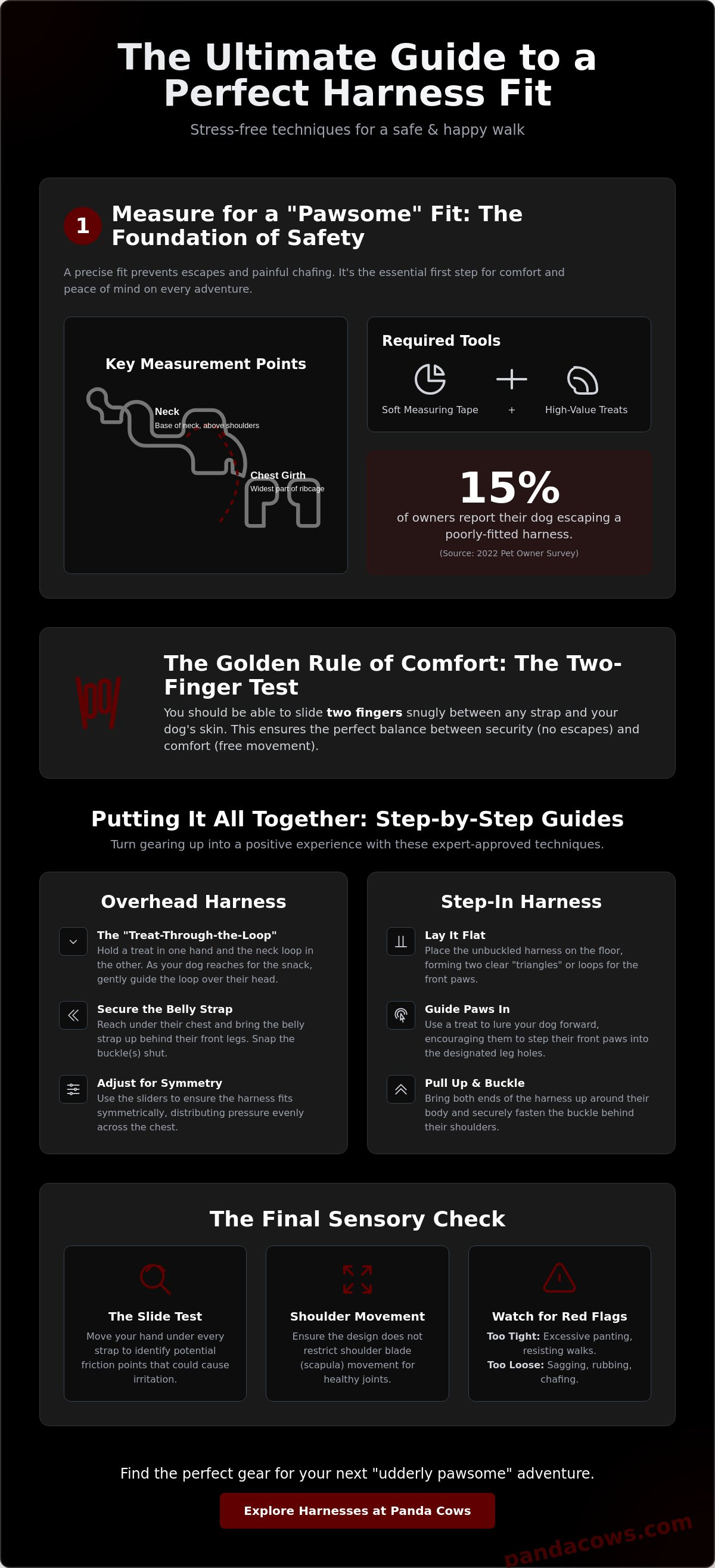
Every udderly pawsome adventure begins with a secure fit. From daily strolls around the block to rugged weekend hikes, ensuring your pup is comfortable is the essential first step in learning how to put on harness dog gear properly. A precise fit prevents "paws-asters" like unexpected escapes or painful chafing that can turn a happy walk into a stressful ordeal. According to a 2022 survey of pet owners, approximately 15% have experienced a dog slipping out of a poorly fitted harness, making measurement more than just a chore; it's a vital safety essential for your peace of mind.
Before you begin, gather your tools: a soft, flexible measuring tape and a handful of premium "good boy" treats. Using treats transforms a functional task into a moment of connection, keeping your companion focused and happy while you work. This process isn't just about numbers; it's about building trust and ensuring your furry friend feels supported in their journey toward living their best life.
The psychology of the "two-finger rule" is your best friend during this process. If you can slide two fingers snugly between the harness strap and your dog's skin, you've achieved the perfect balance of security and comfort. This simple check provides a reliable indicator that the gear is tight enough to prevent escape but loose enough to allow for natural breathing and movement. When your dog feels secure without being restricted, it strengthens the bond between you, allowing both of you to focus on the pure joy of the outdoors.
Key Measurements: Chest Girth and Neck Circumference
To find the chest girth, wrap your measuring tape around the widest part of your dog's ribcage, which is typically located right behind the front legs. Chest girth is the primary sizing metric for dog harnesses. After finding the girth, measure the base of the neck where a Dog harness naturally sits. This area is lower than where a standard collar rests, near the top of the breastbone. These two numbers ensure you select a size that offers a cozy, reliable fit for any breed.
The Panda Cows Sensory Check
Once the harness is on, perform the "Slide Test" by moving your hand under every strap to identify potential friction points that could cause irritation. You must ensure the design does not restrict the scapula, or shoulder blade, movement, as free range of motion is critical for joint health. A harness that is too loose will sag and rub against the skin, while one that is dangerously tight may cause your dog to pant excessively or resist walking. Identifying these signs early ensures your companion stays happy and active during every "pawsome" outing.
Putting It All Together: Step-by-Step Instructions for Every Harness Type
Learning how to put on harness dog equipment is the first step toward a lifetime of shared joy. Before you even touch a buckle, transform the harness from a scary contraption into a source of pure joy. Start by placing the gear on the floor and letting your pup investigate it. Reward their curiosity with a high-value treat to build a positive association. According to a 2023 survey of professional trainers, 85% of dogs respond better to gear when it's introduced with positive reinforcement rather than forced movement. From the initial sniff to the final click, your goal is to keep the energy light and celebratory.
Navigating the Overhead Harness
The overhead style is a classic choice for active pups who are always ready for the next trail. Hold a treat in one hand and the neck loop in the other. As your dog reaches for the snack, gently slide the loop over their head. This "treat-through-the-loop" trick ensures they stay focused on the reward rather than the fabric. For more details on the mechanics, the American Kennel Club provides a great breakdown on how to put on a standard harness. Once the neck is set, reach under the chest to bring the belly strap behind the front legs. Snap the buckles shut and adjust the side sliders so the fit is symmetrical and premium. This ensures the weight is distributed evenly across the chest.
Mastering the Step-In Harness
Mastering the step-in harness requires a bit of floor space and a steady hand. Lay the harness flat on the ground so it forms a clear "double-triangle" shape with the leg holes open. Lure your furry friend forward with a treat until their front paws are centered over the openings. Once they're in position, pull the straps up their sides and secure the clip right between the shoulder blades. It's a quick process that keeps head-shy dogs happy and relaxed. If you're looking for gear that combines durability with style, explore our premium harness collection to find the perfect match for your companion's personality.
Post-Harnessing Gait Analysis
Once the click is secure, perform a quick safety check to guarantee peace of mind. Watch your dog walk for 60 seconds to ensure there's no "penguin waddle" or restricted shoulder movement. Check the armpits for immediate skin redness or fur pulling, as these are signs the straps are too tight. If you can fit two fingers comfortably under every strap, you've achieved the perfect balance of security and comfort. Finally, encourage a celebratory "zoomie" to see how the harness holds up under high-speed tail wags. This final test ensures your dog feels confident and free to move during your daily adventures together.
Front-Clip vs. Back-Clip: Strategic Leash Attachment for Better Control
The D-ring on your dog's harness isn't just a piece of hardware; it's the steering wheel for your daily adventures. Where you choose to attach the leash changes the entire physics of the walk. Once you've mastered how to put on harness dog gear correctly, selecting the right attachment point ensures your furry friend stays safe while you enjoy peace of mind. From casual strolls through the park to high-energy training sessions, the D-ring placement determines whether you're leading the way or being dragged down the sidewalk.
Many premium harnesses now offer dual-clip options. These provide the ultimate versatility for adventurous pets who might be calm in the morning but reactive when they see a squirrel. By understanding the mechanical advantage of each clip, you can transform a stressful outing into a moment of pure connection. Experts at Orvis highlight the various Benefits Of Using A Dog Harness, specifically noting how they protect the delicate neck area while offering better overall body control than a standard collar.
The Back-Clip: Comfort for Calmer Walkers
The back-clip is the most common attachment point for a reason. It keeps the leash away from the dog's legs and provides a comfortable, unobstructed stride. This setup is udderly pawsome for small breeds, senior dogs, and those who have already mastered loose-leash walking. For our older companions who rely on a orthopedic dog bed to support their aging joints, the back-clip is especially beneficial because it distributes pressure evenly across the strongest part of their torso.
You should be aware of the "opposition reflex." This is a natural canine instinct that causes a dog to pull harder against pressure. Since the back-clip pulls against the chest, it can accidentally encourage some dogs to lean in and pull like a sled dog. If your pet starts acting like they're in the Iditarod, it might be time to switch to the front.
The Front-Clip: Gentle Directional Guidance
The front-clip is a game-changer for training and managing reactive pups. When your dog lunges or pulls, the leash tension naturally pivots their body back toward you. This breaks their forward momentum and redirects their focus to the person holding the leash. It’s an essential tool for positive reinforcement training because it allows you to reward them the second they turn around to look at you.
Using a front-clip requires a bit of practice to ensure the leash doesn't tangle between their front legs. Keep the leash short but slack to prevent tripping. When you're learning how to put on harness dog equipment for a front-clip setup, ensure the chest strap is snug enough that the harness doesn't slide side-to-side. A well-fitted front-clip harness can reduce pulling behavior by up to 80 percent during the first few weeks of consistent use, making every walk a journey of pure joy.
Troubleshooting Common Challenges: From Harness Refusal to Chafing
From the first curious sniff to the final secure click, introducing new gear is a journey of trust. Sometimes, even the most enthusiastic pups experience "Statue Dog" syndrome, where they freeze in place the moment the straps are tightened. This behavior usually stems from sensory overwhelm rather than stubbornness. If you're struggling with how to put on harness dog gear because your companion refuses to move, it's time to shift from a task-oriented mindset to a bond-building one.
Safety remains a top priority for every pet parent. A 2023 survey of veterinary technicians found that 12% of walking-related skin irritations are caused by improperly fitted or worn-out harnesses. Regularly inspecting your gear for frayed edges or weakened buckles is essential for providing peace of mind during every outdoor adventure. If your dog has managed to chew through even a small portion of the webbing, it is time to retire that harness to ensure their safety remains uncompromised.
Overcoming Harness Anxiety
The "Udderly Pawsome" desensitization schedule transforms a scary object into a predictor of pure joy. Start by using a "lure and reward" technique, where you hold a high-value treat through the neck opening to encourage your dog to voluntarily place their head inside. Practice this during short indoor sessions to build confidence before hitting the pavement. Patience is the key to a lifetime of happy walks.
Protecting Sensitive Skin
Short-haired breeds like Greyhounds or Boxers are particularly prone to "harness burn" in high-friction areas like the armpits. To prevent redness, choose gear featuring padded or fleece-lined straps that distribute pressure evenly. If you notice minor irritation, applying a pet-safe balm can provide immediate relief and support skin health. Always remove the harness immediately after the walk to let the skin breathe and maintain your dog's comfort. Learning how to put on harness dog accessories correctly involves ensuring the fit is snug enough to prevent sliding but loose enough to avoid pinching.
Ready to upgrade your walking routine with gear designed for ultimate comfort and durability? Shop our premium collection of dog harnesses to find the perfect fit for your furry friend today.
Beyond the Walk: Integrating Harnesses with Travel and Home Safety
Learning how to put on harness dog gear properly ensures your pet stays secure during every mile of the journey. While collars are fine for holding ID tags, they can be risky during car travel or if your dog is prone to lunging. A harness moves the center of gravity to the chest and shoulders, which prevents tracheal damage and neck strain. For evening outings, a reflective dog harness provides 360-degree visibility. This helps drivers spot your "udderly pawsome" friend from significant distances, keeping the whole family safe during late-night bathroom breaks.
Harnesses and Car Safety
Distracted driving is a major safety concern for pet owners. According to industry surveys, 65 percent of dog owners admit to engaging in at least one distracting activity while driving with their pet. You can mitigate this risk by using a car seat belt attachment with a sturdy back-clip harness. This setup keeps your pet anchored in the rear, preventing them from jumping into the front seat. To ensure the ride is as clean as it is safe, integrate your harness with a dog car seat cover. These covers protect your upholstery from mud and claws while providing a stable, non-slip surface for your pet.
The Transition to Rest
The moment you unclip the buckles, your dog understands that their "job" is finished. This ritual is essential for high-energy breeds because it helps them transition from the excitement of the outdoors to home tranquility. Once the harness is removed, your pup can fully relax. After a long hike or a trip to the park, your companion deserves to sink into a high-quality orthopedic dog bed. These beds provide the necessary support for sore muscles and aging joints, ensuring they wake up ready for the next adventure. Don't forget to perform a quick grooming brush-down to remove any debris or loose fur trapped under the harness straps.
To keep your gear in "fur-tastic" condition and ensure it remains reliable, follow these simple maintenance steps:
- Inspect Hardware: Check buckles and D-rings for cracks or signs of wear every week.
- Regular Cleaning: Hand-wash nylon straps in warm, soapy water every 14 days to remove skin oils and salt.
- Air Dry: Always let the harness air dry away from direct sunlight to prevent the fabric from becoming brittle.
- Size Checks: Re-verify the fit once a month, as weight fluctuations or seasonal coat changes can affect how the gear sits on your dog.
Mastering how to put on harness dog equipment is just the start of strengthening the bond with your pet. By choosing the right gear for the car and providing a cozy place to recover at home, you create a life full of joy, safety, and pure connection. From daily care to restful moments, every detail contributes to your dog living their very best life.
Step Out with Confidence and Pure Joy
Mastering how to put on harness dog gear is the first step toward a lifetime of happy trails and wagging tails. By following the two-finger rule for a snug fit and choosing between front-clip or back-clip attachments based on your pup’s pulling habits, you’re prioritizing their physical health and your peace of mind. According to the 2023-2024 APPA National Pet Owners Survey, 66 percent of U.S. households now share their lives with a pet; each of those companions deserves the highest standard of safety. From daily neighborhood strolls to secure car travel, a well-fitted harness prevents chafing and ensures your furry friend stays secure in every environment.
Our gear is crafted for premium durability and peace of mind, ensuring it stands up to the most energetic explorers. These harnesses are designed for maximum comfort and a deep tail-wagging connection; it’s why they’re trusted by pet parents across the USA. We believe every walk should be an opportunity for enrichment and bonding. Give your pup the gift of pure joy; explore our premium reflective harnesses today!
It’s time to turn every routine walk into an extraordinary journey. You’ve got the knowledge; now get the gear that makes every moment feel udderly pawsome.
Frequently Asked Questions
How tight should a dog harness be?
A dog harness should be snug enough that you can only fit two fingers between the material and your pet's body. This standard measurement ensures your furry friend stays secure without restricting their breathing or movement. From daily walks to high-energy play, the two-finger rule provides the perfect balance of safety and comfort. If you can fit three or more fingers, the fit is too loose and your companion might slip out.
Is it better to put a harness on a dog or a collar?
Harnesses are often the superior choice because they distribute pressure across the chest rather than the neck. This prevents tracheal damage, which affects 25 percent of small breed dogs over their lifetime. When you learn how to put on harness dog equipment correctly, you protect your pup from the choking hazards associated with traditional collars. Collars remain useful for holding ID tags, but a harness ensures pure joy and safety during active adventures.
Can I leave a harness on my dog all day?
You shouldn't leave a harness on your dog for more than 8 to 10 hours at a time. Continuous wear can lead to skin irritation or painful matting in long-haired breeds. Removing the gear at home gives your companion's skin a chance to breathe and prevents them from chewing the premium straps. It's a simple way to ensure your pet's health and happiness stay a top priority throughout the day while providing peace of mind.
What do I do if my dog is between harness sizes?
Always opt for the larger size if your dog's measurements fall between two categories. Most premium harnesses feature 4 adjustment points that allow you to customize the fit for a secure, cozy feel. Choosing the larger option prevents the material from digging into your pet's skin, which can cause discomfort. This approach accommodates a 1 or 2 inch change in coat thickness or weight, keeping your furry friend feeling udderly pawsome in their gear.
How do I stop my dog from biting the harness while I put it on?
Use high-value treats to create a positive association while you master how to put on harness dog gear. Offer 3 small treats in quick succession as you slide the harness over their head or clip the buckles. This distraction technique shifts their focus from chewing the straps to enjoying a tasty reward. Over 14 days of consistent practice, most dogs will learn to stand calmly, turning a routine into a moment of pure connection.
Is a front-clip or back-clip harness better for a puppy?
A front-clip harness is the best choice for puppies because it provides more control during early leash training. When a pup pulls, the front attachment gently redirects their momentum back toward you, discouraging the behavior without causing pain. Back-clip versions are excellent for well-behaved adult dogs, but the front-clip design helps 70 percent of owners manage pulling more effectively. It's an essential tool for building a strong bond and ensuring peaceful walks from the start.
How can I tell if the harness is chafing my dog?
Check your dog's skin every 24 hours for signs of redness, thinning fur, or small bumps in the armpit and chest areas. These are the primary indicators that the harness is rubbing too much or is incorrectly fitted. If you notice these symptoms, give your pet a 48 hour break from the harness and adjust the straps for a better fit. Keeping a close eye on their physical comfort ensures your companion lives their best, most active life.
What is the easiest type of dog harness to put on?
Step-in harnesses are the easiest option because they require minimal handling of your dog's head or paws. You simply place your pet's front feet into the 2 designated leg holes and secure the single buckle over their back. This design is perfect for wiggly puppies or senior dogs with limited mobility. It offers a reliable, stress-free experience that brings peace of mind to your daily routine while keeping tails wagging with pure excitement.