

How to Get a Dog Used to a Backpack Carrier: A Guide to Fur-tastic Adventures
What if your dog's carrier wasn't a source of travel jitters, but a mobile safe haven they actually looked forward to entering? Many pet parents worry about their pup wriggling out or crying during their first attempt, and it's completely natural to feel anxious about spinal safety or emotional distress. Learning how to get a dog used to a backpack carrier requires a blend of patience and playful encouragement; however, the reward is a deeper bond and a pup that jumps into their bag with wagging enthusiasm.
By prioritizing comfort and trust, you can transform a simple walk into a celebratory bonding session. We'll help you master the art of stress-free travel with our step-by-step guide to helping your pup embrace the backpack lifestyle. This journey starts with small wins and leads to a future where your dog jumps into their Pet Carrier Backpack willingly. We'll explore incremental trust exercises and ergonomic safety tips to ensure your 2026 travels, whether meeting international weight limits of 8 to 10 kilograms or just visiting a local park, are as smooth as a belly rub.
Key Takeaways
- Transform your living room into a "scent-sational" base camp where the carrier becomes a familiar, inviting piece of furniture rather than a scary stranger.
- Learn how to get a dog used to a backpack carrier by using the "Four Paws In" rule to reward voluntary entry before you ever zip the door shut.
- Protect your back and your pup's peace of mind by employing the "Buddy System" for those first vertical lifts and ergonomic adjustments.
- Graduate from indoor practice walks to backyard explorations to help your furry friend adapt to the rhythm of your gait in a low-stress environment.
- Prioritize a Pet Carrier Backpack with a reinforced bottom and mesh ventilation to provide the structural stability and fresh air your dog needs to feel secure.
Introducing the Adventure: Sniffing Out the New Bark-pack
The first day with a new carrier shouldn't feel like a rigorous training session; it should feel like a cozy housewarming party. Before you even think about straps or height, focus entirely on the nose. Dogs navigate their world through scent, so the initial 24 hours are about olfactory acceptance rather than physical movement. Learning how to get a dog used to a backpack carrier starts with their most powerful sense: their nose. By allowing your pup to investigate the bag without any pressure to perform, you're setting a foundation of trust that makes future steps much easier.
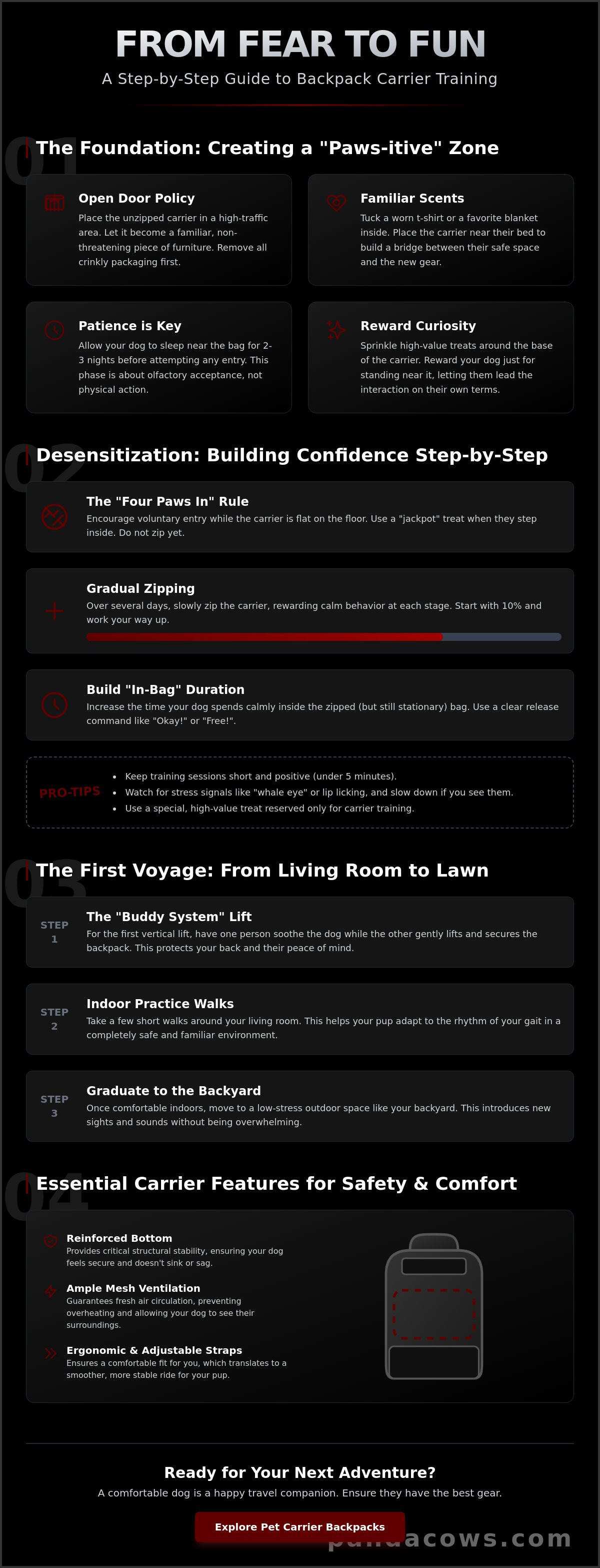
Avoid the common "scary object" trap by removing all plastic packaging the moment the box arrives. That high-pitched crinkle can startle a sensitive pup, creating a negative association before the bag even touches the floor. Instead, adopt an "open door" policy. Place the new gear in a high-traffic area like the living room and leave all the zippers wide open. When the bag becomes a permanent, non-threatening part of the home landscape, the mystery vanishes, leaving only curiosity behind.
Creating a Paws-itive First Impression
To build immediate comfort, place the new bag right next to their favorite orthopedic dog bed. This simple placement creates a mental bridge between their primary spot for relaxation and the new adventure gear. Sprinkle a few high-value treats around the base of the carrier to reward your dog just for standing near it. Curiosity should never be rushed by the owner, as a dog who chooses to explore on their own builds much stronger confidence than one who is coaxed with force. By letting them lead the way, you ensure their first interaction is entirely on their own terms.
Familiar Scents and Safe Spaces
A deeper dive into understanding dog behavior reveals that familiar scents act as a powerful emotional anchor in new environments. Tuck a worn t-shirt or a well-loved blanket inside the main compartment of your Pet Carrier Backpack to make it smell like home. Allow your dog to sleep near the bag for two or three nights before you ever attempt a lift or a zip. If your furry friend is particularly prone to travel jitters, a quick spritz of pheromone spray inside the bag can provide an extra layer of tranquility. Mastering how to get a dog used to a backpack carrier is a marathon, not a sprint, and these early scent-swapping steps lay the vital groundwork for every mountain trail and city sidewalk you'll eventually explore together.
Step-by-Step Desensitization: Training Beyond the Treats
After your pup has spent a few nights dreaming next to their new gear, it's time to transition from passive sniffing to active participation. Learning how to get a dog used to a backpack carrier involves breaking down the entry process into bite-sized, achievable goals. This phase is less about the destination and more about the "paws-and-reflect" moments that build lasting confidence. High-energy dogs might treat the bag like a launching pad, requiring extra focus on boundaries, while senior dogs might need more time to find their footing on a new surface. By tailoring your pace to their specific energy levels, you ensure the experience remains celebratory rather than stressful.
Start with the "Four Paws In" rule. Encourage your dog to step into the carrier while it remains flat on the floor with the door wide open. Don't rush to zip anything yet. Addressing common dog behavior issues like confinement anxiety is much easier when the dog feels they have a choice. Once they're comfortable standing inside, begin gradual zipping. Start by zipping just 10% of the way, rewarding them for staying calm, and slowly move toward 100% over several days. Building "in-bag" duration while the backpack remains on the floor helps them realize the interior is a safe, stable environment. Always use a clear "release command" like "Okay!" or "Free!" before they hop out to prevent premature jumping.
Rewarding the Small Wins
Use a "jackpot" treat, something truly special like a piece of boiled chicken or a favorite high-value snack, only when they place their front paws inside. Keep these training sessions under five minutes to prevent mental fatigue and keep the "tail-wagging" enthusiasm high. Watch for "whale eye," where they show the whites of their eyes, or frequent lip licking as signs to slow down. For pups who need extra reassurance during these sessions, a Calming Pet Blanket tucked inside creates a "moo-ving" sanctuary of softness that helps them settle faster.
The 'Stationary Lift' Technique
When your dog is happy being zipped in, it's time for the "Stationary Lift." Lift the bag just two inches off the ground and immediately set it down. Feed treats through the mesh while the bag is slightly elevated so they associate the sensation of lifting with something delicious. It's vital they feel the floor is still "accessible" during these early stages. Mastering how to get a dog used to a backpack carrier requires this incremental approach, ensuring that when you finally take that first real step, your dog feels as secure as if they were on solid ground. This creates a "black-and-white" path to success that honors the unique bond you share.
Loading Up: Mastering the Two-Person and Solo Lift
Once your pup is comfortable lounging inside their Pet Carrier Backpack on the carpet, it is time for the "lift-off" phase. Mastering how to get a dog used to a backpack carrier means moving from floor-level sniffing to actual vertical movement. This transition can be tricky, especially if your dog decides to "pancake" or go completely limp when they feel the floor disappear. Using a "Treat Distraction" method, where you provide a steady stream of small snacks as the bag rises, keeps their focus on the reward rather than the elevation. For high-energy pups, this mental distraction is the key to preventing a mid-air wiggle that could throw off your balance.
Ergonomic lifting is just as vital for the human as it is for the hound. Always lift with your legs, keeping the bag close to your center of gravity to avoid back strain. If your dog is particularly wiggly, try loading the backpack on a raised surface like a sturdy table or a sofa first. This reduces the distance you have to lift and allows you to slide your arms into the straps while the dog remains at eye level. This proximity provides a sense of security, ensuring your dog feels your presence even as they begin their first vertical adventure.
The Buddy System for Wriggly Beginners
The "Buddy System" is your best friend for those first few vertical adventures. Having a second person involved ensures the dog feels supported from all angles. While one person holds the dog's chest, the other should gently guide the hindquarters into the bag. It is helpful to have your dog wear a reflective dog harness during this process. The extra grip points on a sturdy harness allow for a more controlled, secure load than trying to lift the dog by their collar or underarms alone. Always verify that the tail is tucked safely away from zippers before you begin the final closure; a pinched tail can ruin a dog's trust in seconds.
Securing the Fit for Spinal Safety
Proper alignment is the foundation of a safe, ergonomic adventure. You can find more detailed principles in this Orvis guide to training a dog to wear a pack, which emphasizes the importance of weight distribution. Inside the carrier, ensure the dog's internal safety tether is attached to their harness, not a collar, to prevent neck strain if they shift. Use the "Two-Finger Rule" for all neck and chest straps on the bag, ensuring they are snug enough to prevent sliding but loose enough for comfortable breathing. For the human wearer, adjusting the lumbar support is non-negotiable. A steady ride for the pup depends on a stable base for the person, so tighten those waist straps to keep the weight on your hips. Watch for "slumping" and make sure your dog is sitting squarely on the reinforced base to protect their spinal health. This careful attention to detail turns a simple walk into a truly fur-tastic voyage while learning how to get a dog used to a backpack carrier.
The First Voyage: From Living Room to Local Park
Transitioning from a stationary lift to a "moo-ving" adventure is the most exhilarating part of the process. After your pup has mastered the sensation of being elevated, it is time to introduce the rhythmic sway of your natural walking pace. Start with "indoor walks" through your hallway or living room to help your passenger adjust to the vibration of your gait without the distraction of squirrels or cars. Learning how to get a dog used to a backpack carrier requires this gradual expansion of their horizons, moving from the controlled environment of your home to the unpredictable sights and sounds of the backyard. This middle ground allows them to process the wind and distant barking while still feeling the safety of their home turf.
During these initial forays, stick to the "Short and Sweet" rule by capping your first outdoor trip at exactly 10 minutes. This prevents sensory overload and ensures the experience ends on a high note before fatigue or anxiety sets in. Since your dog cannot see your face while they are on your back, use constant vocal cues to provide reassurance. Softly narrating your walk or calling out their name in a cheerful tone bridges the visibility gap, letting them know that their favorite human is still right there leading the way. These small "paws-itive" reinforcements turn a potentially scary movement into a shared conversation.
Managing Motion and Vibration
To keep the ride smooth, walk with a rhythmic, steady pace that mimics a natural trot rather than a jerky or hurried stride. Avoid sudden pivots or bending over at the waist while your dog is loaded, as these sharp movements can cause the bag to shift and startle your passenger. In the context of pet travel, motion habituation is the process where a dog’s vestibular system adjusts to the rhythmic sway of a human gait, eventually accepting it as a predictable and safe sensation. By keeping your movements consistent, you help your dog find their "sea legs" much faster.
Recognizing Stress Signals vs. Excitement
Understanding the difference between happy anticipation and genuine distress is vital for a successful voyage. Distinguish between "happy panting," which is usually accompanied by a relaxed tongue and bright eyes, and "stress yawning" or frantic lip licking. If you notice your dog trembling or let out a high-pitched whine, recognize this as the "point of no return" and head home immediately to prevent a lasting negative association. Once you return, celebrate the win with a high-energy "good job" play session to decompress. To keep your passenger refreshed during these early outdoor trials, always pack a Portable Pet Water Bottle to turn a quick break into a hydrating high-five.
Choosing the Right Gear for Your Journey
Selecting the right vessel is the final "moo-stone" in your journey toward stress-free travel. If the bag feels flimsy or unstable, your training efforts might "paws" indefinitely as your dog loses confidence in their mobile safe haven. High-quality hardware and thoughtful design are not just luxury features; they are essential tools that facilitate the desensitization process. When you're learning how to get a dog used to a backpack carrier, the physical integrity of the gear provides the silent reassurance your pup needs to relax and enjoy the view. A sturdy Pet Carrier Backpack acts as a reliable partner in your dog's journey toward a higher quality of life.
A reinforced bottom is non-negotiable for building long-term dog confidence. Without a solid base, the floor of the bag can sag, making the dog feel like they're standing on quicksand. This sensation often triggers the "pancake" behavior or frantic scrambling that can ruin a training session. Mesh ventilation is another critical component, especially during those initial nervous moments when a pup's body temperature might rise. Keeping a cool head is much easier when fresh air flows freely through the cabin. Additionally, an internal safety tether acts as a vital "seatbelt," preventing any sudden leaps if a squirrel crosses your path. For the human "mule" in this partnership, ergonomic straps with thick padding and chest clips ensure that a long hike doesn't turn into a back-straining ordeal.
Features of a High-Quality Pet Carrier Backpack
Structured frames offer superior support for larger breeds, while soft-sided bags provide a lightweight, flexible option for petite passengers. Side pockets are perfect for stashing portable pet water bottles, ensuring hydration is always within reach during your outdoor trials. Look for easy-clean materials like ballistic nylon or treated polyester. These fabrics make managing "nervous accidents" during early training sessions a breeze, allowing you to maintain a pristine environment for your pup's next outing.
Maintaining Your Gear for Years of Adventure
Spot cleaning after every trip keeps the fabric fresh, but a periodic deep wash ensures the structural integrity remains intact for years of "fur-tastic" exploration. Always inspect buckles and zippers before every hike to prevent mechanical failures on the trail. For those with sturdier companions or unique sizing needs, refer to our guide on the best dog carrier backpack for pitbull mix to find heavy-duty solutions that match your pup's strength. By investing in the right gear and maintaining it with care, you're not just buying a bag; you're securing a lifetime of shared memories and deeper emotional connections with your best friend.
Embark on a Lifetime of Shared Discoveries
Mastering how to get a dog used to a backpack carrier is a beautiful investment in your pup's happiness and your shared bond. By focusing on scent-swapping and incremental trust exercises like the Four Paws In rule, you've replaced travel jitters with wagging enthusiasm. Every voyage depends on a foundation of safety and comfort, from the first indoor hallway trot to the ultimate mountain peak.
Choosing the right gear is the final piece of the puzzle for a successful journey. We offer a curated selection of ergonomic pet travel gear designed for maximum spinal support and comfort for both you and your furry friend. With thousands of happy tails across the USA already enjoying the backpack lifestyle, you can feel confident in the quality of our offerings. Discover the perfect Pet Carrier Backpack for your next adventure!
The world is waiting for you and your best friend to explore it together. Keep your chin up, your treats ready, and your tail wagging; your next great story is just a zip away.
Frequently Asked Questions
How long does it typically take for a dog to get used to a backpack?
Most dogs require seven to fourteen days of consistent, incremental practice to feel fully relaxed in their new gear. While every pup's journey is unique, focusing on how to get a dog used to a backpack carrier through five minute daily sessions prevents "fur-tunate" setbacks. Patience is your best friend; rushing the process can lead to long term anxiety. Start with the scent swapping steps mentioned earlier and only move to vertical lifts once your dog is "paws-itively" calm while sitting inside on the floor.
Is it safe for a dog to be in a backpack carrier for long hikes?
Long hikes are perfectly safe as long as you prioritize frequent "paws-es" and ergonomic support. Aim to let your dog out every 45 to 60 minutes to stretch their legs and hydrate. Using a bag with a reinforced bottom prevents spinal stress, ensuring your pup remains "feline" fine even on rugged terrain. Always check for signs of overheating or stiff limbs during your breaks to keep the adventure celebratory and safe for everyone involved.
What should I do if my dog starts crying or whining while inside?
If your dog starts vocalizing, stop immediately and assess their body language before continuing your walk. Whining is often a "ruff" way of expressing discomfort or sensory overload. Rather than rewarding the noise with excessive fuss, calmly set the bag down and let them out once they are quiet. This approach helps you master how to get a dog used to a backpack carrier by ensuring they only associate the bag with tranquil, positive experiences rather than stress.
Can large dogs use backpack carriers, or is it only for small breeds?
Specialized carriers are available for larger breeds, though most standard backpacks are designed for dogs up to 18 kilograms. While smaller breeds are the typical "bark-pack" passengers, high capacity bags with structured frames can accommodate larger companions like a pitbull mix. Always check the specific weight capacity of your Pet Carrier Backpack and ensure the human wearer can safely manage the load without compromising their own balance or spinal health on the trail.
How do I know if the backpack carrier is the right size for my dog?
A proper fit is determined by your dog's sitting height and their length from the base of the neck to the tail. Your pup should be able to sit in a natural position without their spine curving excessively or their head being forced down by the top mesh. Check that there is enough room for them to shift slightly but not so much that they slide around during movement. A "tail-ored" fit is the secret to a secure and happy passenger.
Should I feed my dog before putting them in the carrier?
It is best to wait at least 60 minutes after a full meal before loading your dog into the carrier for a trip. This prevents motion sickness and reduces the risk of digestive upset during your "moo-ving" adventures. If you are training with treats, use small, high value rewards rather than a heavy meal. Keeping their stomach settled ensures they stay focused on the fun rather than feeling "ruff" from a full belly while in transit.
What is the best way to clean a dog backpack after a muddy adventure?
Spot cleaning with a damp cloth and mild, pet safe detergent is the best way to maintain the bag's structural integrity. Avoid tossing the entire bag into a washing machine, as this can damage the internal frame or the safety tethers. For those extra muddy adventures, a gentle hand wash and air drying in a shaded area will keep your gear looking "fur-fresh." Regular maintenance ensures your zippers and mesh remain in top tier condition for years of exploration.
Can I use a backpack carrier for an airline flight?
Many backpack carriers are airline approved, but you must verify the specific dimensions of your airline's under seat space before heading to the airport. As of May 2026, international weight limits for in-cabin pets typically range between 8kg and 10kg, which includes the weight of the carrier itself. Always check with your airline 48 hours before departure to ensure your bag meets their current criteria. This "paws-itive" preparation prevents any last minute "cat-astrophes" at the boarding gate.