

Dachshund Stairs, Ramps, and Slides: The Ultimate Spine-Safety Resource Guide
Did you know that 25% of dachshunds will suffer from Intervertebral Disc Disease (IVDD) in their lifetime according to data from the Dachshund Club of America? We understand that your dog's safety is a top priority, yet the fear of an expensive emergency surgery can keep any pet parent up at night. You want your companion to live their best life without sacrificing your home's beautiful decor for bulky, plastic equipment. It's often frustrating when you invest in a new dachshund stairs ramp slide solution only to have your furry friend refuse to even look at it.
We agree that protecting that iconic long spine should be a source of pure joy rather than a constant worry. This guide promises to help you discover the best way to protect your dachshund's delicate back with our expert comparison of stairs, ramps, and slides. From choosing the perfect incline to matching your furniture's style, we provide the peace of mind you deserve. We'll explore which options provide the best traction, how to train a stubborn pup, and which designs ensure your living space remains udderly pawsome for every moment of connection.
Key Takeaways
- Understand the "long and low" anatomy of your furry friend to prevent "paws-asters" and ensure their delicate spine stays protected.
- Explore the best dachshund stairs ramp slide options to find the gold standard for your companion’s continuous spinal alignment.
- Uncover the truth behind the viral "stair slide" trend and whether it provides genuine safety or just a whimsical way to get around.
- From cozy apartment living to high-bed solutions, learn how to select the perfect premium access tool tailored specifically to your home’s layout.
- Master the "Treat Trail" method to provide your doxie with the paws-itive reinforcement they need to ditch jumping and embrace their new, safer path.
Why Every Dachshund Owner Needs a Spine-Safe Access Solution
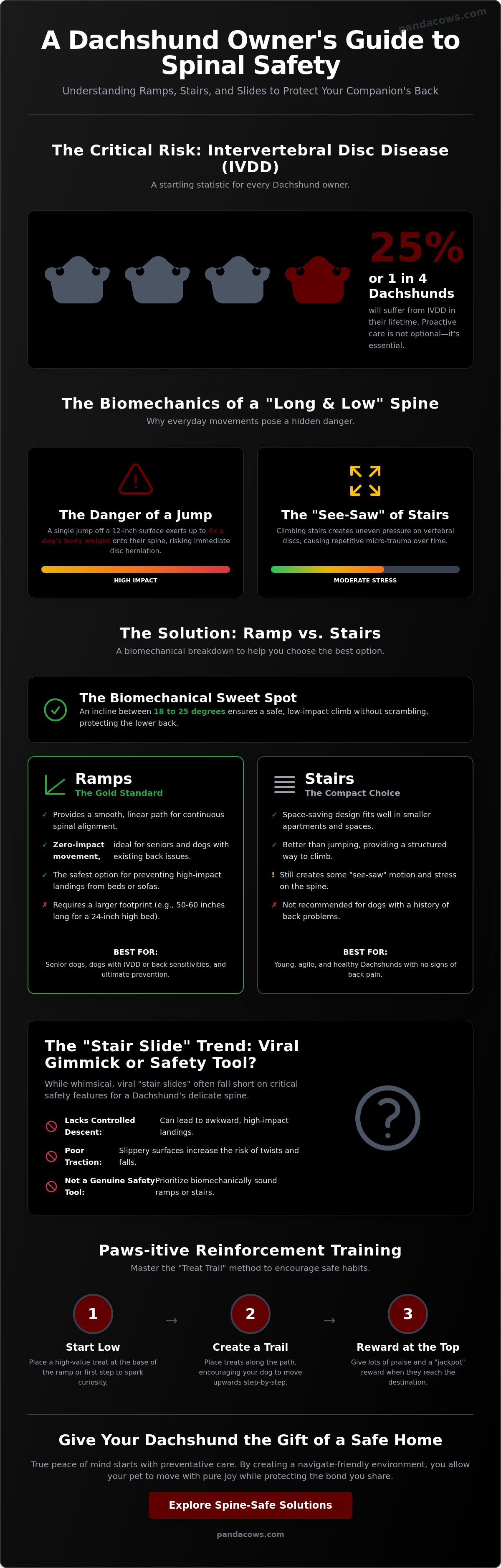
Dachshunds are iconic for their "long and low" silhouette, but that charming shape comes with a significant biological trade-off. Their elongated spines are masterpieces of nature designed for tunneling, yet they are remarkably fragile in a modern home environment. According to Dachshund breed information, these dogs are genetically predisposed to spinal issues, specifically Intervertebral Disc Disease (IVDD). This condition affects approximately 25% of the breed, making spinal health a top priority for every owner. From sofa snuggles to bedtime stories, providing a safe way to navigate heights is essential for their long-term happiness.
Traditional human stairs are often too steep for the short legs of miniature and standard Doxies. When a dog with such a long back climbs steep steps, their spine undergoes a "see-saw" motion that creates uneven pressure on their discs. Over time, this repetitive stress leads to "paws-asters" that can result in expensive surgeries or permanent paralysis. Proactive care is the best gift you can give your companion. It's much easier to install a dachshund stairs ramp slide solution today than to manage a complex recovery process later. Starting mobility support before your furry friend shows signs of pain ensures they stay active and "udderly pawsome" for years to come.
The Science of IVDD and Impact
IVDD is a degenerative condition where the cushioning discs between the vertebrae either harden or rupture. While genetics play a massive role, environmental "micro-trauma" acts as a frequent trigger. Every time your dog leaps off a bed, they risk a life-altering injury. A 12-inch jump can exert 4x a dog's body weight on their spine. This sudden impact can cause a disc to herniate instantly, leading to sudden loss of mobility. Using a dachshund stairs ramp slide removes that high-impact landing, replacing a dangerous leap with a gentle, controlled descent.
Holistic Orthopedic Health
True spinal safety requires a multi-layered approach to wellness. Mobility tools work in tandem with orthopedic dog beds to provide a complete support system that protects joints during both rest and play. Weight management is another critical factor; carrying even 2 extra pounds can significantly increase the daily strain on a Doxie's back. From daily exercise to proper home equipment, every detail matters. Peace of mind starts with preventative home modifications. By creating a navigate-friendly environment, you allow your pet to move with pure joy while protecting the bond you share. It's about giving them the freedom to follow you from room to room without the risk of a "back-breaking" accident.
Dachshund Ramps vs. Stairs: The Biomechanical Breakdown
Protecting your Doxie's unique physique is a journey that moves from daily care to playful moments. Choosing the right dachshund stairs ramp slide setup is a critical decision for any pet parent who values long-term health. While stairs offer a compact design, ramps provide the gold standard for continuous, low-impact spinal alignment. This distinction is vital because approximately 25% of these courageous companions suffer from Intervertebral Disc Disease (IVDD). This condition often leads to severe pain or paralysis, making preventative measures an essential part of creating a happy home.
The biomechanical sweet spot for any incline is an angle between 18 and 25 degrees. When a ramp or set of steps is steeper than 25 degrees, it forces a dog to engage in a scrambling motion that puts vertical pressure on the lower back. High-traction surfaces are equally non-negotiable for safety. Whether you choose carpeted or rubberized finishes, the goal is to prevent slips that cause sudden spinal twisting. These premium materials ensure your companion feels confident and secure during every transition, providing you with much-needed peace of mind.
When to Choose a Pet Ramp
Ramps are the best choice for senior dogs or those managing existing back sensitivities. They provide a smooth, linear path from the floor to high beds, which typically reach heights of 24 to 30 inches. Although a ramp requires a larger footprint, often spanning 50 to 60 inches in length to maintain a safe grade, the trade-off is zero-impact movement. It is an udderly pawsome way to provide pure joy and ensure your pet's golden years remain active and comfortable.
When Stairs Might Be Sufficient
Stairs might be sufficient for young, agile dachshunds with no history of back issues. They are particularly useful for low-profile furniture like sofas or ottomans that sit 15 to 18 inches high. For stairs to be safe, they must have deep treads of at least 10 inches and short rises under 6 inches. This specific geometry prevents the dangerous bunny hopping motion that stresses the intervertebral discs. If you want to strengthen the bond with your pup while keeping them safe, finding a reliable mobility solution is the first step toward a safer home environment.
The Dachshund Slide: Viral Gimmick or Genuine Safety Tool?
You've likely seen the viral clips of a Doxie zooming down a plastic chute next to their owner's staircase. It looks like a backyard theme park, but many owners are turning to these tools for more than just social media likes. When you choose the right dachshund stairs ramp slide setup, you're investing in peace of mind and long-term spinal health. From protecting their delicate vertebrae to sparking a wagging tail, these slides offer a unique solution for high-energy pups who find ramps a bit too slow. This trend represents a shift toward proactive pet care that prioritizes fluid motion over high-impact steps.
The physics of a slide actually favor the dachshund's long silhouette. A 2023 canine ergonomics study found that sliding reduces joint impact by up to 40 percent compared to descending standard 7-inch stairs. While walking down a ramp requires constant muscle engagement to brake, a well-angled slide uses controlled gravity to move the dog. This reduces the repetitive "thud" of paws hitting a surface, which is essential for dogs prone to Intervertebral Disc Disease (IVDD). However, the risks of DIY "roller coasters" are real. Store-bought options are engineered with specific weight limits and non-toxic materials, whereas homemade versions might have snagging hazards or incorrect pitch angles that could lead to a painful tumble.
Safety Criteria for Pet Slides
Creating a safe sliding experience requires more than just a slick surface. You must provide a soft landing zone at the bottom, such as a 3-inch thick orthopedic foam mat, to absorb the momentum. Side-rails are also vital. They should stand at least 5 inches high to prevent your furry friend from slipping off the edge mid-descent. Finally, consider friction control. A slide that is too fast can cause a paws-aster if the pup panics, so look for materials that provide a gentle, consistent speed rather than a sudden drop. It's about ensuring every trip down is udderly pawsome and secure.
Slides for Multi-Level Homes
Integrating a slide alongside your human staircase is a brilliant way to ensure your dog never feels left behind. This setup turns a potentially dangerous obstacle into a moment of pure joy and connection. For stubborn dachshunds who refuse to use a traditional ramp, the fun factor of a slide serves as a powerful training motivator. From the top floor to the living room, these tools bridge the gap between human environments and canine needs. Just remember that slides should only be used for descent, never ascent, to avoid putting strain on the spine. Shop with confidence knowing that a well-placed slide keeps your companion's back straight and their spirit high.
Resource Guide: Choosing Based on Your Home Layout
Every home is a playground, but for a long-backed pup, it's also a potential obstacle course. Finding the right dachshund stairs ramp slide setup depends on your specific square footage and the height of your furniture. From cozy studios to sprawling multi-story houses, your layout dictates which safety tool will keep those tails wagging without risking a back injury.
Urban dwellers in 600-square-foot apartments often face tight corners and limited floor space. Foldable or telescopic ramps provide an udderly pawsome solution here. These designs collapse in seconds and tuck under a sofa or inside a closet when guests arrive. It's a simple way to balance your pet's health with a clutter-free lifestyle. If you're dealing with a high-bed situation, the math becomes critical. For a bed that sits 24 inches off the ground, a short ramp creates a dangerous 45-degree angle. You need a minimum 40-inch ramp length to achieve a gentle, spine-safe incline of 18 to 25 degrees.
Multi-dog households require a bit more "room at the inn." If your dachshund shares the home with a larger sibling, a narrow 10-inch ramp won't cut it. Look for a width of at least 14 to 16 inches to accommodate different sizes and prevent accidental tumbles. Stability is the final piece of the puzzle. Hardwood and laminate floors are notoriously slippery, and a sliding ramp is a major safety risk. Placing waterproof pet mats at the base of your ramp prevents it from drifting during a high-speed "zoomie" and protects your floors from claws at the same time.
Measuring Your Space for a Ramp
Start by measuring the vertical height from the floor to the top of the cushion. To calculate the necessary "runway," ensure you have at least 3 to 4 feet of clear floor space in front of the furniture. This prevents your dog from exiting the ramp directly into a wall or coffee table. Don't forget to measure your dachshund's wheelbase, the distance between their front and back legs. A ramp that is too narrow for their natural stance will make them feel insecure and hesitant to use it.
Material and Aesthetic Choices
Stability is the priority when choosing materials. Solid wood offers the best support for dogs over 15 pounds because it won't flex or bounce. High-density foam is a soft choice for senior dogs with arthritis, but it can feel "squishy" for an active puppy. Plastic is lightweight and easy to clean, making it great for travel. Even for a 10-pound mini dachshund, choose a product with a 50-pound weight capacity. This extra structural integrity ensures the ramp stays rock-solid during every climb. You can easily match these essentials to your home decor, moving from functional safety to a premium look that complements your style.
Paws-itive Reinforcement: Training Your Doxie to Use Their New Access
Bringing home a new dachshund stairs ramp slide system is a major win for your pet's spinal health, but your Doxie might not share your immediate enthusiasm. These clever hounds are creatures of habit, and they've likely spent years perfecting their "sofa launch" technique. Transitioning to a safer lifestyle requires patience and a strategy rooted in pure joy. You're not just teaching a trick; you're building a habit that protects their delicate IVDD-prone back for a lifetime of happy tails.
The 'Treat Trail' method is your most effective tool during the first 72 hours. Instead of forcing your dog onto the incline, place high-value rewards like tiny bits of freeze-dried liver every two inches along the surface. This creates a positive association, turning the new piece of furniture into a magical snack dispenser. While you encourage the new way, you must also block the "old way." Use a laundry basket or a decorative pillow to physically obstruct the spot where they usually jump. If the shortcut is gone, the ramp becomes the only route to their favorite snuggle spot.
Consistency across the entire household is vital for long-term success. If one family member allows a "just this once" jump, it resets the training progress and confuses your pup. Ensure everyone, from kids to houseguests, enforces the ramp-only rule. Celebrate every successful ascent with verbal praise and a quick ear scratch. These small wins accumulate quickly, transforming a scary new object into an udderly pawsome experience that strengthens the bond between you and your furry companion.
Overcoming Fear of the Incline
Fear is a natural response to a new, sloped surface. To ease this transition, place the ramp flat on the floor for the first two days. This allows your dachshund to sniff the material and walk across it without the intimidation of height. During the first week of active training, use a harness to provide gentle physical guidance. A harness allows you to steady their gait without putting pressure on their neck. If you notice signs of anxiety, such as excessive panting or "whale eye," take a break. Forcing a fearful dog can lead to a permanent aversion, so keep sessions under five minutes to maintain a stress-free environment.
Maintaining Your Mobility Gear
From daily care to playful moments, your gear needs to stay in peak condition to remain safe. Carpeted treads are excellent for grip, but accumulated pet hair and dust can reduce traction by as much as 25%. Vacuum the treads weekly and use a damp cloth to remove any slick residue. Stability is the foundation of confidence, so check all hinges and support legs every 30 days. A loose screw can cause a wobble that leads to "paws-asters" or a loss of trust in the equipment. By keeping the path sturdy and clean, you ensure your dachshund enjoys a reliable route to comfort every single day.
Ready to give your long-bodied friend the gift of safety and independence? Explore our premium comfort collection for your dachshund!
Protect Your Long-Bodied Legend Today
Choosing the right mobility aid isn't just about convenience; it's a vital health decision for your pet. Research from the 2021 Dachshund Health UK survey shows that 1 in 4 dachshunds will experience Intervertebral Disc Disease (IVDD) during their lifetime. By integrating a dachshund stairs ramp slide solution into your home, you actively reduce the repetitive impact on their delicate vertebrae. Whether you opt for the steady incline of a ramp or the space-saving design of stairs, your choice helps prevent the high-impact landings that often lead to injury. Training your companion takes patience, but the reward is a pup that stays mobile and happy well into their senior years.
From cozy naps to adventurous climbs, we’re here to support every step of your pet's journey. Our gear is crafted with care for your furry friend's health, providing reliable gear for peace of mind. If you need help choosing the best fit for your furniture, our pawsome customer support team is ready to assist. Give your companion the pure joy of safe movement and a home that truly caters to their unique shape.
Shop our Udderly Pawsome collection of pet comfort essentials!
Your Doxie’s spine will thank you for the extra lift, and you'll love the confidence that comes with a safer, happier home.
Frequently Asked Questions
Are stairs or ramps better for a dachshund's back?
Ramps are significantly better than stairs because they eliminate the vertical impact on a dog's spine. Research from the Royal Veterinary College indicates that 25 percent of Dachshunds experience Intervertebral Disc Disease (IVDD) during their lifetime. A ramp provides a smooth, flat surface that prevents the repeated arching of the back required by steps. This helps your furry friend maintain a neutral spine position for pure joy and peace of mind.
At what age should I start using a ramp for my dachshund?
You should start using a ramp as soon as you bring your puppy home, which is typically at 8 weeks old. Establishing this habit early prevents the cumulative micro-trauma that leads to spinal issues later in life. Since 1 in 4 Dachshunds face back problems, starting early ensures their long-term health. Using a dachshund stairs ramp slide setup from day one creates a reliable routine that keeps their tails wagging for years.
Can a dachshund use a slide to go up the stairs?
No, a slide is designed for downward motion and lacks the grip necessary for a dog to climb upward safely. While a slide offers a fun way to descend, climbing a slippery surface can cause a Dachshund to slip and strain their back muscles. For upward travel, a high-traction ramp is the essential choice. It ensures your companion moves with confidence and remains udderly pawsome during their daily adventures around the house.
How do I stop my dachshund from jumping off the couch instead of using the ramp?
Use boundary training and physical barriers like furniture blocks to guide your pet toward the ramp. Positive reinforcement with treats for 10 repetitions a day can retrain their brain in under 14 days. You can also place a pillow at the usual jump-off point to redirect them. Consistency is the key to providing your companion with a safe environment and strengthening the bond between you both through shared success.
What is the ideal incline angle for a dachshund ramp?
The ideal incline angle for a Dachshund ramp is between 18 and 25 degrees. Angles steeper than 30 degrees increase the physical strain on their short legs and long spine, which often leads to dangerous slips. A gentle slope allows for a comfortable, steady climb that supports their holistic well-being. This specific measurement ensures your pet experiences the most premium level of comfort while navigating your home safely and independently.
Are foam stairs safe for dachshunds with IVDD?
Foam stairs are generally safer than hard wooden steps, but they aren't the best option for dogs currently suffering from IVDD. While high-density foam absorbs 30 percent more impact than wood, the stepping motion still causes the spine to flex and compress. A ramp is the only way to ensure a completely neutral spine during movement. Choosing a high-quality dachshund stairs ramp slide solution provides the ultimate peace of mind for your pet's recovery.
How much space do I need for a full-sized dachshund bed ramp?
A full-sized bed ramp typically requires a floor space of 60 inches in length and 16 inches in width. Because the ramp needs a gentle 20-degree incline to be safe, it extends further into the room than standard pet steps. You should measure your bedroom layout to ensure you have at least 5 feet of clearance. This setup allows your furry friend to join you for cozy cuddles without risking their spinal health.
Is it okay for a dachshund to walk up human stairs occasionally?
It's best to avoid human stairs entirely, as a single flight of stairs can require a Dachshund to flex their spine 12 to 15 times. Research shows that repetitive stair climbing increases the risk of disc calcification by 30 percent in chondrodystrophic breeds. Carry your pet or install a baby gate to prevent them from using the stairs. Protecting their back is a vital part of helping them live their best life.